
Doing business in the European Union
There are opportunity sectors for exporters and investors across the EU economy. The following sections examine several of the major industries in which Canadian companies may find attractive business opportunities.

Key opportunity sectors in the EU
There are opportunity sectors for exporters and investors across the EU economy. The following sections examine several of the major industries in which Canadian companies may find attractive business opportunities.
In this chapter
The EU is home to the world’s second-largest aerospace industry, exceeded only by that of the United States. It is also the world’s biggest importer of aerospace products—its companies spent $109 billion on such imports in 2016. In 2017, Canadian aerospace exports to the EU totaled almost $2.8 billion.
The industry is very concentrated, not only geographically but also in terms of the number of large firms involved and how many people they employ. By these measures, the chief players are the UK, France, Germany, Italy and Spain. Major companies operating in these five markets include:

UK: BAE Systems, Rolls-Royce, Ultra Electronics, Boeing, Bombardier, Airbus Group, General Electric and Lockheed Martin, plus about 3,000 SMEs

France: Airbus, Airbus Helicopters, Dassault Falcon Jet, ATR and Daher, plus numerous SMEs
Germany: Airbus Group, Diehl Aerosystems, Liebherr-Aerospace, MTU Aero Engines and Premium AEROTEC, plus numerous SMEs
Spain: Airbus, Industria de Turbo Propulsores SA, Aernnova Aerospace SA, Airbus Helicopters España SA, Aciturri Composites SL and Boeing, plus about 300 SMEs

Italy: Leonardo (formerly Finmeccanica), Thales Alenia Space, Avio Aero and UTC Aerospace Systems, plus 600 SMEs
The following table shows the value of Canada’s domestic aerospace exports3 to these five countries in the period 2013–2017.
| Export Destination | 2013 | 2014 | 2015 | 2016 | 2017 |
|---|---|---|---|---|---|
| United Kingdom | 290.0 | 535.2 | 532.7 | 515.9 | 456.8 |
| France | 309.5 | 337.8 | 297.5 | 429.3 | 290.3 |
| Germany | 208.8 | 68.7 | 114.9 | 264.2 | 88.6 |
| Spain | 41.5 | 12.1 | 11.5 | 370.2 | 200.5 |
| Italy | 46.4 | 33.4 | 36.9 | 95.1 | 95.6 |
| Total | 896.2 | 987.1 | 993.6 | 1,674.8 | 1,131.9 |
Source: Trade Data Online: selected by HS code 88 (aircraft and spacecraft
The umbrella industry group is the European Aeronautics, Space, Defence and Security Industries (ASD) association, which has chapters in 24 EU countries and represents more than 3,000 companies. The European Aerospace Cluster Partnership (EACP) supports the activities of the various clusters within the sector.
There is a broad range of opportunities across the industry, including:
- Aerodynamic design
- Engine and propulsion technologies and components
- Airframe structures
- Avionics and other subsystems such as landing gear
- Flight planning tools
- Low-cost flight simulators
- Digital flight management systems
- Additive manufacturing (3D printing)
- Aircraft interiors
- Composites and lightweight materials
- Maintenance, repair and overhaul services
- Navigation and communications systems and equipment
- Airport and ground support equipment

Fast facts: the UK
- Britain is Canada’s biggest EU market for merchandise exports.
- The country has the second-largest economy in the EU, after Germany.
- Purely in terms of dollar value, unwrought gold is our top export to the UK
- Other than gold, our major goods exports to Britain include metals and ores, fuels, aerospace products, machinery, medical devices, wood and paper products, and agri-food. In 2017, these exports reached $4.7 billion (gold was worth another $12.5 billion).
- Market entry: Despite our shared history and common language, it’s usually best to enter the UK market via an experienced, well-established local distributor.
The EU is the world’s largest importer of agri-food and seafood products. According to Agriculture and Agri-Food Canada, it is also Canada’s fourth-largest agri-food export market, with over $3.5 billion in sales in 2016.
That figure is a relatively low one, however—in 2016, we accounted for only about 2 % of the EU’s total agri-food imports of $163 billion. This suggests that our EU market has plenty of room for growth, especially given the new advantages provided by CETA. In the agriculture and agri-food sector, for example, almost 94% of EU tariff lines have become duty-free, and several others will be phased out over the next seven years. In the fish and seafood sector, EU import tariffs on almost all our products have been eliminated and, within seven years, all these products will be able to enter the EU duty-free.
Agriculture and Agri-Food Canada has identified several high-opportunity categories for Canadian food exports to the EU, based on criteria such as the potential size of the market and its expected growth. The major prospects and their recent growth rates are as follows.
Top EU markets for Canadian fish and seafood
| Product | Top Importers | Market Growth 2012-2016 (%) |
|---|---|---|
| Cod | Netherlands, UK, France | 16 |
| Scallops | France, Netherlands, UK | 8 |
| Lobster | France, Spain, Belgium | 13 |
| Salmon | Sweden, Denmark, France | 20 |
| Shrimp | Spain, France, UK | 10 |
Source: Agriculture and Agri-Food Canada, Outline of Opportunities
Note that the tariffs on frozen cod, frozen lobster and some shrimp products are being phased out over three to five years. For details, see here.
Top EU markets for Canadian agricultural products
| Product | Top Importers | Market Growth 2012-2016 (%) |
|---|---|---|
| Berries | Germany, UK, Netherlands | 24 |
| Durum wheat | Germany, UK, Netherlands | 16 |
| Flaxseed, linseed | Belgium, Germany, Poland | 5 |
| Mustard Seed | Germany, France, Belgium | 7 |
| Oats | UK, Greece, France | 18 |
| Pulses | Italy, UK, Spain | 7 |
| Maple products | Germany, UK, Netherlands | 16 |
Source: Agriculture and Agri-Food Canada, Outline of Opportunities
Top EU markets for Canadian processed food products
| Product | Top Importers | Market Growth 2012-2016 (%) |
|---|---|---|
| Bakery products | UK, Netherlands, France | 11 |
| Natural health and organic products | Germany, Netherlands, UK | 11 |
| Pet food | Germany, Austria, Italy | 17 |
Source: Agriculture and Agri-Food Canada, Outline of Opportunities
For more information on agri-food opportunities in the EU, refer to the Agriculture and Food Market Intelligence pages maintained by Agriculture and Agri-food Canada.
Note that CETA hasn’t changed the EU’s regulatory and sanitary requirements for food and seafood imports. For example:
- Meat, fruits, vegetables or maple products must be produced in an establishment registered with the Canadian Food Inspection Agency (CFIA).
- Meat and meat products must be produced in an EU-approved facility.
- Shipments of your products must include a CFIA export certificate and/or health certificate.
- Product labelling must conform to EU food labelling requirements.
The EU also sets specific marketing standards for agri-food and seafood products that are supplied fresh to consumers. Refer to the Marketing Standards pages of the EU Trade Helpdesk for more information.

Fast facts: Germany
- Germany is our second-largest EU market for merchandise exports, after the UK
- The country has the largest economy in Europe and accounts for about 20% of the EU’s annual GDP.
- Its 80 million people make it the biggest consumer market in the EU.
- Canada’s major goods exports to Germany include machinery, metals and ores, medical and scientific devices, fuels, agri-food, aerospace products and wood and paper products. In 2017, these exports reached $3.6 billion.
- Market entry: Exporters should allow for regional differences when designing their market strategy for Germany. Competition from domestic companies is stiff, so using experienced local representatives is a definite plus.
The EU imported $125 billion worth of automotive products in 2016, or 11% of the world’s total imports in this sector. The industry provides direct and indirect jobs for 12.2 million Europeans. It is also the single largest R&D investor in the EU, with outlays in the region of $60 billion every year.
Germany is by far the EU’s largest manufacturer of motor vehicles, followed by Spain, France, the UK and the Czech Republic. The EU as whole built 19.2 million motor vehicles in 2016.
CETA has eliminated EU duties on all Canadian auto parts. Tariffs remain on some types of Canadian-built vehicles but are to be eliminated over the seven years following CETA’s adoption.
The following table gives a snapshot of the top five EU producers in 2016, in numbers of vehicles manufactured.
Top EU motor vehicle producers, 2016 (numbers of vehicles manufactured)
| Country | Passenger cars | Light Commercial Vehicles | Medium Commercial Vehicles | Heavy Commercial Vehicles | Total |
|---|---|---|---|---|---|
| Germany | 5,542,971 | 414,686 | 34,835 | 133,714 | 6,126,206 |
| Spain | 2,269,577 | 612,277 | 11,534 | 29,676 | 2,923,064 |
| France | 1,571,809 | 507,221 | 15,366 | 43,726 | 2,138,122 |
| United Kingdom | 1,731,656 | 75,137 | 4,871 | 12,354 | 1,824,018 |
| Czech Republic | 1,342,920 | 0 | 0 | 1,217 | 1,344,137 |
| Total | 12,458,933 | 1,609,321 | 66,606 | 220,687 | 14,355,547 |
Source: European Automobile Manufacturers' Association (ACEA)
The EU is home to 15 major automotive manufacturers: BMW Group, DAF Trucks, Daimler, Fiat Chrysler Automobiles, Ford of Europe, Honda Motor Europe, Hyundai Motor Europe, Iveco, Jaguar Land Rover, PSA Group, Renault Group, Toyota Motor Europe, Volkswagen Group, Volvo Cars and Volvo Group.
The industry’s umbrella group is the European Automobile Manufacturers' Association (ACEA). ACEA works closely with Europe’s 29 national automobile manufacturers’ associations and with the European Council for Automotive R&D (EUCAR).
The following table shows the top EU importers of the two key Canadian auto products categories (passenger vehicles and parts) over the past five years. Between them, these categories accounted for over 90% of the value of Canada’s automotive exports to the EU in 2017. Tractors, trucks and other minor automotive products made up the rest.
Export sales of passenger vehicles and parts to major EU markets, 2013–2017 (in millions of dollars
| Export Market | 2013 | 2014 | 2015 | 2016 | 2017 |
|---|---|---|---|---|---|
| Germany | 42.3 | 41.5 | 61.1 | 55.1 | 131.5 |
| United Kingdom | 17.9 | 15.7 | 31.0 | 53.3 | 76.0 |
| Finland | 79.2 | 77.6 | 63.6 | 90.5 | 72.4 |
| France | 22.7 | 26.7 | 31.2 | 32.7 | 46.1 |
| Poland | 4.6 | 6.3 | 9.9 | 13.1 | 24.4 |
| Belgium | 10.7 | 10.3 | 11.5 | 9.5 | 18.3 |
| Spain | 4.0 | 7.2 | 13.6 | 14.2 | 18.1 |
| Netherlands | 8.9 | 23.5 | 11.7 | 11.9 | 15.6 |
| Italy | 6.2 | 4.7 | 5.6 | 5.5 | 14.2 |
| Sweden | 9.9 | 8.5 | 8.1 | 6.8 | 8.7 |
| Lithuania | 2.2 | 2.8 | 2.5 | 2.8 | 7.7 |
| Total | 208.7 | 224.8 | 249.8 | 295.4 | 433.1 |
Source: Trade Data Online, selected by HS codes 8703 (passenger vehicles) and 8708 (vehicle parts).
Export opportunities that may interest Canadian companies include the following:
- Powertrain equipment
- Emission control systems
- Fuel economy technology
- Drive train electrification
- Electric and battery technologies
- Lightweight materials
- Safety equipment and systems
- Telematics and infotainment systems
- Diagnostic and repair equipment
- Vehicle interiors
- Vehicle parts and components
The clean technologies industry (“cleantech”) is made up of several sectors, with various subsectors in each. It includes:
- Green building and energy efficiency
- Energy storage and grid infrastructure
- Green transportation
- Renewable power and alternate energy
- Environmental preservation
Estimates place the current value of the global cleantech market at more than $1 trillion, with the EU market alone worth about $150 billion. The EU’s climate change plan calls for a 20% cut in greenhouse gas emissions by 2020, which will require substantial investments in products, services and R&D.
The following is a sample of potential EU cleantech markets and subsectors where Canadian businesses may find opportunities.
The UK
The UK is trying to move to a low-carbon economy and is concentrating on renewable energy, energy efficiency, green technologies, smart grid technologies and electric vehicles. It is very active in green building, especially in new residential construction and retrofitting existing structures. Sustainable building products and high-efficiency building control systems are consequently in demand. Britain’s push toward the use of smart grids will require advanced metering infrastructures, grid automation technologies, demand control systems and energy management systems.
Germany
Germany is experiencing a strong demand for pollution control equipment and services. This includes water and wastewater management, heat recovery from wastewater, air pollution control, filtration technologies, solid waste management systems, advanced recycling technologies and soil remediation technologies.
Italy
Italy is moving toward a smart grid approach to power distribution. It needs grid technologies, operating centres, smart metering systems and technologies for integrating renewables into the smart grid.
Spain
Spain is a world leader in renewable energy. Like Italy, the country is shifting toward smart grids and smart cities and needs to develop the supporting infrastructures. It also offers a range of export opportunities for freshwater and wastewater treatment and management, as well as pollution control and remediation technologies.
Netherlands
Like Spain, the Netherlands is an important presence in the renewable energy sector. In 2017, it provided major investment incentives for the development of its solar, onshore wind, biomass and geothermal resources. The government is accelerating the development of smart grids with its Intelligent Grids Innovation Program, which supports 94 pilot projects. The increase in sustainable electricity production, the use of electric vehicles and the development of electrical storage systems will also require major changes to the grid.
Sweden
Sweden intends to replace all fossil fuels with renewable energy sources by 2020. Green building and energy efficiency are two of the key contributors to this plan and include low-energy housing, retrofitting for reduced energy use, building automation, heat recovery ventilation systems and energy-efficient windows and doors.
Finland
Finland’s major initiatives in cleantech include better waste management systems (especially for the forestry industry), municipal waste recycling, air and water pollution monitoring and sampling technologies, particulate matter reduction technologies and contaminated soil remediation.
Denmark
Denmark is highly active in the green building sector and in systems that reduce the environmental impacts of the country’s households. This includes sustainable architecture and building materials, heat recovery ventilation, high-efficiency insulation and lighting, waste management and water and sewerage systems.
Government procurement
Under CETA, Canadian companies can bid not only on government procurement contracts offered at the regional and municipal levels, but also on contracts offered by local bodies such as hospitals, academic institutions and utilities. Since CETA’s government procurement provisions cover numerous cleantech subsectors such as engineering services, technical testing and analysis, sanitation and sewage and refuse disposal, this could be a good source of opportunities for Canadian cleantech businesses.
This isn’t an exhaustive list, since the push toward energy efficiency, environmental sustainability and climate change mitigation extends across the EU. Depending on your company’s specific cleantech niche, you may find opportunities in a range of European markets.

Fast facts: France
- France has the third-largest economy in Europe after Germany and the UK and has the EU’s second-largest consumer market.
- France’s services industry accounts for an increasing share of economic activity although its manufacturing and agricultural sectors remain strong.
- Canada’s major goods exports to France include metals and ores, machinery, aerospace products, medical and scientific devices, fuels, pharmaceuticals, agri-food, automotive products and wood and paper products. In 2017, these exports reached $3.1 billion.
- Market entry: Using French partners is advisable, as competition can be fierce and buyers prefer to stay with local suppliers they know and trust.
Canadian business that supply equipment, technologies and services for the extractive sector may find good opportunities in the EU’s mining, oil and gas industries. The following table shows the top EU destinations and the sales figures for Canadian-built mining and oil and gas field products from 2013 to 2017.
Export sales of mining and oil and gas field products to major EU markets, 2013–2017 (in millions of dollars)
| Export Destination | 2013 | 2014 | 2015 | 2016 | 2017 |
|---|---|---|---|---|---|
| Netherlands | 14.9 | 5.3 | 7.8 | 4.6 | 18.0 |
| United Kingdom | 28.0 | 14.6 | 19.8 | 16.9 | 13.7 |
| Sweden | 18.3 | 14.3 | 4.5 | 5.3 | 8.0 |
| Finland | 6.5 | 7.9 | 3.4 | 4.8 | 6.6 |
| Belgium | 6.7 | 14.5 | 7.8 | 10.0 | 5.2 |
| France | 4.8 | 3.6 | 7.3 | 3.3 | 4.6 |
| Spain | 2.4 | 4.2 | 2.2 | 0.6 | 3.9 |
| Germany | 5.4 | 4.1 | 7.2 | 4.9 | 2.3 |
| Romania | 1.8 | 2.0 | 0.9 | 0.2 | 2.0 |
| Poland | 0.3 | 0.3 | 2.1 | 0.3 | 1.3 |
| Total | 89.2 | 70.8 | 63.1 | 50.8 | 65.5 |
Source: Trade Data Online, selected by NAICS code 33313 (mining and oil and gas field machinery manufacturing)
The following is a sample of EU markets where Canadian oil, gas and mining equipment manufacturers and service providers may find opportunities.
2.5.1 Mining
Bulgaria
Bulgaria’s mining industry has attracted considerable investment from the government and from foreign investors during the past few years. The country has extensive mineral deposits, including lead, zinc and copper ores, and the sector is a major contributor to GDP. Canadian mining expertise may consequently find a market in Bulgaria’s mining sector.
Finland
Finland is a mining-friendly country located close to major markets and has processing facilities for many minerals. Several Canadian mining firms operate in Finland and have major assets there. The country produces mostly base metals, gold, and platinum-group metals, as well as industrial minerals. The production of mineral commodities is a major contributor to the domestic economy.
Hungary
Hungary has large deposits of uranium, copper, coal and bauxite. While mining is a minor sector in the country’s economy, it has recently shown signs of new growth and may present future opportunities.
Spain
Spain’s mining sector is an active one that has drawn on expertise from Canadian mining companies in the past. It has substantial reserves of industrial minerals, quarry and ornamental stone, and metal ores. Current significant mining projects include Río Tinto (copper), Las Cruces (copper), Agua Blanca (nickel), Aznalcóllar (zinc) and Salave (gold).
2.5.2 Oil and gas
Croatia
Croatia is pursuing greater energy security by building domestic capacity and attracting foreign investment. To help diversify its gas import sources, it is building a floating liquid natural gas terminal at the island of Kirk and is supporting development of the Ionian Adriatic Pipeline.
Cyprus
Gas exploration and development in Cyprus’ offshore territory will require ancillary services for the exploration and exploitation of natural gas deposits.
Poland
Poland is trying to improve its energy security. To do this, it will need to fill domestic gaps in the equipment, production and training needed by the sector. Over the longer term, the country intends to diversify its oil and gas supply sources, so it can become less dependent on Russia.
Romania
Romania is the largest producer of oil and gas in Central East Europe, and new deposits discovered in the Black Sea basin could triple its reserves. The country is strategically located within the European energy market and has extensive oil and gas infrastructure, as well as surplus refining capacity. The refineries, however, are outdated and need retrofitting and modernization.
Romania is also participating in the construction of the BRUA (Bulgaria, Romania-Hungary and Austria) gas pipeline, which will have a 528-km stretch within the country itself. This project might offer opportunities for Canadian companies in the areas of engineering services, equipment supply and consulting.
The EU is the world’s third-largest importer of forest products. In 2016, it accounted for 14% of global imports in this sector, for a total of $48 billion. In the same year, according to Eurostat, Canada was the 11th-largest supplier of these products to the EU.
CETA will significantly benefit the industry’s exports to the EU, given that the pre-agreement tariffs for forest products ranged from 2 to 10%. Under CETA, all Canadian forestry products now have duty-free, quota-free access to the EU market.
The following tables show the value of Canada’s major forestry exports (wood products, paper products and wood pulp) and their top EU destinations. In 2017, total Canadian exports of these products to the entire EU reached $1.1 billion.
Export sales of wood products to major EU markets, 2013–2017 (in millions of dollars)
| Export Destination | 2013 | 2014 | 2015 | 2016 | 2017 |
|---|---|---|---|---|---|
| United Kingdom | 226.2 | 250.5 | 289.3 | 381.3 | 370.2 |
| Belgium | 48.4 | 46.8 | 37.9 | 68.6 | 64.9 |
| France | 32.3 | 28.9 | 24.1 | 28.4 | 28.9 |
| Netherlands | 21.5 | 26.3 | 23.9 | 26.2 | 28.8 |
| Germany | 31.0 | 24.7 | 24.5 | 24.0 | 21.9 |
| Italy | 51.3 | 48.7 | 23.7 | 21.7 | 15.7 |
| Spain | 1.3 | 5.4 | 7.6 | 7.9 | 9.9 |
| Total | 412.1 | 431.4 | 431.0 | 558.1 | 540.4 |
Source: Trade Data Online, selected by HS code 47 (wood and articles of wood)
Export sales of paper products to major EU markets, 2013–2017 (in millions of dollars)
| Export Destination | 2013 | 2014 | 2015 | 2016 | 2017 |
|---|---|---|---|---|---|
| United Kingdom | 57.3 | 101.9 | 132.8 | 140.5 | 109.4 |
| Germany | 38.5 | 50.7 | 53.7 | 56.8 | 68.3 |
| Italy | 15.0 | 17.7 | 16.3 | 27.9 | 28.6 |
| Spain | 7.4 | 13.4 | 5.4 | 10.8 | 25.6 |
| France | 15.1 | 22.2 | 18.6 | 20.9 | 24.3 |
| Ireland | 8.7 | 16.3 | 20.9 | 24.7 | 22.4 |
| Netherlands | 9.2 | 25.6 | 17.5 | 17.9 | 15.3 |
| Total | 151.2 | 247.8 | 265.0 | 299.6 | 293.9 |
Source: Trade Data Online, selected by HS code 48 (paper and paperboard)
Export sales of pulpwood to major EU markets, 2013–2017 (in millions of dollars)
| Export Destination | 2013 | 2014 | 2015 | 2016 | 2017 |
|---|---|---|---|---|---|
| Germany | 78.8 | 86.1 | 62.7 | 67.4 | 55.6 |
| Netherlands | 33.2 | 34.8 | 60.2 | 41.8 | 43.5 |
| Italy | 143.1 | 75.4 | 80.2 | 65.8 | 33.6 |
| Spain | 29.6 | 33.3 | 31.5 | 32.9 | 25.7 |
| France | 24.5 | 22.6 | 23.0 | 24.9 | 23.1 |
| Ireland | 2.0 | 1.3 | 3.1 | 10.0 | 5.4 |
| Finland | 3.4 | 2.4 | 2.0 | 2.8 | 3.5 |
| Total | 314.6 | 255.9 | 262.7 | 245.6 | 190.3 |
Source: Trade Data Online, selected by HS code 47 (wood pulp and the like)
Currently there is strong EU demand for a range of Canadian forestry goods, such as wood pellets, sawn and sliced wood, chemical wood pulp and seating components. In addition to traditional exports such as these, the emerging subsector of biotechnology may provide new EU opportunities for the Canadian forest industry. Wood chips, for example, can be processed into biochemicals for the manufacture of products such as glues, cleaners, solvents and insulation. Cellulose nanocrystals and filaments, also originating from wood, can be the raw materials for making paints, varnishes, composite materials, packaging and plastic products.

Fast facts: Italy
- Italy has the fourth-largest economy in the EU and is a mature and sophisticated market.
- Northern Italy is one of the most industrialized and prosperous areas in Europe. Much of this industry is centered on the manufacture of high-quality consumer goods by small and medium-sized enterprises.
- Canada’s major exports to Italy include pharmaceuticals, fuels, machinery, agri-food, aerospace products, medical and scientific devices, metals and ores, wood and paper products, and automotive products. In 2017, these exports reached $2.2 billion.
- Canadian exporters in all sectors will face vigorous competition from Italian and other EU companies.
- Market entry: To enter the Italian market successfully, you’ll need an Italian agent, distributor or business partner. Much of Italy’s business culture is based on personal relationships, so you should expect to spend time cultivating such ties with your associates.
The EU is the world’s fourth-largest importer of ICT equipment and the largest importer of ICT services. It is also Canada’s second-largest export market for these goods and services, after the United States.
The EU is a growing ICT market. According to Bitkom, a major German industry association, overall revenues for the sector reached almost €700 billion in 2017. Much of the current growth is concentrated in the IT side of the industry, particularly in software and IT services. The telecommunications subsector, in contrast, is showing a lower rate of growth. This suggests that IT software and services will provide the best opportunities for Canadian exporters with suitable products.
The leading ICT markets in the EU are the UK, Germany, France, Spain and Italy. It is difficult to find statistical information about Canada’s ICT services exports at the country level, but our ICT goods exports to these and some lesser markets (with 2017 sales greater than $10 million) are shown in the table below.
Export sales of ICT products to major EU markets, 2013–2017 (in millions of dollars)
| Export Destination | 2013 | 2014 | 2015 | 2016 | 2017 |
|---|---|---|---|---|---|
| Netherlands | 98.6 | 116.9 | 130.3 | 119.8 | 174.6 |
| United Kingdom | 189.8 | 225.0 | 242.1 | 180.1 | 166.1 |
| Germany | 132.2 | 118.3 | 165.8 | 170.3 | 141.4 |
| France | 104.1 | 80.9 | 99.4 | 89.5 | 103.9 |
| Italy | 34.3 | 27.0 | 34.2 | 38.1 | 26.4 |
| Spain | 12.8 | 17.0 | 23.1 | 17.9 | 21.8 |
| Ireland | 16.9 | 16.6 | 18.9 | 20.1 | 19.5 |
| Sweden | 22.3 | 27.6 | 23.5 | 31.5 | 17.7 |
| Belgium | 21.6 | 19.9 | 23.5 | 18.4 | 16.9 |
| Hungary | 8.9 | 10.5 | 6.6 | 7.9 | 12.3 |
| Total | 641.3 | 659.6 | 767.3 | 693.4 | 700.7 |
Source: Trade Data Online, selected by NAICS industry codes 3341 (computers and peripherals), 3342 (communications equipment), 3343 (audio and video equipment) and 3344 (semiconductors and components).
Together, the five leading markets are good representatives of the opportunities that Canadian ICT companies may find in the EU. The following examples suggest the potential.
The UK
Britain is Canada’s biggest ICT market in the EU and is home to one of the world’s largest cloud and data centre markets. The government’s ICT strategy is heavily committed to cloud technologies and British ICT companies develop a vast spectrum of applications software. The country has the largest mobile market in Europe and companies are always seeking new applications that will appeal to businesses and consumers.
Germany
Germany has the largest ICT market in Europe and the sector is a government priority. The country hosts many of the world’s largest trade shows, which can open doors for enterprising Canadian ICT firms. Some key subsectors are IT security (especially for critical infrastructure), cloud computing, smart business platforms, health IT, data centre technology and system integration.
France
France has the third-largest computer software and services market in the EU. The demand for cybersecurity technology is growing rapidly, in part because of recent legislation and government subsidization of new products for the subsector. Other leading areas are cloud computing, e-commerce, smart phone applications and “big data” technologies. On the telecommunications side, there are opportunities in mobile and broadband products and services, and other wireless solutions.
Italy
Italy has one of the EU’s largest and most advanced mobile communications markets and is Europe’s fourth-largest market for ICT equipment and services. Software and services opportunities may be found in mobile and cloud security, access management controls and secure content management. On the hardware side, there is a demand for threat management appliances, firewall and VPN devices, and intrusion and detection systems.
Spain
Spain is one of Europe’s most important ICT markets, with more than 33,000 companies ranging from transnationals such as Oracle and IBM down to small software developers. The major market segments are digital content production, software development, and telecommunications and hardware manufacturing. The government’s Digital Agenda initiative is to be completed in 2020 and involves the deployment of ultra-fast networks, development of the digital economy and a major increase in public and private R&D spending.
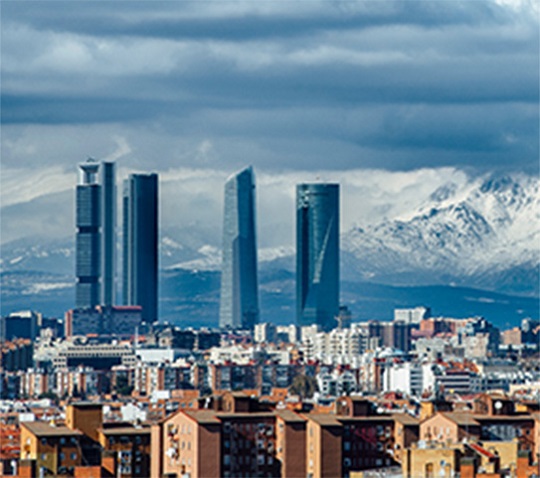
Fast facts: Spain
- Spain has the fifth-largest economy in the EU. With a population of about 47 million, it is one of the EU’s bigger consumer markets.
- Dozens of large multinational companies operate in Spain. Spanish firms have themselves become major global players in the banking, telecommunications, infrastructure, automotive and energy sectors.
- Recent economic reforms have reduced costs and improved productivity, sharply increasing Spain’s competitiveness and making it a good entry market for the EU.
- Canada’s major goods exports to Spain include metals and ores, aerospace products, fuels, agri-food, machinery, wood and paper products, medical and scientific devices, automotive products and pharmaceuticals.
- Market entry: Face-to-face meetings with potential customers and partners are essential. As in Italy, Spanish business people expect to establish trusted personal relationships with suppliers before doing business with them.
EU investment in infrastructure projects has lagged in the past few years. Beginning in 2018, however, investment levels were beginning to creep upward. As time passes, this should stimulate new demand for infrastructure-related goods and services across the EU.
Much of this demand may appear in “Emerging Europe,” the EU members of the former Soviet Bloc. Because the region started from a lower level of economic development than western EU nations, it has more ground to make up. Consequently, Emerging Europe’s infrastructure sectors are likely to show brisk growth over the next few years. Elsewhere in the EU, growth rates will probably be lower but should still show improvement.
The following projects represent a sample of EU infrastructure commitments planned or underway.
The Netherlands
Three major road projects are in the procurement stage: the Blankenburg tunnel €600 million), the A13/16 Rotterdam and Afsluitdijk causeway projects (€1 billion) and an upgrade to the A9 Amstelveen motorway. In the renewable energy area, the country has completed the financing arrangements for a set of enormous wind farms in the North Sea. According to the World Economic Forum, the Netherlands already has the best infrastructure in the EU and intends to improve it further.
Germany
In 2016, the German federal government launched its Federal Transport Infrastructure Plan 2030. It has a value of €270 billion and includes hundreds of projects related to roads, railways and waterways. It focuses on investment in replacement infrastructure as well as upgrades and new construction projects. These projects emphasize smooth passenger and freight transport, high-capacity infrastructure networks, safety upgrades and climate change mitigation.
United Kingdom
The UK construction market is expected to show moderate growth in the next few years as the country’s new National Infrastructure Plan begins to take effect. Several large infrastructure projects are currently in the pipeline, such as upgrading the country’s A-roads and rail links, enlarging the capacity of airports and ports, expanding electricity generation and improving flood and erosion protection.
Spain
Spain is showing a resurgence in infrastructure development, including investments in 20,000 km of roads as well as funding for hospital construction. The government is also sustaining its commitment to renewable energy, particularly solar and wind.
Slovakia
By relying on EU funding, Slovakia has been able to procure several roadway projects, including the €1 billion Bratislava Bypass.
Czech Republic
The Czech Republic plans to modernize its train stations and rail network, with a budget of about €380 million. A private-public project to upgrade the D4 motorway is also in preparation.
Poland
Poland has several transport, social infrastructure and waste-to-energy projects in the pipeline. It is planning to build one of Europe’s largest airports, with an annual capacity of about 50 million passengers.
Bulgaria
Bulgaria has undertaken major investments in constructing and modernizing roads, airports and ports. As part of the Connecting Europe Facility, €111 million is being invested in three major infrastructure projects: the Plovdiv railway, the Sofia–Kalotina road link modernization and the development of the Port of Burgas.
If you manufacture products such as construction materials, power generating machinery, electrical equipment or rail products, it may now be easier for you to compete in the EU infrastructure sector. This is because CETA has eliminated all tariffs on goods used in building and maintaining infrastructure.
If you provide services related to infrastructure development—such as engineering, or architectural or environmental services—you may also gain from CETA’s labour mobility provisions. These provisions make it simpler for intra-company transferees, contract service suppliers and independent professionals to work and do business in the EU.
In addition, CETA allows Canadian companies to bid not only on government infrastructure contracts offered at the regional and municipal levels, but also on contracts offered by local bodies such as hospitals, academic institutions and utilities.
The EU is the world’s second-largest importer of medical technology. It is also our second-largest export market for medical devices after the United States. The following table shows the value of Canadian sales to our major EU markets for the various subsectors within the industry.
Export sales of medical devices to major EU markets, 2013–2017 (in millions of dollars)
| Device Type | 2013 | 2014 | 2015 | 2016 | 2017 |
|---|---|---|---|---|---|
| Bougies, catheters and drains | 37.3 | 46.9 | 76.2 | 104.3 | 132.0 |
| Medical and surgical instruments | 15.8 | 19.4 | 12.6 | 16.8 | 18.9 |
| Diagnostic apparatus | 5.8 | 10.8 | 11.6 | 14.0 | 14.5 |
| Electrocardiographs | 6.1 | 11.1 | 10.7 | 8.9 | 13.9 |
| Ultrasonic scanning apparatus | 5.2 | 3.5 | 2.6 | 2.0 | 6.6 |
| Dental instruments and appliances | 1.9 | 2.5 | 3.1 | 2.5 | 3.5 |
| Tubular and suture needles | 0.3 | 0.3 | 0.6 | 0.9 | 1.3 |
| Ophthalmic instruments | 0.3 | 0.3 | 0.3 | 0.4 | 0.8 |
| Ultraviolet or infrared apparatus | 0.1 | 0.9 | 0.0 | 0.9 | 0.7 |
| Dental drill engines | 0.1 | 0.3 | 0.6 | 0.6 | 0.4 |
| Syringes | 0.0 | 0.3 | 0.7 | 0.1 | 0.1 |
| Magnetic resonance imaging apparatus | 1.9 | 0.0 | 0.0 | 0.4 | 0.0 |
| Total | 74.7 | 96.4 | 119.0 | 151.7 | 192.8 |
Source: Trade Data Online, selected by HS code 9018 (instruments and appliances used in medical, surgical or veterinary sciences)
The following is a sample of EU markets where Canadian medical device manufacturers may find export opportunities.
Belgium
The Belgian market for medical equipment and supplies was estimated at US$2.4 billion in 2017 and has been growing at an annual rate of around 4%. The country produces less than 10% of the medical equipment it needs for domestic use, so imports are vital to the healthcare system. In addition, Belgium is a major transshipment hub, serving as an EU distribution centre for many companies in the sector. Major imports include diagnostic imaging apparatus, orthopedic and implantable products, and medical and surgical instruments.
France
The French medical devices market had a turnover of nearly €30 billion in 2017 and is forecast to grow at about 4% annually for several years. The majority of the industry is made up of small companies, with most of its 1,300 firms being niche-market SMEs. Among the key opportunity areas are non-invasive surgery, orthopedics, disposable medical devices, medical imaging, rehabilitation and intensive care equipment.
Germany
Germany is Europe’s largest market for medical devices, accounting for roughly €30 billion in sales annually. Several very large companies—such as GE Healthcare, Medtronic and 3M—operate in the country, but 80% of the sector’s players are SMEs. Key industry drivers include the sector’s innovative strength, a solid financial infrastructure and an investment environment that encourages start-ups.
Ireland
Ireland’s medical technology sector, employing some 29,000 people, is becoming one of the industry’s global hubs. The country exports medical products to more than 100 markets, and 18 of the world’s top 25 medical technology firms have an important Irish presence. Canadian medical devices manufacturers may find opportunities in diagnostics, cardiology and surgical equipment, electro-medical apparatus, orthopedic and rehabilitation equipment, assistive devices and e-Health.
Spain
Canadian medical devices companies may find opportunities in Spain. Among the major areas of interest are diagnostic equipment and drug delivery systems, stem cell technologies, cardiology devices, dental technologies, trauma implants and nanotechnology.
United Kingdom
The UK medical equipment market is valued at around US$11 billion annually. The publicly-run National Health Service is the largest purchaser of medical equipment and provides for about 85% of the country’s healthcare needs. Among the key opportunity areas are telemedicine, assistive technologies, electronic monitoring equipment, home care technology, cancer care technology, rehabilitation equipment and diagnostics.
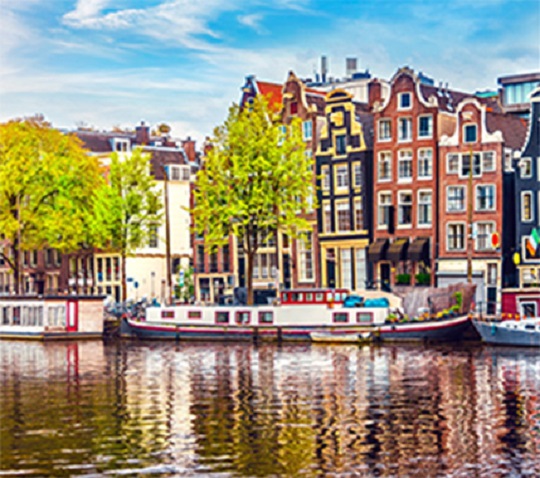
Fast facts: Netherlands
- The Netherlands has the sixth-largest economy in the EU and offers one of the most favourable business and investment climates in the world.
- It is home to Europe’s largest port, Rotterdam, which is within a 300-km reach of more than 170 million EU consumers. The country has the best logistics and distribution network in the EU.
- The above factors make the Netherlands an excellent jumping-off point for exporters new to Europe.
- Canada’s major goods exports to the Netherlands include fuels, metals and ores, machinery, medical devices, agri-food, pharmaceuticals, apparel, aerospace products and wood and paper products. In 2017, these exports reached $2.9 billion.
- Market entry: Distributors are the preferred approach, with price being the most crucial factor in a successful market entry. Careful product adaptation to local preferences is a must.
The EU is the world’s second-largest importer of pharmaceutical products and accounts for 24% of the global import market for this sector. In 2017, Canadian exports of these products to the EU totaled almost $1.4 billion, making it our second-largest international market for pharmaceuticals after the United States.
The pharmaceutical industry is a major player in Europe’s economic activity. It directly employs upwards of 700,000 people and invests tens of billions of euros in R&D every year. In terms of sales, the five largest EU pharmaceutical markets are Germany, the UK, France, Italy and Spain.
Major companies operating in the sector include the following:
- Bayer AG manufactures biotech products, veterinary pharmaceuticals and consumer health care products.
- Roche is a worldwide pharmaceutical company with two huge divisions, diagnostics and pharmaceuticals. Subsidiaries include Genentech, Chugai Pharmaceuticals and Ventana.
- Novartis is based in Switzerland and focuses on over-the-counter drugs, animal health, diagnostics and many other pharmaceutical products. Subsidiaries include the Chiron Corporation, Ciba Vision and Sandoz.
- Sanofi is the world’s major producer of vaccines and focuses as well on oncology, thrombosis, internal medicine, diabetes, and the central nervous and cardiovascular systems. Subsidiaries include Genzyme, Chattem, Zentiva, Medley, Nichi-Iko and Sanofi Pasteur.
- GlaxoSmithKline is a British company that manufactures pharmaceuticals, biologics, vaccines and consumer healthcare products.
The European Federation of Pharmaceutical Industries and Associations (EFPIA) is the umbrella organization for the EU’s pharmaceutical sector.
Canada’s major EU export markets for pharmaceuticals (each with more than $5 billion in sales in 2017) over the past five years.
Export sales of pharmaceutical products to major EU markets, 2013–2017 (in millions of dollars)
| Export Destination | 2013 | 2014 | 2015 | 2016 | 2017 |
|---|---|---|---|---|---|
| Italy | 369.2 | 736.6 | 485.9 | 486.5 | 463.1 |
| Belgium | 137.8 | 363.8 | 346.5 | 246.9 | 353.8 |
| Ireland | 100.6 | 137.1 | 282.9 | 220.0 | 199.5 |
| France | 70.3 | 84.0 | 93.2 | 103.2 | 100.6 |
| Netherlands | 123.3 | 114.2 | 90.4 | 105.6 | 88.4 |
| Germany | 75.4 | 63.0 | 76.9 | 76.9 | 86.2 |
| UK | 198.2 | 68.1 | 92.9 | 50.8 | 56.5 |
| Spain | 31.2 | 9.2 | 11.3 | 9.9 | 14.7 |
| Denmark | 12.5 | 3.5 | 7.8 | 3.9 | 11.2 |
| Total | 1,118.5 | 1,579.5 | 1,487.8 | 1,303.6 | 1,373.9 |
Source: Trade Data Online, selected by HS code 9018 (instruments and appliances used in medical, surgical or veterinary sciences)
Canadian pharmaceutical companies have found opportunities in the EU for a range of products, primarily the following (total 2017 export values are shown in parentheses):
- Medicaments measured and packed for retail use ($1.1 billion)
- Blood preparations, vaccines, toxins and similar ($150 million)
- Medicaments not measured and packed for retail use ($93 million)
- Reagents, gels and sutures ($28 million)
- Dressings ($4 million)
If you manufacture pharmaceuticals for export to the EU, CETA’s provisions can help you with the inspection and certification requirements for your Canadian production plant. Under the agreement, Canada and the EU can accept the results of each other’s inspections. Consequently, if your manufacturing processes meet the required standards in Canada, they may also be accepted in the EU without a separate EU inspection.
CETA notwithstanding, you must still obtain authorization at either the country or the EU level to sell pharmaceuticals in EU countries. In addition, if you don’t have an EU business presence, you’ll have to market your products through an importer or representative.
Note also that the rules and policies for pharmaceutical pricing and reimbursement systems vary across the EU. Be sure you understand the details of the local system before you commit to a sale.
Many of the sectors examined above need various kinds of services as well as goods. Canadian companies may find opportunities in numerous areas, such as the following:
- Engineering, architectural and construction services
- Marine and ocean technology services
- Health care and education
- Software and information technology
- Management and administrative services
- Environmental services such as water and pollution treatment, waste remediation and alternative energy

Fast facts: Belgium
- Belgium is linguistically and culturally diverse, and its excellent logistical infrastructure makes it a key EU distribution hub. Because of these factors, it is an excellent test market for exporters intending to expand across Europe.
- While its economy ranks as the ninth-largest in the EU, its 11 million people enjoy one of Europe’s highest per-capita incomes.
- In terms of dollar value, diamonds have been Canada’s top export to Belgium. Other than diamonds, our major exports include metals and ores, pharmaceuticals, agri-food, machinery, wood products, fertilizers, motor vehicles and medical and scientific devices. In 2017, these exports reached $2 billion (our diamond exports were worth another $1.33 billion).
- Market entry: For most Canadian companies, the best way to enter the Belgian market is through distributors, wholesalers or specialized retailers.