
EP 08
100 years of success with Premier Tech
Nov. 22, 2023

Exporting Canadian knowledge and expertise all over the world
On this week’s episode of The Export Impact, Joe Mimran sits down with Jean Bélanger, CEO and president of Premier Tech, to find out how this Quebec-based company grew from a small startup to become an international leader in its industry.
Where to listen
Follow us on your favourite streaming platforms to never miss an episode of the Export Impact Podcast. Tune into our podcast for new episodes every second Wednesday at 6 a.m. ET.


Joe Mimran (00:00): Hi, I'm Joe Mimran and welcome back to the Export Impact Podcast. Get ready for an insightful and thought-provoking episode as we delve into the world of visionary Canadians who dare to dream big, take risks, and make a global impact. Today, our guest is Jean Belanger, president and CEO of Premier Tech. This company is a true marvel as they’re venturing into a diverse range of industries, including robotics, systems, automation, horticulture, and life sciences. While they’re ranked among the largest packaging equipment manufacturers on the planet and have enormous global reach, Premier Tech remains deeply connected to its Canadian roots. And, today, Jean is here to share his invaluable knowledge about harnessing Canadian expertise and successfully selling it on the world stage.
I’d like to begin our episode by acknowledging that we’re recording from my office in Toronto, which is on the traditional unceded territory of many nations, including the Mississaugas of the Credit, the Anishnabeg, the Chippewa, the Haudenosaunee, and the Wendat peoples, and is now home to many diverse First Nations, Inuit and Métis people. We value taking this moment to deepen the appreciation of our Indigenous communities wherever we are, and to remind ourselves of our shared debt to Canada’s First Peoples.
Hello, Jean, and welcome to the Export Impact Podcast.
Jean Belanger (01:41): Hello, it’s a real pleasure to be with you today.
Joe Mimran (01:44): Thank you. To kick things off, Jean, could you provide us with a deeper understanding of Premier Tech with such diverse involvement in various industries, how do you effectively bring all these facets together and create a cohesive company culture?
Jean Belanger (02:00): That's a very good question. Premier Tech is turning 100-years young this year. So we’re started in in 1923, we actually launched in New York after two German brothers immigrated to the U.S. Their family produced horticultural products, which were exported to the U.S. The brothers opened a sales office, and within a few years, they started looking to source locally for their products. In 1933, they opened their first peat-manufacturing plant here in Canada near Rivière-du-Loup, QC, which is where we have our headquarters today. For most of our 100 years, Premier Tech was primarily involved in horticulture. But, in 1990, we pivoted and started diversifying the company and launched our systems and automation business and in 1995, we launched our water and environment businesses, and five years ago, our digital and life sciences businesses.
We wanted to leverage our competencies and knowledge-based assets to deliver value to our customers and create opportunities for team members to expand their talent and commitment to provide impact. Starting in the late 1950 and early 1960s, we always designed and manufactured most of the technologies we use in our peat moss plants. When I joined in the mid-1980s as a young engineer trainee with a few friends from high school and university, we soon realized that our competitors were borrowing with pride. They were using the technologies we invented and some of the products we designed, and they were having them manufactured by third parties. And we said, why the heck don't we start offering these technologies and our knowledge to our direct competitors back then?
In mid-1989, our board of directors and my manager then weren’t enthused with the idea. He said, "Are you out of your mind selling our technology and helping our competitors to become more competitive?” But I said, “Look, they're having it made.”
Long story short, after about a year, they said that they expected us to fail. But to be good managers, entrepreneurs and business leaders, you need to have your small failures and mistakes and learn from them—to come back better to the real company.
Joe Mimran (05:06): That's a great story. You were saying that you started by working summers at the company while you were studying to become an industrial engineer, which is super interesting. And I guess those are the influences that I guess you develop your own leadership style through those learnings, I would imagine.
Jean Belanger (05:24): When you're at university, or in my case in industrial engineering, you have a lot of homework and team projects, so you develop skills at writing documents. If you’re stronger in physics, math or in thermodynamics, then you take the lead. The leadership style we implemented when we began Premier Tech Systems and Automation today was based on who is good at doing what. It was really collegial in the way we built the business. A few years later, the then management pointed out that for five years we worked on finding a new application for peat moss with a filtration media.
We’re working on a product called Echo Flow to treat on-site wastewater from residential homes, but it’s complex and we may drop it. It's a lot of science, it's biology, and basically, we're a horticulture company, but you guys are engineers, you're in technology, would you be interested in having a look at it? We're not such a big company, so we knew about the project, and believed we can do this, but on our own terms. We’re going to turn an R&D project into a business proposition. With the strength of the team, we're No. 1 worldwide for on-site wastewater in Germany, France, Spain, Portugal, Ireland, United Kingdom, Canada, and in many states in the United States. I forgot to say that in the first year or so, we were forbidden to sell to our competitors in Canada. We were allowed to sell to peat moss producers in Europe with whom we were not really competing. Our first markets were Finland, Sweden, Russia, Germany and the U.K. We had to export to survive, and after a year and a half, they said, “OK, you guys are doing well. You can try selling to our competitors in Canada”, which we did and succeeded, like I said.
Joe Mimran (07:42): The culture that you built sounds very entrepreneurial. Sounds like you used a lot of skunkwork teams with existing talent and just said: Go for it. And most companies would build this kind of portfolio that you have through acquisition because they wouldn't have the right spirit within their company to create all these different channels of business. I would say engineering is at the heart of it, but still very different businesses and very entrepreneurial. You've been in business for 100 years. What are you doing to celebrate this remarkable achievement? It's an incredible milestone, particularly in Canada. You hear about 100-year-old companies in Europe. You don't often hear about it in Canada, and it certainly surprised me when I read about your business and learned about your business. I'd love to hear what you're doing to commemorate such an auspicious moment.
Jean Belanger (08:41): The biggest celebration of all is when you go to a colleague and tell them they’ve done a good job. Celebrating teamwork is at the heart of how we've built Premier Tech. There's so much potential and runway ahead of us that I insist on saying to my team, "We're not 100 years old, we're 100 years young!” This is how we kicked off the year in January when I took the stage at our annual top managers' meetings. This is a special year because we're 100 years young, but also because of the talent and ideas from our teams and businesses around the world.
We have to keep our eyes on the ball and deliver upon our promises to our customers, but we’re planning loads of events around the world. We have more than 65 offices and manufacturing plants, which we call home bases, around the world. We’re going to celebrate each one as being part of Premier Tech and our 100 years of history. On Sept. 9, we hosted a major celebration at our world headquarters with about 5,000 people, team members, family, some suppliers, partners and longtime strategic partners.
Joe Mimran (10:15): That's a lot of people to say hello to!
Joe Mimran (10:22): Let’s turn now to focus on the export part of your business. Please tell us a little bit about the experience you had a few years ago that shifted your perspective on exporting.
Jean Belanger (10:35): I attended a dinner in Quebec City with about eight CEOs, entrepreneurs and business leaders. At one point, we were asked what we thought of Export Development Canada? Somebody said, “Well, you're there to support Canadian companies to export, you're there to encourage us to go and open up new markets outside of our province or outside of Canada.” We discussed this for maybe a few minutes and then he said that EDC is in the import business. So, everybody had a big question mark, and he says, "If you want to create value in a society, you don't create value by trading locally. You don't create value by trading within your own province or between provinces. You create value when you export and then you import currencies, you import money from outside of your own country. That's where you create value.” EDC is here to make sure that Canada’s prosperity grows, can maintain, and grow our way of life and protect our civil liberties and everything that we're known of as a country.
That's an interesting way of describing the true value of exporting. It's not just about “I want to export because I want to export.” If you have a product that does very well and you're happy within your own province or between the Maritimes, then it's OK if it's not an end in itself. It's tough to export: There’s travel, you must learn about different cultures, regulations and depending on your product and the industry you're in, you might face some regulatory issues and all sorts of different rules, different competitors, different behaviours. You have to do this for reasons that are meaningful to you, your people that will give your technology or your product the next level of voice and reach in the marketplace. But it's not an easy game to play.
Joe Mimran (12:49): It's not an easy game to play. EDC does provide this impetus for people who want to take the risk and want to share the risk in essence. I mean, that's what they really help you do is they help you in sharing that risk. But the fact that it’s a government agency, they do have to be selfish in the sense that it has to benefit Canada, and that's how it benefits Canada, right? The more, like you said, the more that you can export. And that's a fascinating aspect of exporting, is how it really does help us import. I'm curious here in so many different countries, perhaps you could just tell us a little bit about the countries you're in, the experiences that you've had. You touched on some of the regulations, some of the barriers of entry and some of the difficulties when you export. But I would think in your case, you have even that many more because you're dealing in so many different product categories and services where regulations must change from one industry to the next. Then you've got myriad ways of selling, different customs and you have to put into place long-term, large contracts that require very detailed vetting before you get involved. How do you manage all of that? How do you deal with it and how have you dealt with these hurdles? That's a lot of questions in there.
Jean Belanger (14:11): Well, first it makes every day an exciting one. If you're looking for a bit of a thrill, we’ve got plenty. At Premier Tech, we're a Canadian company with locations in multiple provinces, eight out of 10 where we have manufacturing plants and/or offices. We're an exporter, but we are also an international operator. We have 48 manufacturing facilities in 16 countries. We have a manufacturing plant in Bangkok, Thailand, serving Southeast Asia in our systems and automation business. We have a plant in Jundiai, Brazil supporting Latin America and so forth. You have to become local. In fact, we would like to say that we're a local company.
We're a global company with employees in 28 countries. We sell in about 100 countries and have manufacturing plants in 16 countries. We export from each of these locations. None of those locations, those manufacturing plants are there for sourcing low-cost labour. They're there with regional or continental mandates, and you have to become local. You have to embrace the local culture. We have a Premier Tech culture, but we have to find a way that, how do we define the original Quebec Premier Tech culture when we're in Alabama, when we're in former East Germany and [15:52nameofplace] Even though Premier Tech is a global company, we’re local in Thailand. So, it's a very difficult or challenging task. It's not something that you do overnight. You can’t arrive and just start spraypainting everything, whatever colour is your colour.
Premier Tech’s logo is blue, we bleed blue. We say you can’t do that. And a lot of our diversification wasn’t through acquisition. It's really was born within the company through our assets, knowledge base, and competencies but our international expansion was through acquisition; to acquire right off the bat the connection with local culture, the understanding of the regulations, the connection with the customers, how to behave, how to act, how to sell in Southeast Asia, how do you interact with a company in Indonesia, in the rice industry or in Vietnam and China. We wanted to make sure that we gave our potential the full support it required. We needed to become an international operator with manufacturing plants and salespeople and service people and local people in different cultures and languages. But at the same time, we wanted to manage the risk and we saw that through acquisition, which would be the better way.
There are only two countries, or actually three where we started Greenfield; the United States, Canada in 1933 and China in 2010, we went through acquisition and about 62%-63% is organic growth and 38% would be through acquisition. For us, acquisitions have been a special strategy to do two things to accelerate our international growth and the mastery of everything you highlighted before and become organic growth platforms. How can we download or upload, shall I say, technologies, processes, brands, customer relationship, products into a company we acquired and how can we download the same thing from them and redeploy it in a different country? Ten years ago, we acquired a company in Germany in rainwater harvesting and recycling. Since then, we pivoted those technologies to our French and Portuguese operations and one in the U.K. in Newcastle, so that we could create more business. And it was impossible to export from Germany. It was feasible, but not on a large scale; the cost of transportation, not very efficient from a cost standpoint or from a sustainability standpoint. So, we did technology and manufacturing transfers, and we've been able to generate a lot of organic growth and create jobs in all those countries.
Joe Mimran (18:47): I would think, though, the amount of work that's involved in just leading an acquisition, the due diligence, again, you're in a foreign country to do due diligence in a foreign country now is a lot of work. You've got to find the capital. Did you use EDC or any other agencies to assist in either identifying these opportunities or help with the due diligence process? With mergers and acquisitions, it's a whole expertise all in itself.
Jean Belanger (19:16): It's a business in itself. We did our first acquisition in 1995, and it was really local. It was in Quebec, like 10 kilometres down the road, so it was an easier one. But in 1997, we did our second one in Ireland, and then quickly followed by a couple in Germany in 1999 and 2000. And again, there we decided that we wouldn’t subcontract our responsibilities, that we would leverage the network of the Quebec or Canadian government in understanding how we approach a company and do business in Germany. But we would be the ones making the first contact and at a table negotiating. We would have Canadian, Quebec-based lawyers. They might have counterparts in Germany for local laws, for tax analysis, or for understanding the document. And there was no ChatGPT to translate it back then.
So, you had to go with good old machinery, the good old days, but still we built again, a practice, the processes of how you bring a meaningful acquisition target. But I say this in a very respectful manner. How do you bring them to the table? Some we worked on for five to 10 years just building the relationship. We know that company X, Y, Z have technology or have a market position that would be meaningful to us. And we're long-term players. You know, we don't know the date, but we know the day.
Joe Mimran (20:55): That's amazing. That's patience. But you also have to have the staying power, you have to have the ability to do that, right? I mean, many companies don't have that kind of depth to be able to do a five to seven-year strategy. But when you're working, I guess across multiple countries, again, multiple lines, you have some that I think are immediate wins, some are mid-term wins and some are probably long-term goals and long-term wins that you've got to strategize right now. You mentioned ChatGPT and AI is on everybody's tongue right now. I am sure you're working on stuff that is impacting your business and AI's got to be high on your hit parade without divulging any secrets. What are you doing in that area?
Jean Belanger (21:45): I think we're doing a lot, but it's going so fast. We all talk about AI and it's going to profoundly change the way we manage and run our businesses. But there are still some of the good old tools that are powerful with the computing power that we have now available, like statistics and probabilities and stuff like that, which for some applications work perfectly. Then you go to specific algorithms that are available out there and then machine learning, and then you go to large learning models like ChatGPT, LLMs. We're working across a bandwidth of projects that will either change the way we run internal processes to embed it into our products and the way we make them more efficient, or we become more predictive in when they will require service and support. And finally, it's to give our customers the information they need in a timely, relevant, and actionable manner. And this is something where we see major impacts in the way we run and deliver value to our customers. The way we run the business and deliver value in the next three to five years.
Joe Mimran (23:01): Yes, 10 years ago it was the internet of things that was sort of on the tip of everybody's tongue. And now it's a matter of having embedded that now AI can start to use those tools to, like you said, give more information than in the past was just very difficult to secure. And I think it's going to change things. Everybody's very concerned that it may take jobs away. I believe it will be a job creator, not a job destroyer. At the end of the day, it may impact certain jobs, but I think it's going to open many more jobs to go forward. We have a large audience of ambitious Canadian entrepreneurs who’re tuning in. What are some of the practical steps or strategies you would recommend to help them initiate their global exporting endeavours successfully?
Jean Belanger (23:44): I would say really the first step is list why you want to do this. You have to do this for the right reasons. And once you've identified the Top 2, 3, 4, 5 reasons why you want to become an exporter, put beside it, what are the key strengths you already have that will facilitate or enable delivering upon these reasons and the weaknesses. And then either you've done this alone depending on the side of your business or your type of leadership, but the sooner the better, bring your team into the discussion, make it a conversation, because you can’t do this alone. I have in mind this transaction we did in Holland with a beautiful company, great technology, and for us it was all about scaling them. And for both good and bad reasons, we didn't meet with all of the management. The two owners wanted total secrecy, and it was a key transaction for us.
And we made a compromise of not meeting with the top five or six leaders, which we always do. This was in 1999, and we've never made that mistake or compromise again. It sounds very simple, and it might sound corny, but do it for the right reasons. Establish the foundation you're starting with, both the solid aspects and also the weaknesses. But you need a team, and you need a team that the husband or the wife agrees that you'll miss a few birthdays, and you'll miss a few holidays or a few significant dates in your family because this is going to happen. There's no way you're going to do this without me being on the road on July 1st or being on the road when it's your wedding anniversary or being on the road when your kids celebrating a birthday.
You're going to miss a lot of those moments and you'll navigate around it, but there's no way you're going to avoid this. And then it's what you make out of it. You make it count. There's quality and there's quantity; without quality in your personal and family lives is not the right scenario; when you're there, you must be there and they accept that when you're not there, you're going to be back and you're going to be a good dad or a good mom or a good brother or sister. It's important to establish the motivation to establish what you have in your toolbox, and then you have to bring people on board for the journey. This isn’t something you can do alone, and it includes your suppliers and your partners and your bankers. It means reaching out to organizations, like EDC or others, EDC or your banks. Don't try to do this alone and bring people on that journey as early as possible in your thought process.
Joe Mimran (26:46): Yes, so you're saying be prepared to make sacrifices, be passionate, and try and find some really good partners to help you, whether they be external partners or internal management team partners and that'll get you there. I don't know how you do it. I mean, I think running a business that you're running is very complex. You’ve been a wonderful guest. Thank you so much for sharing your valuable insights and experiences today. It's been truly an enlightening conversation. We appreciate your time and expertise and keep inspiring and making a global impact. Jean, it's a real pleasure. Thank you so much.
Jean Belanger (27:30): Thanks. Cheers.
Joe Mimran (27:31): Thanks for joining us today on the Export Impact Podcast. If you enjoyed today’s episode, we'd love for you to subscribe, rate, and leave us a review on your favourite streaming platform. See you back here in two weeks.
Host & guest
-

Guest
Jean Bélanger
CEO of Premier Tech
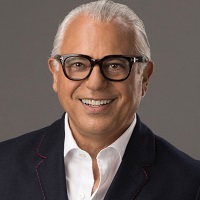
Host
Joseph Mimran
CEO of Joseph Mimran & Associates Inc., founder of Club Monaco & Joe Fresh, and former Dragon on CBC’s Dragons’ Den
Related resources

MyEDC gets you the answers you need
Join more than 30,000 Canadians who rely on MyEDC to grow their businesses with confidence.

Indo-Pacific market intelligence
Insights and analysis from EDC to help plan your global expansion in the Indo-Pacific and Asia.

EDC Solutions
Our unique suite of solutions can help you offset the risks of doing business abroad, finance your deal, and access the working capital you need.