
EP 15
Certn: Building trust internationally
Mar. 20, 2024

Verified: International background checks with Certn CEO, Andrew McLeod
Joe Mimran gets a behind-the-scenes look at cybersecurity, with Andrew McLeod, CEO of Certn, a global data company that specializes in background checks for some of the most talent-centric companies in the world. From encryption to working with an international team spanning four continents, this Canadian company shares their vision on how they can enhance the field of security and compliance, while remaining ethical.
Where to listen
Follow us on your favourite streaming platforms to never miss an episode of the Export Impact Podcast. Tune into our podcast for new episodes every second Wednesday at 6 a.m. ET.


Joe Mimran (00:00): Hello, I'm Joe Mimran and welcome back to the Export Impact Podcast. Today, we're talking about background checks. You know, those reports that reveal your criminal record, your credit score, your personal history. They're increasingly common in our day-to-day lives and it seems like everybody uses them now - employers, landlords, lenders, even your potential first dates. But how much do you really know about what goes on behind the scenes? How can you protect your privacy and identity in a world where you're constantly being tracked and analyzed? That's where Certain comes in. Certain is a Canadian tech firm that aims to revolutionize how background checks are done. Their vision to use technology to create a safer and more inclusive society by making checks ethical, transparent, and fair. Andrew McLeod is the CEO and co-founder of Certain. He's here to tell us about himself, the business he co-founded, and how he tries to strike a balance between transparency and privacy.
I'd like to begin today's episode by acknowledging that we're recording from my office in Toronto, which is on the traditional unceded territory of many nations, including the Mississaugas of the Credit, the Anishnabeg, the Chippewa, the fHaudenosaunee, and the Wendat peoples, and is now home to many diverse First Nations, Inuit and Metis people. We value taking this moment to deepen the appreciation of our indigenous communities wherever we are, and to remind ourselves of our shared debt to Canada's first peoples.
Andrew, welcome to the show.
Andrew McLeod (01:47): Thanks for having me, Joe.
Joe Mimran (01:49): Yeah, terrific. I'm really excited to be talking to you today. I know that Certain's long-term goals to be universally used and accepted everywhere, and it looks like you're well on your way. You started the firm in 2016 with your best friend. Please tell me where did the idea come from?
Andrew McLeod (02:09): That's a great question. Well, I started with my two best friends. The idea came from really our experience with trust. So as maybe self-proclaimed global citizens, we've lived in different places and done different things and every time the process for getting access to opportunity was challenging. So in 2014, I moved to New York from Toronto, five-hour drive, hour and a bit flight, and somehow I went for a perfect credit to no one wanted to rent me an apartment and take that, apply it to the same when I lived in the UK or Australia. And then imagine I was coming from somewhere that maybe wasn't so familiar. Maybe I was coming from Asia or Latin America and coming to Canada or the US or Australia or the UK or really moving anywhere and how much harder that would be. And so that global mobility challenge kind of sparked the idea of, okay, well what about domestic trust? You know, what about getting a mortgage? Why does that take so longer? Or getting a job when we're doing a background check and how do I know that the information about me is accurate if it's all kind of behind this black box? So the idea of how do we empower people towards opportunity through trust burned into our brain in 2016 and we wanted to solve that problem.
Joe Mimran (03:23): Wow. Wow. And so what made you think though, that there was this void? I mean, did you check to see whether or not there were major competitors already doing an amazing job and that your service wouldn't be needed or you'd be up against these kinds of giants? How did you have the courage to just say, oh yes, I had a problem renting an apartment so, therefore, I can build a multimillion-dollar business? Like where does that chutzpah come from?
Andrew McLeod (03:53): I would say that the conviction we had because we had experienced the impacts and then in our last company we hired a whole bunch of people and we did a lot of work in the property management space. So we saw the challenges of renting to people, the challenges of building trust with renters and vice versa. And then doing a background check for volunteering. You always do your volunteering background check the day before you're supposed to start volunteering and then when it takes six to eight weeks and nobody's happy, that was really the, okay, there's gotta be a solution here for us individually. And as we looked into the competition, they do really great work the way my dad did it on paper.
Joe Mimran (04:40): That's interesting. So you actually went out and you checked the competitive landscape and you realized that they were using outdated methods to get to a final answer. And you saw this opening, right? Like there's a great need and that's the mother of all inventions, right? Is sort of a need. And then you went out, you had the chops to fill it.
Andrew McLeod (05:03): Exactly. At the time, if you could buy a house without needing to be there in person, why should I have to go to the police station to get a criminal record check?
Joe Mimran (05:12): So now you have what? 500 employees, speaking 37 languages across 13 countries. I mean that's pretty amazing from start of 2016. You've done that in seven years during Covid, two to three-year hiatus because of Covid or maybe Covid was good for your industry, I'm not sure. Take me through that. How have you been able to expand so rapidly and how have you really cracked into this international market?
Andrew McLeod (05:45): I would say that when we started the company, because we had that global mobility challenge, we wanted to be global really early on, which I think was probably intimidating for some investors early days, knowing that we wanted to be global quickly. And the nice thing that happened that was a terrible thing was the pandemic. So in March 2020 when the pandemic started, Certain was 24 people in one office here in Victoria, British Columbia, Canada. And the pandemic was an interesting time because a lot of our competitors decided hiring is gonna decrease, so we're gonna pull back. And we said the iron is hot, we have to strike now. And I know a lot of members of my team and some of our investors at first were like, what are you talking about? And then we really saw the opening to get in front of customers really quickly and we saw that now this novel idea of being able to do these processes in an automated and digital way with more accuracy had to become the reality because you couldn't go to the police station to get a criminal record check for volunteering. You couldn't go and have a human in an office process this type of check. You had to do it in a digital and automated way. So we were perfectly positioned to do that.
And on top of that, being that we're in Victoria and at just shy of 500 people, we would hire the entire tech community in Victoria. We had to broaden our horizons of where we found talent. So we started looking in different parts of the world, different parts of the country, and during that process, we started to find companies that we really resonated with and opportunities we really resonated with in different places. So there was the organic piece and then dropped in our lap, the inorganic piece because now we weren't constrained to Canada or North America. We could look at opportunities in other countries and we'd always wanted to be global and we had started expanding geographically. And then we had the opportunity to buy a company called Credence inside of the UK and that was you know, an even bigger slingshot to our grain.
Joe Mimran (07:56): Oh, I see. So you've done this through acquisition, partly?
Andrew McLeod (08:00): I would say a bit of both. So the organic growth is basically, you know, we double the business year over year and then we acquire a company and try and double them. So it's really kind of a land of an expand play in the different regions and that gave us truly global coverage. We tried to build the global network and as quickly as we possibly could, and in a lot of cases, we didn't have to be physically present in that country. In the 13 countries that were physically present, in most cases, it's either the best talent or the best talent but you have to be physically located in that country to be able to get the licenses to be able to do the things that we do.
Joe Mimran (08:35): Oh, I see. So I've got so many questions, I don't even know where to start. You've gone through this kind of acquisition; the UK was the first acquisition you made. Were you busy also as you were growing the business trying to raise money and trying to lure investors? And how did you fund the business? Did you bootstrap it when you started? How did you do with that piece of it?
Andrew McLeod (08:57): Still very early days, we bootstrapped it and as we started to grow and Certain became real, we started to get interested in investment from a number of different groups. So we did our seed round just prior to the pandemic and when we closed our seed round, it was a huge deal. Then the pandemic happened and we did two more financings in that year that made us, I mean it was one of the most successful Series A's in Canadian history at the time that we did in August of 2020 in the middle of the pandemic. And right as we closed our Series A, we got a term sheet for what we called a Series A plus. So the funding environment for us, because of the traction we had and the growth that we had was really good. And then coming into 2021, we had a ton of cash and a ton of growth relative to our size that we were fortunate enough to be able to pull the lever of acquisition. And there were some companies that didn't fare as well as we did in the pandemic. They didn't see the growth that we saw. And on top of that, it's traditionally a service business. So we saw companies that had founders that were looking to retire, who didn't exactly wanna be in the traditional unsexy background check space and it had a really good product and a really good team. So we decided that we would capitalize on that and make them Certonians.
Joe Mimran (10:23): I like that, Certonians, that's great. That's very sci-fi. And so did you stop at Series A? What are you at now? Are you like Series E by now or where are you guys going?
Andrew McLeod (10:35): So we have this tendency to do financing back to back sort of by accident. So we close our Series B and that, you know, we got preempted to do what we call a Series B plus. So I'd say we're Series B plus.
Joe Mimran (10:50): Well, if you're generating a lot of cash, you probably don't need a lot more cash, right? So you can, unless I don't know what these acquisitions are costing you, but this whole notion of growing through expansion and then bringing your sort of best-of-breed and your own systems to help on the back end of some of these businesses is a great way to grow. You must get tremendous synergies as you start growing. And then you have the advantage of being able to source information around the world, which for some employers must be pretty impressive, I would think.
Andrew McLeod (11:22): It's incredibly valuable for our customers and it's been nice because we brought in global capability, but also global expertise. So in the companies that we've brought on, we've got people in the business that have more years in background checks than I have years on the earth. That coupled with our internal skills around technology has been hugely complimentary. So it gives our customers that technical advantage, but also the knowledge that we're bringing into the organization is super valuable both at a regional level and at a global level.
Joe Mimran (11:55): And so you're in all these countries, how do the regulations differ? I know that the US has this, I was looking it up, this Fair Credit Reporting Act, right? You gotta work around or gotta work with an oversight body. How does it differ from country to country? Are you in Russia?
Andrew McLeod (12:14): So, we don't service Russia due to sanctions, but we can do checks on Russians that are not in Russia. There are some service outages that happened on occasion in Russia. I would say, you know, Russia's a challenging one right now, the Ukraine's a challenging one right now from a a service availability perspective. But generally, around the world there's sort of two ways of doing things from a regulatory perspective. And I would say all of them have the best intentions in mind. So the standard that Certain provides in terms of privacy, data security, data storage, data residency, all of that kind of stuff, which are really important have to be at the highest standards. But the way that it's important is slightly different. You know in the US it's you mess up and you get sued and there's a massive class action lawsuit. And in Europe, it's you mess up and G D P R comes against you and there's a massive lawsuit and even it ends up in harsh monetary penalties.
You know, when you look kind of at the two extremes of how they're enforced, you really have to make sure that you've got your I's dotted in your T'S crossed to make sure that first and foremost you're protecting the information of the individuals, of the consumers that we aim to build trust for. I mean the whole purpose of the business was to empower people towards opportunity and that benefits the business and the consumer, but really you gotta protect the consumers' information and make sure it's being used for the right purposes and the right information's being shared and that it's correct.
Joe Mimran (13:48): Right. And how do you protect that information?
Andrew McLeod (13:51): It's protected in a whole bunch of different ways. So I mean the way that it's stored, the encryption, the basic technical pieces are there and then also making sure that it's stored in the right ISIS with the right time and the right reasons. We could probably build a product just based on what we asked to do to be able to keep information stored in the right place at the right time for the right time.
Joe Mimran (14:15): So when you think about the background check industry, where would you say you are now positioned? Are you one of the top players now? Would you say that you're middle of the pack? Like where do you think you're positioned?
Andrew McLeod (14:30): So I would say globally we would be most definitely in the top 10. And that's unfair to say in some respects because when you look at the US there are 1800 competitors in our space. So there is probably a Joe's background screening company somewhere in the United States, which is very different than kind of the global landscape. You know, in Canada for example, there are probably 10 competitors of which we would be in the top three. In the UK, for example, there are probably 20 or 30 competitors of which we would be in the, probably the top five, maybe 10 and climbing. And then if you start looking at different countries like France or Germany, there might be one or two. There are interesting nuances in each country. I mean France, for example, there are no credit bureaus in France and credit history is very different.
Joe Mimran (15:24): So how do you get information? Where do you scrape information from?
Andrew McLeod (15:29): The biggest thing is going directly to the sources and figuring out what information can and can't be used in a specific country. So in France, credit is something that can't be used. Doesn't matter if you're handling money, if you're hiring someone from France in France, you can't use credit history, but you can use job history. So being able to build automated ways of verifying employment or education, making it a lot easier to be able to get someone's criminal history. In France, I'm really proud because it took three years I think to get direct access, to do French criminal record checks. We have it now, which is really cool. France and Germany are very, they're very challenging places to get that type of information because you have to meet that really high bar of data security and privacy and I'm proud to say that we're able to do that now.
Joe Mimran (16:22): This is something today where even people's online activities are being looked at prior to hiring. Are you getting a lot of requests in that regard where people behave very differently online than they might otherwise? Especially in today's charged political climate as well. When you're bringing a new employee on, is that something that you're asked to check on?
Andrew McLeod (16:49): Social media checks are becoming more and more requested. And it's interesting because there's a whole bunch of different ways of going about a social media check that are not candidate-friendly. And I think that to me is the thing that we're working to avoid because everyone's entitled to their own opinions. Everyone's entitled to have their social media presence. Choosing to employ someone is an important decision and you wanna make sure that if you're looking at their social media profile, you're looking at the things that are actually important to the role.
Joe Mimran (17:22): There's so much judgment involved in that. When you go and you check somebody's social online background, are there sort of guidelines that you use for doing that or is this just specific requests that come from your clients?
Andrew McLeod (17:35): So we have guidelines and then there they're also tailored to specific clients. So there's gonna be things that certain clients look for that they would want included in some of these reports. I think the big thing for us is we can never include things that would exclude somebody from getting employment that they deserve that is specifically protected. You know, race, religion, sexual preference, family status; that has to be completely taken out of anything social media related because that should never be part of a judgment that someone makes in social media. Now, if you have threatening content or illicit content or things that might go against the mission or the vision of the company, that might disqualify you. Now in the future, what we wanna do, we do it now, but more so is make that more transparent to the consumer.
So you as an individual can have an analysis of your social profiles that you would store on your phone that you could share. You'd also have your credit report, you'd have your real time criminal history. So Joe, you could go right now and be like, look, I'm gonna prove that I'm not a criminal. You can see it on my phone. And certainly can provide all of that information so that you could share it with whomever you want, whether it's your next dinner date or your next mortgage or your next job or your next apartment; really any opportunity where you need to build trust between two individuals or individual in a company. We wanna give people the ability to have those credentials and those things so that it's transparent. You didn't get the job because your credit score wasn't good enough. I mean, credit and jobs are pretty rare unless you're working with money. But let's use a better example. You didn't get the apartment because your credit wasn't good enough.
You now know what they're seeing and now you know that there's a threshold that that property manager, that landlord wanted and you don't meet that and you can have that conversation as opposed to today where you do a credit report on a tenant, you don't go back and say, Hey, your credit wasn't good enough. Usually you just, not me, but you know, usually one would just say, oh, we found a better applicant. And this brings out the transparency so that people know what things they might have to work on or what things they might have to explain.
Joe Mimran (19:48): It's a little black mirror. I don't know if you watch that show, Black Mirror, but it does...social scoring gets a little futuristic and weird. But I love what you're saying about it being just a transparent process that everybody can engage in in a way that helps them control their own personal background score and that it's not a black box, it's not just for certain individuals to be able to look in and see and provide a score that they're made available to you. Where in the past it was very difficult to get one on yourself and you can get your own credit score today, which was not so readily available. I think that work is really exciting. This podcast is all about exporting, which is what you have done so successfully. You've taken a service, you've grown it across many different countries and it sounds like you're gonna continue to grow. What does the future look like for Certain?
Andrew McLeod (20:44): Well the big thing is, is pushing that empowerment of consumer agenda because the end game, the future state for Certain in my dream is that the next time I go to, you know, Austria, you know, pick a country, I can go to Austria and I can share my credentials to be able to get the visa to go to Austria instantly. When I arrive in Austria, if I decide that Austria is the place for me and I want to go buy a house, my credit information, my job history, my employment history, anything that they would need to lend me the money to buy a house or to rent a house is all there and it's all directly from the source of truth so it could be trusted. And same with when people are coming back to Canada, that is the big focus for us to be able to continue to expand globally. I mean we're constantly increasing our presence in new countries and new markets and new geographies and growing our customer base, people that accept Certain credentials. And then we're gonna do something big shortly here where we're gonna be announcing something that will allow people to have access to those credentials and to be able to share those credentials.
Joe Mimran (21:52): Maybe you can do a pre-announcement right here on this podcast but I love this idea of sources of truth and having that accreditation so that it does hold up wherever you go. I think that's really important and how you can become that stamp of truth. So E D C is certainly a big part of what we always talk about and the great work that they do to help entrepreneurs grow around the world. Is there any experience you've had with E D C that you can share with us?
Andrew McLeod (22:26): E D C has been an incredible partner to Certain in navigating different regions, complex regions. E D C has contacts and connections that welcome you with open arms and in every part of the world. They have been incredible to work with as we've expanded pretty much anywhere internationally but specifically we did some work in, or we do a bunch of work in Saudi Arabia, Beaumont, the U A E D and E D C was awesome in helping us forward relationships over there. And to be able to work and to trade in that region as quickly as we have is, you know, is a testament to EDC.
Joe Mimran (23:05): And they provide a lot of ancillary contacts in terms of government agencies and embassies and trade embassies and other trade organizations which really can't buy that kind of support, which is what is so remarkable about E D C and what they've been able to do in helping businesses. And because I've been doing this podcast now for a bit, I get to talk to great entrepreneurs like yourself and I get to hear about the support that's been given and you know, I wish I had them back in the early days when I was paying prime plus 10% for my money and trying to export. Oh yeah, prime was 18% at the time, so you're talking about 28% for my money. So yeah, good on them; amazing. If you were to give any advice to other entrepreneurs looking to export, what would be some of your advice to them?
Andrew McLeod (24:02): At first, get in touch with E D C. When I first thought about E D C, I thought government, slow, not gonna get it. E D C gets it and they think big. And that's what I love about working with E D C. So definitely a mistake that I made is not talking to E D C Stoner and I would say as companies are starting to think about going global is to be really intentional about it and to be really intentional about the communication and the interaction that you have with your counterparts, your customers, your employees in different parts of the world. Because the hardest thing about running a global company is you're now on 24 hours a day. I mean, when I wake up, the UK is ending their day. When I end my day at five o'clock, Australia starts their day and when Australia ends their day, the UK is starting their day. So it's 24 hours and if you're not intentional about it and you don't have the right team, it gets really hard.
Joe Mimran (25:01): It's tough and it's hard to organize Zoom meetings because of all the different time zones. I know we have an office in Australia, in the UK and when we have team meetings, it makes it pretty tricky to get everybody at a fair time.
Andrew McLeod (25:15): At least one person, often two have to show up at an uncomfortable time.
Joe Mimran (25:19): That's right. Yeah, somebody is always compromised. We've been here with Andrew McLeod, the CEO and co-founder of Certain. I hope you have found it as scintillating as I have. It's been a real pleasure to talk to you, Andrew. Congratulations on your success, on your growth, and on your positive energy. I think you're gonna go on to be a world leader with Certain, and as I said, I am now going to become a Certorian looking for the source of truth. Thanks you so much for being with us today.
Andrew McLeod (25:51): Thanks for having me, Joe.
Joe Mimran (25:53): Thanks for joining us today on the Export Impact Podcast. If you enjoyed today's episode, we'd love for you to subscribe, rate, and leave us a review on your favorite streaming platform. See you back here in two weeks.
Host & guest
-
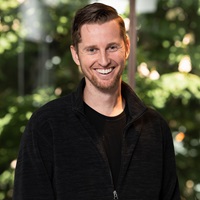
Guest
Andrew McLeod
CEO of Certn
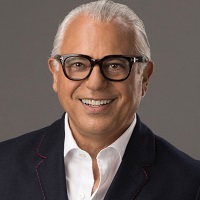
Host
Joseph Mimran
CEO of Joseph Mimran & Associates Inc., founder of Club Monaco & Joe Fresh, and former Dragon on CBC’s Dragons’ Den
Related resources

MyEDC gets you the answers you need
Join more than 30,000 Canadians who rely on MyEDC to grow their businesses with confidence.

Craft strategies for profitable global expansion
Learn how to select, execute and optimize the right expansion strategy for you and your business.

Connect to global opportunities
Build business connections and accelerate your international growth.