
EP 16
Exploring doing business in India
April 3, 2024

Forging lasting business relationships in India
Host Joe Mimran takes listeners to India to find out what Canadian exporters need to know about doing business in that country. He’s joined by Éloïse Harvey, CEO of EPIQ Machinery, a leading machinery designer with a large manufacturing facility in India, and Ladislau Papara, EDC’s chief representative of India’s global business development.
Where to listen
Follow us on your favourite streaming platforms to never miss an episode of the Export Impact Podcast. Tune into our podcast for new episodes every second Wednesday at 6 a.m. ET.


Joe Mimran (00:02): Hi, I'm Joe Mimran and welcome back to the Export Impact Podcast. On this podcast, we explore the fascinating world of exporters who reach global markets with their products. But have you ever wondered who creates those goods and how they do it? EPIQ Machinery is one of those companies. They’re Canadian and stand at the forefront of machinery design and manufacturing. They're not just any machinery manufacturer; they're pioneers in crafting innovative solutions for myriad industries, like aluminum smelters and pulp-and-paper mills, as well as global heavy equipment vehicles and material handling systems market.
At EPIQ Machinery, they're more than just manufacturers; they're visionaries who consistently blur the lines between being a technology company and a heavy machinery manufacturer. They do this by relentlessly integrating cutting-edge technologies into their equipment and revolutionizing the way these industries operate on a global scale. Today, we have the privilege of sitting down with Eloise Harvey, the CEO of EPIQ Machinery, and she's going to share with us the remarkable journey of how EPIQ has evolved over the past decade, their mission to innovate and create effective solutions and the challenges they've encountered along the way.
But that's not all. We're also joined by another special guest, Ladislau Papara. Ladislau serves as the chief representative of India’s global business development at EDC, and he's played a pivotal role in EPIQ's growth within the Indian market. He'll shed light on the dynamic Indian market and reveal how the future of Canadian exporting might very well be anchored in the bustling markets of Asia.
So, if you're curious about the story behind the creators of the goods that span the globe and the innovative solutions that drive industries forward, stay tuned for an insightful conversation that delves into the heart of EPIQ Machinery's journey and their impact on the world of exporting.
I'd like to begin today's episode by acknowledging that we're recording from my office in Toronto, which is on the traditional unceded territory of many nations, including the Mississaugas of the Credit, the Anishnabeg, the Chippewa, the Haudenosaunee, and the Wendat Peoples, and is now home to many diverse First Nations, Inuit and Metis people. We value taking this moment to deepen the appreciation of our indigenous communities wherever we are, and to remind ourselves of our shared debt to Canada's First Peoples.
Eloise, let's start with you. Tell us a little bit about EPIQ, how you started, who you sell to, what got you into the business in this industry. It's fascinating.
Eloise Harvey (02:50): So, very quickly because it’s a long story to tell, but I'll jump right into the last two years of our business when we actually created EPIQ Machinery from two independent companies from Quebec:
- Mecfor located in the Saguenay region up north in Quebec that was specializing in design and fabrication of custom vehicles for the mining and metals business, primary for the aluminum production type of activities; and
- Advanced Dynamics that was located in the Greater Montreal area and that specialized in the heavy material handling solutions for both the primary metals—so, aluminum production also and the pulp-and-paper business.
We did merge the two businesses together in August, 2021 and I became CEO at that point. In 2021, the two companies, together, were making C$55 million in revenue, and two years later after the merger, we’re now at $85 million so, that's a 55% increase in two years. That growth has been mainly driven by our ability to utilize our Indian facility to help us actually take advantage of the incredible growth in both the pulp-and-paper and the primary metals business markets over the two past years. We did grow our Canadian facilities as well, but we managed to continue growing because of our Indian facility, for sure.
Joe Mimran (04:35): That's inte resting. And how did you build the sales? Were there any particular tactics that you used?
Eloise Harvey (04:41): We're really pushing these days on proximity with our clients—70% of our sales volume is actually exported to a few major markets. Our first export market being the U.S., followed closely by Europe and the Middle East and then India as an export market. So, how do we increase these sales? We’re getting closer to and also establishing branches of EPIQ Machinery into these countries where we can really focus on the relationship, long-lasting relationships with Tier 1 clients. That’s how we've managed to grow: Delivering quality, always being innovative, being in the forefront of our industry, in terms of what we offer our clients.
But I would point out the fact that we put so much effort on being close and the relationship with the client. That’s how we've managed to grow and, like I explained, we've been very lucky in business. There's always what you do, but there's also the markets.
We've been lucky that the markets have been growing in the heavy industrial world across the globe and probably some of my competitors have grown as well, but we've managed to grow so much faster because we were able to leverage our Indian facility. Between 2021 and today, we've actually tripled our manufacturing floor in Pune. We’re still growing at the moment because we have so much. The order book is crazy at the moment and we’re able to say yes to our clients, and continue delivering and having acceptable delivery delays because we can leverage additional manpower in India to help us deliver to our clients across the globe.
Joe Mimran (06:42): You also incorporate a lot of technology and advanced thinking in the machinery side of the business. What's that competitive landscape look like? Are you at the forefront of that thinking? Are you doing things that are different than your competitors?
Eloise Harvey (06:59): What's really unique about EPIQ Machinery is that we have both, what we call, fixed equipment—standard material handling type of machinery and when I say fixed, it's like a conveyor or a manipulator or some sort of processed equipment that you can imagine. And we have mobile equipment—specialized, unique, custom-made for the type of industry we're in. And then we add the autonomous vehicles to this mix and we put all of this equipment and robotize and automate these systems and subsystems and equipment. And we can also have all of this equipment, both mobile and fixed, talking together and talking with the plant.
So, we could deliver a portion of a plant that would be fully automated, including mobile and fixed equipment, and all of these without any intervention from a human being other than, for example, in a control room at some point. And this what I'm saying, it's new; heavy industry is not, I wouldn't call them pioneers in terms of technology; they're a classic industry. We’re pushing them towards this automation and connecting all the equipment with the plant. That's where I think we differentiate ourselves.
Joe Mimran (08:23): How many employees would you have in Canada versus India?
Eloise Harvey (08:29): At the moment, which is pretty exciting, I could say we have half and half. We have about 300 in Quebec and 300 in India, but the 300 in India will be growing in the next few years. As I say, we have increased our manufacturing floor capacities, so we’ll be probably going up to 700 employees in the next two years in India. That’s not accounting for a new engineering company we just acquired as a majority shareholder called Steamer Engineering in Pune as well. That engineering firm will also be growing, so, that will add to our 600 employees currently. We have another 30 engineers joining our group and we'll continue growing that business as well.
Joe Mimran (09:20): Very impressive. You must have encountered hurdles along the way. Perhaps, you can just tell us some of those that you've had to overcome on your exporter journey.
Eloise Harvey (09:29): There's the exporter journey, which is just exporting equipment—I always like to tell that story because I've been in the business for 23 years. I've always been with the Mecfor division, so the mobile equipment division prior to merging and creating EPIQ Machinery. I was young, excited and exporting was what I wanted to do. I wanted to do international business. So, the first opportunity I had to sell mobile equipment—a specialized transporter to a U.S. primary producer—I jumped on it. My controller, at the time in the business, was also young and I guess we didn't know, so we didn’t protect our order with an exchange contract. We went in and lost $93,000 during the course of that contract. I'm laughing today; I wasn’t laughing at the time, but we just didn't know what we didn't know.
And what I'd like to say is if we would've talked to EDC at the time, they would've said, “Red flag.” The exchange rate between the U.S. and Canada was volatile at the time and it was moving up and down and we just got hit so hard by that. That's part of the little hustle we had as an exporter, kind of not knowing what we didn't know. I keep telling people, just talk to people and know what they're doing and they've been doing it for years. On the journey to creating our Indian division, and that was on the advanced dynamic side, the first few years, it was actually a lot tougher just getting the quality we expected and again, our employees in India just didn't know what they didn't know.
Once we understood that, we had to just explain why and what we wanted, but why we wanted it that way. So, really take our team by the hand and train them, according to the way EPIQ Machinery does its business. After that, things started working like a charm, but it was a lot of work at the beginning just understanding that we had to put so much effort and really showing every step to make sure they understood exactly what we wanted. But once we did it, it was amazing.
I keep telling our team in India today, they're autonomous. They went from being a very small team only acting as subcontractors welding steel for us to being a full-fledged branch. They have their own local clients and they design and fabricate complete systems they commission. They’re a replica of EPIQ Machinery, North America, but in India. So, you see how much over the course of 10 years, they've developed and we're so proud of what their accomplishment is and where we're today with them and they're autonomous.
Joe Mimran (12:43): I'd like to bring Ladislau into the conversation to discuss the role that EDC has played. Ladislau, why don't you tell us what your role is at EDC specifically and why it's so important for EDC to have someone like yourself?
Ladislau Papara (13:00): Sure. Thank you, Joe. I am the country head for EDC in India. I lead a team of six people. We have two locations in Delhi and Mumbai. Mumbai, being the financial capital of India, that's where the core of our team is. And our role is to work alongside other partners such as the Trade Commissioner Service (TCS), the provinces and other organizations to really de-risk the markets for Canadian exporters. That's our main goal.
The second goal is to create trade opportunities for them. I have to say that when we talk about EPIQ Machinery, I'm really happy to see the growth journey, but I do have to recognize I can’t take full credit for that because we met at a very exciting time in their growth trajectory. For EPIQ, if I was to use that as an example, we met with them at a time when they were doing their due diligence on some of their growth, their planned growth in India, and we were able to give them some advice.
We worked alongside the province of Quebec, they have a trade office there as well, and our trade commissioners. I'm really happy to see them move forward with their investment decision. The other thing I just want to mention about EDC more generally, and this is what Eloise alluded to earlier, we're in the business of de-risking all these markets. We operate in 190-plus markets and that's our main role. We’re set up quite well in Canada. We have 20 regional offices, which are close to our exporters. Again, that's to guide them on their journey. And people, like myself in the market, are more front-facing, understanding the market, bringing that knowledge back, making those connections, and helping our exporters succeed.
I would definitely say within the India trade ecosystem here, I'll give you an example, the Trade Commissioner Service (TCS) has roughly 50-plus trade commissioners in eight locations in India. They work really closely with us. So, there's a lot of coverage, there's a lot of knowledge, there's a lot of help. I encourage people to reach out to us. We do have, under this new Indo-Pacific strategy that was launched by the Canadian government in November, a lot of knowledge available for free online.
EDC, specifically, we have an Indo-Pacific knowledge hub on our website, edc.ca. And the TCS, and I like to talk about this as well, they have a portal called Canada SME Gateway to India. If you Google it, you'll find it. And what you find on that portal is really the Yellow Pages of all the partners you need for your growth in India. It's a product that exporters have been asking for the last 10 years. We finally have it. And when we talk about choosing your partners, that's a list where you have vetted partners that you can trust, that you can work with, that you can access for free.
Joe Mimran (15:45): EDC has always been traditionally known for accounts receivable insurance. I think that's the first thing that comes to people's mind. But this added knowledge that you offer to companies that want to try and break into these markets is so critical and so helpful. Of course, the financing, I think for any company that's growing and wants to grow aggressively, the ability to get the support of EDC financially is also so, so helpful. With EPIQ and their growth journey, what did you offer to them specifically?
Ladislau Papara (16:19): I don't want to divulge too much because some of these details are confidential, but with EPIQ, we have of course provided them face-to-face support, knowledge and tips and a bit of a pulse-check to see whether they're on the right path. The second thing is we’re evaluating various working capital solutions, but I also want to tell you a little bit about India. I'm based in Mumbai. It's basically a city of 26 billion people. I call it the Toronto of India. I'm not sure if that's a good comparison, but it’s the financial hub and a lot of the big Indian conglomerates have their headquarters in the city and that's why a lot of this business activity happens here. I think Eloise mentioned Pune a number of times.
Pune is a big manufacturing hub, big manufacturing cluster, which is situated about a two-hour drive from Mumbai. It's in fairly close proximity. Most people who go to Pune land in Mumbai, then drive over on the highway and get to this big manufacturing place, so to speak. Let me tell you, the big question that we always try to answer is, “Why is India important to Canada?” We know that earlier this year in April, India became the most populous country in the world: 1.4 billion people. But that hides a few important statistics for us. You already mentioned that the growing middle class is really what drives a lot of that growth. I think there's a forecast that there will be 386 million people in the middle class by 2030. Of course, they have a lot of purchasing power, so that's going to be a big driver.
India, itself, is currently the world's fifth-largest economy. The gross domestic product (GDP) is $3.5 trillion, but its ambition is to become the third-largest economy by 2030. We're not that far off. It's just seven years left. This is a number that I'm going to share with you, which is going to really put it in perspective as to why a lot of exporters and companies want to come to India.
India has 15 million people joining the workforce every year. The labour pool is great. There's, of course, a lot of pressure on the government to make sure that these people have jobs. So, there's a big investment attraction effort that the government is doing and I would say EPIQ Machinery is a perfect example of that. Having a joint venture in India, tapping into that big labour pool—highly educated labour pool—and creating growth not just for Indian customers, but for their global customers.
Eloise Harvey (18:50): I just want to add, Ladislau, that if I go back 10 years ago, what we wanted to do by tapping into India and starting our own little factory, at the time, it was 5,000 square feet. It was a small factory and we were going into India mainly to reduce our costs. And 10 years later, we have 315,000 square feet of manufacturing floor. That’s an amazing workforce that allows us to grow as fast as we want to grow. As I was explaining earlier, we’re continuously hiring and expanding our facilities in Canada, but we can’t do it at the pace that our business is able to grow. So, we’re using India to allow us to grow at the speed we want to grow and we’re also moving into that market.
When we started in India, it was to use the sub-assemblies to feed our factories in Canada and then export worldwide. But today, 40% of ADF's revenue—that's our Indian JV—is actually being delivered to the Indian market. When we started, it was all about cost; today, it's about manpower and tapping into the incredible market that’s India, even for our type of manufacturing goods.
Joe Mimran (20:13): How do you manage the relationship? India's quite a distance, and when you have that number of people there, how do you split your time? How do you ensure that the culture is being built the way you want? How do you manage that? I think for anybody who wants to be an exporter or produce in other countries, that’s a physical drain. The travel isn’t always easy and you've got to bounce back and forth and communication with different languages and different customs. How do you manage all of that?
Eloise Harvey (20:46): When we started, as I explained, we had to train our people a lot. Of course, they were expats, so we did send a few of our Canadian workers to India to start pushing our culture and explaining exactly what we wanted and how we wanted it. That was very important. These people stayed for a number of years, but once we've managed to transfer our way of working, what we wanted out of the business, now they know, now they understand. And they’re basically the ones pushing our culture down to new workers as we add them to our team. We have an amazing general manager at ADF, and he carries on the EPIQ culture and he's excited to do so. We’re very lucky. It was a lot of investment of time and money to ensure that our culture and what we wanted to get out of India was exactly what they were delivering.
Now, I'll mention we just purchased a majority stake into an engineering firm, and we are redoing exactly the same thing. We're sending a Canadian engineer to explain to the team over there. I'm not saying they're not competent—they're highly competent and well trained—just to make sure they understand the way we work, so we can integrate our teams and they can work together. Basically, that's what we're training them on, is to be able to have a seamless relationship between the two offices, India and Canada.
Joe Mimran (22:23): That's wonderful. You know, we're coming close to the end of our time here, but one question that I always like to ask is, what advice would you give other entrepreneurs who want to export? How would you tell them to go about their growth? I'll start with you, Eloise, and then I'll pass it on to Ladislau.
Eloise Harvey (22:44): I'll make it quick. Remember when I said that our workers in India didn't know what they didn't know and they needed people to just explain why and how to do things? It's the same for business owners. We know how to do business in North America, for example, but when we're going into another market—it doesn't matter what the market is—we don't know what we don't know. That’s why we need local partners. That’s why we need EDC or any other governmental agencies to help us find the right partner, understand the local culture, help us open doors, just take advantage of what our government is putting in place to help us grow and avoid mistakes. It doesn't mean we're not going to make mistakes, but let's try to avoid making mistakes.
Joe Mimran (23:34): Ladislau, I have the same question for you. What would you recommend to budding entrepreneurs who want to take on the world of exporting?
Ladislau Papara (23:45): Let me just share a few thoughts here. What we know so far is that there are about 300 Canadian companies of various sizes with a footprint in India. There are a lot of success stories, of course. So, I think we need to connect the dots a little bit more. And that's actually our role at EDC: To get all these exporters in in one room and share stories so, they don't have to repeat the same mistake over and over. But I tell exporters that sometimes, we get attracted by the U.S. market because 75% of our trade goes there. We always learn not to put all our eggs in one basket. I tell people, consider India as a long-term strategy and the U.S. or Europe as a short-term strategy, but spend the time to do your homework on India because it takes time to develop it.
I also tell people that when you miss your first chance in China and going to China, India is a second chance—the chance for a do-over. But I do caution people, I tell them what's not as easy as United States. You have to build relationships. You need to make sure you find the right partner. You need to make sure that your interests are aligned so, you pull in the same direction.
I also tell people about the three Ps. First one is presence. You need to be in India to be face-to-face with them. In India, people don't usually send a lot of emails. They like to call each other, they use WhatsApp. WhatsApp is the business tool there.
Price, that's another thing. You know, it's a very price-sensitive market. Unless you have a very unique product that you can sell through an e-commerce platform, for example, you have to produce your stuff there. What you don't make in your margins per unit, you're going to make up in scale because you're going to sell an exponential number of whatever widgets you're making.
The third one is patience. The story I tell people is that it takes roughly two years from your first meeting to signing the first contract. So, you do need to give yourself that leeway. Once you have that relationship in place, once you have that first contract, the others will follow. You have to keep in mind that Indians are investing their own time to build that relationship with you. They also have a vested interest to make sure it's successful once it's in place. So, I would say, the mentality that Canadian exporters need to have is not to be afraid of problems, but to actually anticipate them and figure out a plan as to what to do when the problem comes up. And this is where there's a lot of support, like EDC. The trade ecosystem is there.
Joe Mimran (26:08): Very insightful. Eloise Harvey is the CEO of EPIQ Machinery and Ladislau Papara is chief representative of India's global business development at EDC. Thank you both for your time today. It's been very, very informative and extremely enlightening. Thanks so much.
Thanks for joining us today on the Export Impact Podcast. If you enjoyed today's episode, we'd love for you to subscribe, rate, and leave us a review on your favourite streaming platform. See you back here in two weeks.
Host & guests
-

Guest
Éloïse Harvey
Chief executive officer of EPIQ Machinery
-

Guest
Ladislau Papara
Chief representative, India, Export Development Canada
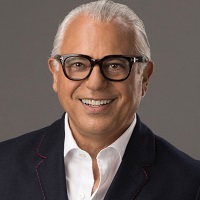
Host
Joseph Mimran
CEO of Joseph Mimran & Associates Inc., founder of Club Monaco & Joe Fresh, and former Dragon on CBC’s Dragons’ Den
Related resources

MyEDC gets you the answers you need
Join more than 30,000 Canadians who rely on MyEDC to grow their businesses with confidence.

Cultural tips for doing business in India
Read this Export Development Canada overview on business etiquette in this key market.
Export Guarantee Program
Let us work with your financial institution to help you get the financing you need.