
EP 21
Investing in niche markets for global growth
June 12, 2024

Export strategy: Investing in global tech companies
Our host, Joe Mimran, is joined by Joseph Khoubbieh, chief investment officer at Valsoft, and Frank Trentadue, regional director of Technology and Diversified Industries at Export Development Canada (EDC). Valsoft acquires and develops international software firms to create long-term strategic alliances and improve their competitiveness. Learn what successful acquisitions entail and how EDC is helping Canadian technology companies succeed in global markets.
Where to listen
Follow us on your favourite streaming platforms to never miss an episode of the Export Impact Podcast. Tune into our podcast for new episodes every second Wednesday at 6 a.m. ET.


[00:01:20.400] - Joe
Hi, I'm Joe Mimran, and welcome back to the Export Impact podcast. As I bet you've noticed, EDC loves to think and talk about exporting, but really, exporting is only half of what they do. The other half is helping Canadians to make investments in other countries. That can be a lot of different things. They might need to break into new markets or expand their reach where they've already established a presence, or they might need to leverage new services and financing options to get them the resources they need to make their investment. Every business has their own unique exporting journey, and it's EDC's job to help. One great example of this is Valsoft. Valsoft is a Canadian business that acquires and develops vertical market software companies. Now, you might not know exactly what that means. I had to do a bit of digging myself, but we're joined today by Valsoft investment partner, Joseph Kubiez, who's going to tell us what they do, why it's important, and how they've been shaped by their own exporting journey. Also joining us is Frank Trentadue. Frank is the Regional Director, Technology, Creative, and Diversified Industries at EDC. He's had the privilege of working with Valsost, and he's going to help us understand how the role that foreign investment can play in growing your business.
[00:02:48.600] - Joe
I'd like to begin today's episode by acknowledging that we're recording from my office in Toronto, which is on the traditional unseated territory of many nations, including the Mississauga of the Credit, the Anishinaabeg, the Chippewa, the Haudenoshoni, and the Wendat peoples, and is now home to many diverse First Nations, Inuit and Métis people. We value taking this moment to deepen the appreciation of our Indigenous communities wherever we are and to remind ourselves of our shared debt to Canada's first peoples. Joseph, Frank, thank you both for being here today. Joseph, let's start with you. The term vertical market software acquisition is a mouthful. Can you break it down for us?
[00:03:35.030] - Joseph
Yeah, of course. That's why we use the acronym VMS. It's a little less difficult to say, but what vertical market software is, is a fancy long term to say that these are software businesses that cater to a specific vertical, meaning they've been built to service a tiny niche within either a geographical constraint or a business constraint, and the software can't possibly be used by millions and millions of people. So it's been tailored with the specificities needed by a certain industry, and then it makes it very powerful within an industry, but only that industry.
[00:04:16.070] - Joe
How did the company get to this one specific art of the software industry? How did you pick this very narrow band of all the things that could be acquired? Because you've acquired, I think the Bellsofts acquired something like 60 plus businesses, from what I understand. How did you narrow in on this particular niche?
[00:04:36.380] - Joseph
It's a good question. We actually yesterday closed our 90th acquisition. So every time we do that, the number keeps getting bigger and bigger. And we're looking forward to our 100th one. Hopefully, hopefully this year, but probably early next year. It all started with the desire to invest in great businesses. And that's an extremely broad statement that eventually leads you to software because software is a great business to be in, especially the good ones. They have an immense amount of operating leverage. They could be profitable, they could grow depending on what you do with them. It's also relatively early in their lifespan. Software It took off about 10, 15 years ago, and we don't really see it slowing now. Then once you narrow it down to software, you have the choice to go extremely broad, so software that can be used by a bunch of people, or extremely narrow. And both of them have advantages and disadvantages. The advantage of going broad is you could have billions and billions of people using it, but there's a lot more competition there. Everyone is looking at the size of the pie rather than the quality of it, say.
[00:05:51.460] - Joseph
And if you go narrow, there's far less competition, but it doesn't reduce the quality of the software. It just makes it less attractive for people to invest in. And the way we counter that is instead of being in one narrow vertical, we're in now 90 of them, and hopefully 200 of them, and hopefully 500 of them. So we've picked the best of both, which is niche. That way, we're under the radar, nobody knows about us, but we multiply that by as much as we can so that we have the size and the scale.
[00:06:23.460] - Joe
I mean, 90 acquisitions is an incredible number. Over how many years has that happened?
[00:06:29.450] - Joseph
It's been eight years.
[00:06:30.810] - Joe
Wow. So you're averaging over 10 acquisitions per year, and it sounds like you're actually ramping that number up now.
[00:06:38.050] - Joseph
Yeah, it started with one, obviously, then three, then five. Over the last three years, we've averaged 20. This year, we're going to be probably 25 to 30. I think next year, our goal would be to do 30, 35.
[00:06:52.470] - Joe
Now, each one of these, I assume, has been successful. What's the key to picking a successful company? Do you have a process that you go through? Is there a committee that goes through all of these potential targets, and then you decide which one is the best?
[00:07:09.750] - Joseph
Look, success is a relative term, right? So luckily for us, there has been no disasters, but we've had acquisitions that have been a incredible and some that have been somewhere between okay and good. For us, a good acquisition can take different forms. But the key to be able to make good acquisitions and that many acquisitions is to decentralize the process as much as possible. Meaning that if myself, Sam, my partner, or Steph, my partner, were in charge of every single transaction, there was no way we could do 30, 35 of that. There's just It's not enough time for us to do that. What you have to do is to basically create a playbook and a lesson strategy and spend an enormous amount of time perfecting it, and then eventually spend even more time educating incredible M&A professionals so that they could do it on their own and that you are only there to either tweak the strategy or support them when they need to. So of course, there isn't a transaction transaction that closes without us knowing. But there are many, many transactions that close with us reviewing them and going through an hour or two of why are we doing this rather than line by line and meeting with everyone and so on and so forth.
[00:08:32.170] - Joseph
So The key to be able to do so much of that is come up with a playbook, perfect the playbook, and then spend an enormous amount of time teaching people the playbook.
[00:08:43.010] - Joe
Can you do this over multiple countries, which is a fairly complicated process, I would think, to vet the companies in different countries, different laws, different languages, different restrictions. You would need professionals in each of these countries. How do you manage that piece of it?
[00:09:01.580] - Joseph
It is unbelievably complicated, especially that we tend to do these things out of Montreal. We don't have any M&A professionals for the time being internationally. So there's no way to do this other than to rely on partners like the EDC in navigating some of the jurisdictions that they're involved in, or going there, sitting down there, and just painfully going through it slowly but truly. Or in, I think, 17 different jurisdictions now, I can't tell you that two of them are even similar. Each one of them is unique, and you got to do it. There's no other way.
[00:09:40.750] - Joe
You mentioned EDC. It's a good segue into introducing Sprink. Tell us a little bit more about why EDC does so much to pursue foreign investment.
[00:09:53.480] - Frank
Yeah, thanks, Joe. Maybe a couple of words also with tech, right? This is a tech company. Tech is different. They're structured differently, so their focus, at least at the start, is not necessarily profits, but gaining market share. Lifecycle is different. So it's important that EDC have people that walk the talks. So I think that's one of the keys to the success, just to position the tech team within EDC. Edc's mandate to support exporters and Canadian investors abroad. Our studies show that the exporting companies, investors experience faster growth, are more resilient, more innovative. They stimulate the economy, contribute to job growth, and our GDP. So, exporting companies, investors, strengthen Canada. And that's why we support these type of companies.
[00:10:40.890] - Joe
It's interesting that when you see a company like this, you really see the value of EDC being able to assist exporters in this way. Because to go into each of these countries on your own without that support is very costly, and it can cost them mistakes as well. And I think the fact that EDC has these connections in each of these countries, they have connections with the local government offices. They've got know-how. I've gotten to learn quite a bit about EDC's extensive network and how helpful it can be. I think it's an amazing program, EDC. And to have a a company like this growing at this pace and for you to be able to support them to this extent is really something. What programs or services, specifically, does the EDC offer to help Canadian companies make these investments?
[00:11:33.140] - Frank
As a value prop, you nailed it on the head. We help in three ways. We help planning for international growth. We help via a network. You mentioned over 20 offices right now around the world. We're looking to increase our exposure into Pacific area, and we help companies such as Valsalff Scale and through a variety of financial solutions. So in this case, actually, Valsalff is a perfect example of a Canadian investor abroad. It's part of their DNA, where the majority of their sales is M&A versus organic. We started the relationship with Valsalff by supporting their balance of sales. In other words, as you know, Joe, it's sometimes necessary to negotiate a balance of sale with the vendor The purchase goes through, but Valsal pays a certain amount up front with a balance due later, and EDC helped finance this balance of sale portion and facilitating that for an acquisition. That's one part of how we started the relationship. Valsoff also benefit from our global expertise. We provided advice for, I remember, an acquisition. They were looking to close in Europe. It didn't go through. But through these touch points, we developed a trusted advisor relationship relationship with the client, and that allowed us, actually more recently, to enter their syndication as a direct lender as well.
[00:12:54.610] - Frank
A strategic partner is what we aim to be for Valsoff. We're hoping to continue in that way.
[00:13:02.650] - Joe
Chose So in terms of the industry that you've chosen, which is the software industry, talk to me a little bit about when you buy these companies, how important is the existing management and what do you do to assist them in being a better company? In other words, as you roll these businesses up, what are the advantages of the roll up? What are the benefits that you bring as a group? And how do these, if there are synergies, how they play into the possibility of the business going forward?
[00:13:35.150] - Joseph
The importance of management is basically 100% of the due diligence process that we do. We are ultimately a software company, but the software was built by the management team, more often than not by the founder and people around them. We prefer if the management team wants to stay on with us and continue building what they've built and help us build the business with us. But we're also flexible if they want to retire after a short transition period or after calls and whatnot. But that doesn't diminish the importance of understanding their impact on the business. There's two important things to do here is that at the end of the day, whether it's the employees, the customers, or the product, their DNA, the management's DNA is in there. If they built it a certain way, if they priced it a certain way, if they had conversations with customers a certain way, it takes years and years to modify that if it needs to be modified, and that's something that we take into consideration. Then it also allows us to see how we're going to partner with them. The most ideal acquisition for us is an acquisition where the management team wants to stay on board, and the management team requires nothing more than us being a board of directors for them, where we can give them strategic advice when needed, capital when needed, but they are fully independent of running the business within the standards of Velosoft and Orla.
[00:15:05.090] - Joseph
It obviously doesn't always happen this way. Sometimes we need to intervene, but that's the ideal acquisition for us.
[00:15:11.930] - Joe
Does this roll-up strategy, I had asked this in my previous question, is there synergies, do you get benefit? Do these companies get benefit from your network of 90 plus? In other words, you have a software for, say, the medical industry, and then all of a sudden it was only used in one country, and now it's through your network, you can make it available in 20 countries. Is that a benefit to these companies? Is that where you get your lift on these businesses?
[00:15:42.790] - Joseph
Perhaps later, when we have 500 or 600 companies. But for now, Because what we do is so niche in industries and geographically, it, of course, can happen and has happened that we're able to cross-sell between geographies and whatnot. But I would say it's more of an exception rather than a rule, and certainly not something that we count on. I think it's nice to have, but not a must have. As we continue to grow and have more presence in different verticals in different jurisdictions, I'm sure it will happen more, but for now, no.
[00:16:18.150] - Joe
And does the size of these businesses vary? I mean, do you find that you go after these under-the-radar companies that are smaller in nature? Are they all similar size? Are you looking at this point from big to small?
[00:16:34.120] - Joseph
Basically, they are always somewhere between 3 and $50 million in top line. It's rare that you'll see one much bigger just because they're so niche in what they do. If they're much bigger, it would mean that it's a huge niche, but usually they're in that ballpark.
[00:16:51.090] - Joe
I would assume that the software industry is very high-margin industry. So be it the revenue may not be enormous, but the margins are quite good in the software industry.
[00:17:02.510] - Joseph
The reason we're in software is that in general, the businesses that we buy, profitability is a choice. So it's mature businesses that have been around for a very long time, and if you wanted them to be profitable, you could. But sometimes the right decision is to revap the software, increase sales, do a bunch of things that in the short term would make you less profitable or unprofitable, but in the long term would lead to a healthier business.
[00:17:29.240] - Joe
Ai is the buzzword these days. It's on the tip of everybody's tongue. How is AI impacting some of the businesses that you're looking at, if at all?
[00:17:39.140] - Joseph
I think in general, we don't know yet. We started by being fearful of it in the sense that if it becomes powerful enough, then It could replace some software businesses that we have. Then we started embracing it way more, and we started using it to enhance the way we do things. There are a few of our developers and a few of our companies that have used it to accelerate the pace at which they develop. We've used it for lead generation, both on the M&A side and on the sales side. We feel that we've set up a team internally. Their job is to basically disrupt disrupt our business using AI. And so far, they've enhanced our business. They've disrupted some old habits we've had, but it's been positive. So it's way too early for us to conclude on this, but we're extremely conscious of it and trying to be ready for this disruption if it happens. But we're still not sure which way it's going to go in the long.
[00:18:43.940] - Joe
Frank, the same question for you at EDC, how are you looking at AI given your EDC tech division and the importance of tech entrepreneurs to EDC's mandate? How are you looking at AI these days?
[00:19:00.790] - Frank
Well, we definitely leverage AI within our own shop. But I mentioned at the very beginning, companies, while we're in that niche, within that industry, we're supporting exporters that tend to be more, as I said, fast growth, more resilient, and innovative. And in there is, I believe, the AI piece. We don't finance or lend to AI companies, per se. It's AI-powered companies. I think that's been said that it's more that numeric transformation is the first step before we get to AI, and not everyone has gone through that numeric transformation, or at least fully. We've seen companies in tech, software, SaaS companies, leverage AI and algorithms and data to be more successful in the market, create a niche in the and allows them to stand out. And that's the impact we want to have. We want to help those companies scale within Canada so they can actually go and be a global player. The word is impact that we use at EDC, and we want to have an impact for these companies so they can go against the strongest around the world. Hopefully, AI is going to be that competitive advantage that they've developed. I don't need to say Montreal is the key hub for AI.
[00:20:14.680] - Frank
I think it's early to say, but that's where we're at.
[00:20:18.720] - Joe
With respect to the way that you interface with Valson, does Valson have a board of directors that EDC sits on? I'm just curious about how EDC interfaces with Valson on a monthly basis, for example, or quarterly, or however often you get together. But how is that interaction? What does that look like?
[00:20:42.560] - Frank
Well, we're not an investor yet, but that is one of our financial solutions that we've actually leveraged over the last several years, ie, being an investor, direct investor. To answer your question, we don't sit on the board. We're not an investor, but we are, at least I'd like to think we are a strategic partner, a Joseph says that we are a strategic partner when he speaks to some of his lending partners, financial institutions. For us, it's an account manager, a relationship manager, client relationship. I'd like to think of it a little more as a trusted advisor. That's the word I use. It's regular touch points throughout the year, whether it's their legal counsel, a variety of people within EDC. We're going to bring our executives over to Valsal next week, sure in a couple of weeks. Different touch points at different times in the year to make sure we're on top of things as the company evolves in terms of needs.
[00:21:43.630] - Joe
I mean, it's such a dynamic business at the pace that they're growing. Joseph, you guys are growing at such a pace. Do you manage any one specific business in addition to having an overall investment role? And how did you join Valsoff? Were you part of the founding group? Give Just a little history there.
[00:22:05.090] - Joseph
I joined when we had made our third or fourth acquisition. My partners, Sam and Seth, had founded the business. I was working in finance at the time. We had a previous relationship, and we knew of each other and knew that we would want to work with each other. They brought me in to manage our fourth acquisition, and it was a terrible idea. I did everything I could to ruin that business. I'm more comfortable in front of my screens and spreadsheets than Running a day-to-day business. But the idea behind it was for me to understand what we're buying so that it could be effective on the investment side. For the year or so that I did that, while it This was the most painful year of my life, I gained an insane amount of appreciation for operators, software developers, anyone that works in software, anyone that really operates a business day-to-day. It's a lot tougher than what I do for a living. And also a great amount of knowledge in terms of what represents a good business, what lever can be pulled and whatnot. So for everyone's sake, thankfully, for the lenders' sake, I don't manage any business.
[00:23:15.930] - Joseph
I only manage on the investment side of But if I needed to, and if everyone around me wasn't available, I could step in. But no, my day-to-day is much more on the investment side.
[00:23:28.070] - Joe
How do you go about finding these businesses? Do you have services that will provide information on businesses in your specific field?
[00:23:38.430] - Joseph
Yeah, well, we have a whole team here in Montreal and around the world. Their only job is to populate our database with vertical software businesses. It's estimated that there's over 100,000 of them around the world. We have about 70,000 of them in our database. And then after that, it's about how many we can reach out to during the week and how we reach out to them, I think. A lot of those businesses are on people's radar. But if you're able to approach them with the right set of circumstances, with the right mind frame and whatnot, they'll eventually answer you and you'll be able to present. We try to get on about 100 calls a week with founders and software businesses. If we're able to do that, then we'll be able to close a large transaction.
[00:24:27.120] - Joe
Are people hearing about Valsoft? Are they now starting in the industry? Are people starting to know about you so that when you do call, it doesn't sound like a weird cold call. Hey, I want to buy your business. There's a lot of those cold calls that come through. I guess once you have that stature of being an acquirer, I would think it'd easier to get to the owners.
[00:24:50.320] - Joseph
I think so. I think more than half the transactions we did this year were with people that we had been in touch with for over 24 months. It's rare that some of our M&A guys get on call and people are like, Oh, yeah, I've never heard about. So people maybe know the name, or maybe no one says those Canadian guys that buy businesses, or those Canadian guys on Constellation software that buy software businesses. Weirdly enough, I would be disappointed if everyone knew us. It would mean that we've tapped out what we could do. So it still happens. I mean, it happens frequently, but we're more known than we were last year and the year before. And I think it's going to continue to get there, but there will always be opportunities for us to introduce our store.
[00:25:39.040] - Joe
I had heard that one of the aspirations is to be a public company. Is that still the goal?
[00:25:44.650] - Joseph
It is, yeah. We feel that it's a natural progression for the business. Our competitors are public. It's a company that is intensive in its capital use because there's great uses of capital for the money that we generate. So it makes sense for us to be a public company. We are taking all the necessary steps to do it internally and externally, and hopefully within the next 12 to 18 months, we'll be ready. Nobody's dream and aspirations to be a public company, and no one is forcing us to do it. We just think it's a natural progression for us.
[00:26:18.240] - Joe
I'll tell you, it's an amazing story. The growth that you are having through acquisition is really a great model for other companies to look at, and the fact that you're in so many different countries as well. The fact that EDC has been such a good partner, I think, also speak volumes. If you were to give advice to other companies looking to export, looking to acquire, what one, two, three pieces of advice you would give Joseph?
[00:26:46.520] - Joseph
I would say it to Some of the law firms that have helped us, some of the accounting firms that have helped us, and some of the other lenders that have helped us. But when you're trying to go outside of your comfort zone, which is the local comfort zone, your partners are unbelievably important. It has to do when they can give you a piece of advice that can save you time and money and headaches. I don't even know how to put a value to that. But having the right partners when you're trying to do that is the most important thing. Choosing your partners where you're trying to go internationally is literally the most important decision you've made.
[00:27:26.560] - Joe
Well, Frank, if I ask you the same question, if you had a piece of advice for those looking to export and to purchase companies outside of Canada, what advice would you give them?
[00:27:39.290] - Frank
We surveyed companies and asked, what do they value from EDC? And the Planning, Helping Plan International Growth, as Joe alluded to in that network, came out as a one, two. That doesn't cost anything, Joe. It's free of charge that we provide around the world to mining companies and investors. I'll do a self blog to say, in order for us to actually work and understand your business, we need to nurture the relationship. So call us early.
[00:28:10.850] - Joe
Excellent. Joseph Koubier is an investment partner at Valsonst, and Frank Trentadue is and Frank Trantadouet, his Regional Director, Technology, Creative and Diversified Industries at EDC. Thank you both for your time and your insight today.
[00:28:27.510] - Joseph
Thank you.
[00:28:28.170] - Frank
Thanks.
[00:28:30.300] - Joe
Thanks for joining us today on the Export Impact podcast. If you enjoyed today's episode, we'd love for you to subscribe, rate, and leave us a review on your favorite streaming platform. See you back here in two weeks.
Host & guests
-

Guest
Joseph Khoubbieh
Chief investment officer, Valsoft
-
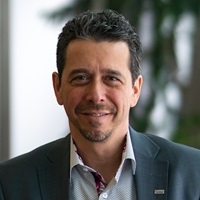
Guest
Frank Trentadue
Regional director, Technology and Diversified Industries, Export Development Canada
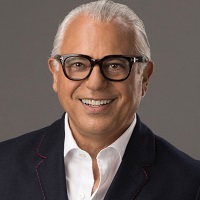
Host
Joseph Mimran
CEO of Joseph Mimran & Associates Inc., founder of Club Monaco & Joe Fresh, and former Dragon on CBC’s Dragons’ Den
Related resources

MyEDC gets you the answers you need
Join more than 30,000 Canadians who rely on MyEDC to grow their businesses with confidence.

Craft strategies for profitable global expansion
Learn how to select, execute and optimize the right expansion strategy for you and your business.

International Finance Direct
Get financing support for new investments in foreign markets. We help you scale revenue and capacity for global growth.