
EP 05
Conscious consuming: Goodee’s story of exporting style, design and beauty
Oct. 11, 2023

Goodee’s story of exporting style, design and beauty
In this episode of The Export Impact podcast, twin brothers, Byron & Dexter Peart, Co-founders and co-CEOs of Goodee, chat with host, Joe Mimran, about their passion for style, design and beauty. What emerges is a fascinating discussion about their company’s journey and how exporting their products to the United States lead to partnerships with suppliers from 20+ countries around the world.
Where to listen
Follow us on your favourite streaming platforms to never miss an episode of the Export Impact Podcast. Tune into our podcast for new episodes every second Wednesday at 6 a.m. ET.


Joe Mimran 0:01
Hi, I’m Joe Mimran, and welcome back to Export Impact Podcast. We’ve all been hearing for years that the future of retail is online, and the facts are hard to argue. In 2022, Canada’s online sales reached about $80 billion. But online markets aren’t immune to market forces. With COVID-19 lockdowns lifted, and privacy issues making it more difficult for marketers, there’s been a slowdown for some online retailers. In addition, new trends have emerged with more and more Canadians growing aware of the social and environmental impacts of the products they buy. They’re changing their shopping habits to reflect their values, and retailers who don’t respond, are in danger of being left behind.
My guests today have many thoughts about this growing trend, often called “conscious consuming.” Twin brothers, Byron and Dexter Peart, started the online marketplace, Goodee, in 2019 using their sophisticated style sense and big hearts to curate dreamy home goods with meaning. Their mantra, “Good design, good people, and good impact.” says it all. Hope you enjoy the conversation.
I’d like to begin today’s episode by acknowledging that we’re recording from my office in Toronto, which is on the traditional unceded territory of many nations, including the Mississaugas of the Credit, the Anishnabeg, the Chippewa, the Haudenosaunee and the Wendat Peoples. And is now home to many diverse First Nations, Inuit and Métis people. We value taking this moment to deepen the appreciation of our Indigenous communities wherever we are, and to remind ourselves of our shared debt to Canada’s First Peoples. Welcome to the show, Byron and Dexter. So happy to have you here.
Dexter Peart 1:51
Thanks, Joe. Super happy to be here. Great to be together.
Joe Mimran 1:54
Let’s start by having you tell us just a little bit about both of your backgrounds.
Dexter Peart 1:59
You got twin brothers here today: You’ve got Dexter, the younger of the two brothers by 59 seconds. A little bit about my background. We started our previous company, which was called WANT Les Essentiels, back in 2007. Before that, we also had a distribution company called Want Agency that we launched in 1999. It’s been well over 20 years that Byron and I have been deep in the fashion-lifestyle business. We ended up exiting WANT Les Essentiels in 2017 to start up Goodee in 2019. It’s been a long journey—we’ve learned a lot. Full disclosure, we’ve known Joe for many years, as well too, just as a peer, and a colleague, and someone who has always been an inspiration to us over the years in the fashion business in Canada.
We continue on a journey that’s about style and lifestyle. Joe, what you brought up about good people, good design, and good impact, it really is what leads the inspiration for Byron and me on a day-to-day basis. It’s how we get out of bed. And this stage of our lives, we love working with good people. That’s really what it’s all about.
Byron Peart 3:04
Byron speaking here, and thanks for that question, Joe. I think our mum would actually have something to say to this as well, but Dexter and I are born and raised in Canada. Coming from a family of immigrants who came to Canada for education, but also opportunities for family, as well. Our parents actually have a great academic background. Our mother’s a microbiologist and our father was an economist, both working for the government services in Ottawa. They always saw and recognized that we had this creative element, not only ourselves, but our brothers as well. We also have an older brother who’s in architecture, and another brother who’s in the high-end kids’ furniture business. So, to them, there’s nothing genetic that’s happening here, from the academic side through creative.
But what was really exciting is that, for them, they always nurtured that in us from a very young age. They provided us opportunities in our personal lives, and through our education to discover more of ourselves and what it was driving our impulse and influences. We both studied at Western, which some of your audiences might have a connection to. We went to university and studied economics, following our father. But on the side, which I hadn’t told my parents at the time, I was taking elective courses at Brescia College in History of Fashion & Pattern Making because it was also something that was of high interest to me. And that continues to be a true line for Dexter and myself personally and with our work, is that we have this extremely high level of curiosity. We’re curious about people; we’re curious about design; we’re curious about the world and how it works, and what our role is inside it—might be a big role inside that because a lot of people go through this period of self-discovery and self-reflection. We’re constantly asking ourselves or pushing each other to ask questions or figure out how we could do things better, how we could be better citizens, or how we could do better business, as well.
We are totally passionate about style and design, and beauty, probably more than fashion itself. I think someone like yourself, Joe, you could attest to that beauty in nature, but then finding beauty in the real world and objects. And I think sometimes we’re driven to look at products and things that surround us at face value, but there’s so much more in any product that in our life, whether that’s a physical product, a story. What we’re doing is trying to get to that much deeper narrative. It’s not easy in these times when everyone’s looking for quick, short ways to get across messaging. But I think what’s important for us is always to tell the deeper story about why things need to exist. And that’s an exciting thing to do through a business and a platform as much as to do through an individual conversation, too.
Joe Mimran 5:25
I think you’ve got such an interesting story. You’re twin brothers, you both have incredible taste, and it shows in everything that you’ve ever done. I know your products intimately and have followed your careers. So, it’s always curious to me as to how people get on when it comes to creative decisions because it’s so subjective. It was a big shift for you guys to go from apparel-based, accessory-based business to now being a marketplace for home products primarily how you started. What was the big motivator for making that shift?
Dexter Peart 6:00
It’s an amazing question, Joe and it’s not one that happened overnight. Like when I was saying before about the previous business that we had for 17 years, we had brought a variety of fashion brands into the North American market: Acne Studios, Nudie Jeans, Filippa K. We love fashion, that will never change.
But we did see a shift in the market where in the 2010s, maybe after the economic crisis, that a lot of products started looking the same. There was a lot of promotion happening in the apparel space. It became harder and harder to find the true beauty that Byron is speaking about, the craftsmanship in the apparel that was being put forward. And we really wanted to have a conversation about things that were built to last. We wanted to have a conversation about products that people would use, and not just one person, but multiple people. And, as we started designing our own stores, and been designing our own homes, we’ve always had a love for interiors, which I think is a natural evolution of fashion anyways. And we thought that, if we weren’t going to try to completely bend the fashion apparel market to a more sustainable environment, which is tremendously difficult, we thought that the environment of being in home was just going to be an easier conversation starter, a better tableau for us to be able to experiment with our narrative.
So, we started designing a hotel in Belize that we got really excited about right at the beginning of launching Goodee. It just felt like it was the right place for us right now. Just add one little piece there, Joe. Obviously, when we were ideating on Goodee, we could never have imagined that there was a pandemic around the corner. And then, you just think about the fact that we were early on talking about spaces and how important those spaces are to people. And to have the pandemic, it almost was able to crystallize how important spaces, how important the things that surround us are, and how we cherish these environments. That was the impetus for Goodee, maybe we had this ability to be able to see the future a little bit. But it’s just been a really interesting environment to be in, to talk about home and decor for people. That's been really exciting for us.
Joe Mimran 8:11
You talk about the aesthetic, but there’s also this “conscious consuming” that’s going on. And I think people are voting with their wallets in terms of social platforms that they want to support and products that they want to support. Talk to me a little bit about that because I think Goodee does do that, right? This conscious consuming. Who’s your customer and how do you make your decisions on the products you buy?
Dexter Peart 8:35
I think that’s a great point where you were before Joe, just about the proliferation of products. We’ve been driven to this consumerism from the companies that are in the market in all ends of the business, that are constantly expecting us to buy more, to consume more, whether that’s the foods that we eat, the clothes that we wear, the cars that we drive. I think that what we recognized early on with our project at Goodee was that there was an education piece of this as well.
We had to inform and we couldn’t only expect that a customer, just by putting a labelling on something, or saying that it’s doing good, that we had to show them and also educate and give more meat on the bone for that. I think that’s what is really our unique approach and what’s resonated with our audience because they’re looking for a trusted destination. We recognize that it’s very difficult for consumers to make choices when they walk in. If you just take the simple idea of walking into a grocery store and everything has some kind of label on it, like, how could you get that customer to believe that your label or your narrative is true and honest? And our approach is, we want, through this platform, that we might take longer for them to go through that buying process, or gifting process, but that we’re going to inform them and educate them, and build that trust together with them. So, how do we do that?
First and foremost, for anyone who’s listening to this, if you come on the platform, every product and brand has an associated value and, in many cases, multiple values that brand and product support. So that someone who’s—and as you just said—who’s looking to buy, consume, or give a gift with their wallet is able to do that and really attach something that’s important to them to the product that they want to bring into their lives. That takes twofold.
- On the supplier side, that means we have to work together with all of our suppliers and identify what it is that they’re doing, where they’re making a material difference in their sourcing, in their product development, how they package, how they support their local communities, whichever benefit they’re providing.
- On the consumer side, we have to translate that to the consumer as well. It was important for us from the beginning to widen the net around this sustainable development conversation. A lot of times brands, because it’s easier maybe, will just talk to recycled plastic, or waste reduction. We’re inspired by the sustainable development goals that we identified—these 12 causes that we think are important to us. And that through a lot of stakeholder engagement research we did in the beginning, we knew were going to be important to our customer, as well. But there’s more than 50 partners on the platform from more than 25 countries globally whose products have a range of benefits, societal and environmental benefits, that we are very inspired by. It’s not just beautiful products, but products that are extremely well-made, that are made to be passed on for generations, celebrated in the type of work that they’re creating. And we’re bringing it all together to make this tapestry of beautiful interior furniture.
Joe Mimran 11:21
That longevity of product is so critical. Who are your primary customers? Do you sell to just individuals, or do you also sell to other businesses and wholesalers?
Byron Peart 11:31
From the very beginning, we thought about the end consumer because, like most entrepreneurs, we were thinking about what we were looking for. We knew that we wanted to make a better choice in the decisions that we were making, and there wasn’t necessarily a platform that was able to do that for us. So, we’ve always been thinking about the end consumer as our main audience and that’s why we launched as an e-commerce first business. And we launched on Day 1 thinking about this as an e-commerce platform. What’s actually transpired over the last couple years, which is extremely exciting, is that while we’ve been focused on the customer, there’s been a tremendous amount of interest from businesses, as well as, architects and designers, hotels, just a swath of different consumer profiles that are showing up.
There’s no doubt that the majority of our customer base continues to be a typical end consumer, the majority of our businesses in the United States, as well. We’ve seen that it resonates, obviously, on a one-to-one basis as a pure e-commerce business. But we’ve also seen that in environments, like wholesale and trade, and then also business-to-business, we’ve also had a lot of traction there, too.
Joe Mimran 12:39
Is there a specific criteria you use when you’re vetting products? What do you go through? What’s your internal process for making those decisions?
Byron Peart 12:49
We developed our own assessment reporting tool. It starts with a 40-question survey that’s done virtually, the thing that Dexter mentioned before. We actually launched in 2019. In May, nine months into our development, obviously, we were locked down, so we had to evolve a lot of our auditing process. It was great because it actually, in some ways, works better. We’re able to speak with all of the employees, the artisans who are working with our partners. What we do is we’re looking at everything from the ESG standpoint: The governance of the company, we’re looking at what the ownership structure is, we’re looking at who’s involved, pay equity. It’s quite a lot of information, specifically around resource management materials. We’re looking at waste-reduction initiatives that companies are taking and making. We happen to be ourselves a B Corp-certified company. I also happen to be a board member with B Lab North America. It was important for us to be part of an ecosystem that wasn’t only saying it’s doing good, but reporting on that basis.
What we did with Goodee is we brought that same mindset into our business. So, all of the partners are not only coming to us and saying, “OK, yes, this is intensive what you guys are asking us for, but we want to work together with you because we feel like we’re a part of a bigger ecosystem that’s making change.” It’s fully through product, but also how companies are operating and know-how, they’re running their businesses. It’s robust.
And then the one thing I’ll say to add to that is that, already in our second year of business, we published an impact report, which for a company of our size, was quite significant. Now, we’ve done two, and our third one came out in May. So, all of that information that we’re not only collecting, but we’re monitoring, we have an impact framework plan of development. All of our partners are along that journey with us, and we’re reporting to our end consumer. It’s right on the home page when you come on the platform, so you can see the effect and the impact of that work that we're doing.
Joe Mimran 14:41
That’s excellent, Byron. I think you were saying 85% of your products are exported to the U.S. at this point, which is pretty significant. And that’s really the main goal of these podcasts is to encourage Canadian entrepreneurs to embrace exporting and to learn from wonderful entrepreneurs, like yourself. Just talk a little bit about the decision to really push into the U.S. What were some of the hurdles that, perhaps, you had when you first entered into the U.S. market?
Dexter Peart 15:14
Byron spoke before about how we launched before the pandemic. I think that the United States is already a pretty noisy market. It’s not for the faint of heart to be able to go into the U.S. and try to make a splash, and try to get traction, and try to build awareness and customer engagement. Very early on, because we have had a deep background working in the United States, we felt comfortable that we wouldn’t be able to crack into the market. But it was tough. The first nine months, it was a little bit crickets at the very beginning, like starting out any business. But we stuck with it. We persevered because we knew, not just for the size of the market, but we had an understanding that the stories that we were trying to tell were going to resonate in the American market.
America has 332 million people, I don’t think that what we do resonates in the entire country, but there’s no doubt that there’s pockets, coastal pockets. And then, we’ve seen California and New York are, by far, our biggest areas of penetration, but we’re also penetrating in Seattle and Portland, in Austin, in areas around Miami. There's a variety of opportunities within the U.S. I think what we always tell young Canadian entrepreneurs is to try to build a product or a story that’s strong enough that it would work for an American audience, not just a Canadian audience. And then, when you do that, just to have discipline to be able to push through.
We got lucky in the sense that when everyone was back at home, we were able to tell a story when people were more attuned to listening because they weren’t living these crazy, frenetic lifestyles. And they just tapped into the story that we were telling. That gave us the opportunity to build what you were just saying before, Joe, that kind of penetration in the U.S. Frankly, we hadn’t even been able to travel into the market, but we were able to communicate in that market through a tremendous amount of really great press because what we were doing was different. Even though it was coming from Canada, the press really resonated with our story. We were able to do some really great things from a marketing standpoint internally, as well and tap into the U.S. market. It’s a challenge. It continues to be a challenge today, Joe, trying to be able to cement a young brand in such a large market. I think there’s a few Canadian brands that are in the American graveyard, but we’re working at it every single day.
Joe Mimran 17:31
You got a tremendous amount of PR, as well. I think you should pat yourself on the back because the PR that you received is highly unusual for such a young company. You can maybe talk about that. And also, was there any particular services or programs that you took advantage of to be able to help you in buying inventory, financing your business?
Byron Peart 17:55
I think a couple of things that came to mind right away, one of them was more operationally tactical from us, Joe. When we launched Goodee, we put our first third-party warehouse in the middle of America. Before we even opened up the company, we knew that it was very important for us, strategically, to plant the inventory that we had in Missouri. Not the sexiest place in the world, but directly in the centre between California and New York, and these two to three days trucking to each one of those places. It was important to us that, logistically, we were able to be able to operate in the U.S. from Day 1, and not have those sorts of tensions on the borders of having goods that were in Canada, and then having to cross-dock them and do extra documentation. Those things were critical from the very beginning.
Specific to some of the early opportunities that we had, I think anytime you come to businesses as second-time founder, it’s obviously easier than if it was a first time. Because Byron and I had exited our previous business, whether it was meeting with investors, meeting with banks, meeting with potential suppliers, we probably had a little bit of a leg up. But that’s also a function of the fact that we’re in our 50s now, and we’ve been at it for more than a minute. But one of the things that we did do, specifically with EDC, early on when we were looking for additional loan financing. EDC had a matching program for a line of credit, and they were able to match the bank that we were working with to be able to support that. I think that was one thing that was an important element to us being able to have the kind of additional capitalization in the business outside of the equity that we had raised inside the business. And we were able to do that quite early. I think that’s one area where we’ve had some success.
Subsequent to that, while we haven’t necessarily taken advantage of a lot of these services that have been available, there are so many services, whether it’s consulates and offices in the U.S., I know that EDC and other program providers have offered us to be able to use their physical spaces at embassies, or office spaces where you’ll be able to do trunk shows, or show your product. There’s a lot of options that are available to small- and medium-sized businesses that they can take advantage of entering the U.S. without having to have an office in the U.S. And I could say, just from Goodee standpoint, partly is a function of the fact that I think we did get a lot of press. We have had a variety of different service providers who have reached out to us and offered us those opportunities.
Joe Mimran 20:29
That’s terrific. I know that when I was building my businesses very early on, the early days, I spent 60% of my time raising capital. Unfortunately, EDC wasn’t around to help, and we were exporting into the U.S. So, it’s quite a leg up when you can get that kind of support from someone, like EDC.
I’m just going to shift gears here just for a second. Diversity is a big word these days, and maybe it’s at the core value at Goodee. I understand that 50% of your offerings come from female-owned businesses, and 40% is BIPOC-owned. Those are amazing statistics. I would love to get your thoughts on all of that.
Dexter Peart 21:10
I think from the very beginning, Joe, our position was that there was a lot of amazing products, a lot of great craftspeople and artisans from around the world who were not necessarily getting noticed. When there were conversations now about 15% pledges, we don’t look at these as percentages or numbers, we just thought that there’s a lot of great stories out there. And if we can unearth that, then we can have a conversation about design that just didn’t feel as monolithic as a lot of the design that we know right now today.
Part of Goodee is about discovery. And so, it was really exciting for us to say there’s so many great female creators, there’s so many great BIPOC creators, what if we created a platform for them to be able to showcase their creations alongside some of the most well-known or well-aspired brands from around the world? And so, it’s shown up in the business as 40% or 50%, I think these are the things that we find consistent with what the general thesis was and why we wanted to do Goodee in the first place. And those are commitments, I would say, that we’ve also made as an organization as well, that those are the kinds of representations that we would like Goodee to be about.
Joe Mimran 22:22
Has it benefited your business to be focused in that way? Do you get a different consumer sentiment and following as a result?
Dexter Peart 22:31
I’m going to let Byron jump in, but the one thing that I will say is, when we talk about those, that’s the sales, that’s not just the brands that we have on the site. This is the revenue that we’re turning over. Our customers are already telling us that’s what they want. They’re buying from female-led businesses, they’re buying from BIPOC-led businesses in these kinds of proportions. And so, it’s rewarding the business because that’s what people are saying they want from us. That’s really exciting, for sure.
Byron Peart 23:00
Even just bringing this back to ourselves. In our earlier stages of our professional development, we were often the only Black brands that were in showrooms, or were in buying appointments. And so, we had to find our own way and there were, in many cases, gatekeepers that were—maybe not even fully intentionally—deciding, “We don’t want to work with this brand,” but they were just not looking to the consumer. But for all of the suppliers and makers to feel like there was this destination, that they weren’t only going to be welcomed, but that their stories were going to be spotlit, highlighted. That’s a very powerful thing. So yes, we’ve seen it from the customer side. But from our brand and partners, they’re very excited to be part of something that feels different and feels much more global. We’re diverse, but it’s really changing the landscape of what design looks like. That’s a very rewarding thing for us, as well.
Joe Mimran 23:49
It’s a good thing you mentioned that you’re Black designers because this is a podcast, nobody would have known that without you mentioning it. So, that’s helpful. What’s next for Goodee? Where do you want to go? What’s the future look like?
Byron Peart 24:03
I think a few things. Retail is in our blood. We want Goodee to touch as many hearts and minds as we possibly can. We are in the human business, so while we’ve just talked about how the first three years of the organization have been very much focused on e-commerce, we really think that there’s a tactile element to seeing these products, to touching these products, to owning them. We’re really excited. In the very short term, we plan on doing something in California. California represents more than 35% of our business, so we want to get closer to our customer in California who’s already shown that they want to engage with us.
On the longer term, obviously, we see a great opportunity in working directly with architects and designers in trade. As much as we talked about it before, about having these amazing items in people’s homes, we love the idea of having them in hotels and office spaces. That’s a natural transition of what we’re already seeing inside the business, as well.
I think that if I was to listen to this podcast in five years, I’m hoping that you will see Goodee in so many different environments, and it’s going to feel super normal. This is going to feel like an obvious conversation about beautiful products made by diverse people, and it’s going to seem very normal. We’re still at the early cusp of these conversations around ESG, conversations around diversity, conversations around design, Joe. Like how many people are really talking about good design, right now? And any conversation that we want to be a part of includes buying better and we want to be at the forefront of that conversation.
Joe Mimran 25:37
Wonderfully said. What’s the one piece of advice that you wish you received when you were launching Goodee?
Dexter Peart 25:46
I think probably a revelation and advice is how long it takes to build trust. At the end of the day, the great brands, great businesses, great companies, they need to earn trust. It’s incumbent on creating a business. And we all have seen these great hockey stick stories of businesses, but they tend to be the ones that are not still around five to 10 years later.
Building trust is how to build longevity, and it needs to be earned. It’s not overnight. We constantly have to reaffirm the work that we do it at the highest quality. Always staying ahead, and faster, more nimble than the competition, and being true and honest in building the trust. Because the audience is super savvy, they're super smart and we believe that audience will only stick around if we are authentic and trustworthy.
Joe Mimran 26:33
Great response as well. And just fascinating to hear your story and to see how far you guys have come in the very short three years that you started your business. To be so well-exposed in the U.S. and to make the strides that you’ve made is really quite amazing. I think you guys do an amazing job.
Thank you so much, Byron and Dexter. Thanks for spending time with me today and telling your story. It was a real pleasure. Thanks to everyone for joining us today on the Export Impact Podcast. If you enjoyed today’s episode, we’d love for you to subscribe, rate, and leave us a review on your favourite streaming platform. See you back here in two weeks.
Host & Guest
-
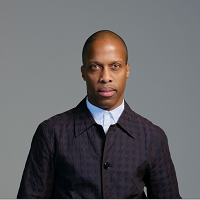
Guest
Byron Peart
Co-founder and co-CEO, Goodee
-

Guest
Dexter Peart
Co-founder and co-CEO, Goodee

Host
Joseph Mimran
CEO of Joseph Mimran & Associates Inc., founder of Club Monaco & Joe Fresh, and former Dragon on CBC’s Dragons’ Den
Related resources

MyEDC gets you the answers you need
Join more than 30,000 Canadians who rely on MyEDC to grow their businesses with confidence.

Export Help Hub
Find the answers to the most frequently asked trade questions from Canadian companies—instantly and for free.

Sustainable finance
Our sustainable finance solutions enable businesses to continue to grow while transitioning to more sustainable business practices and materializing their ESG objectives.