
EP 10
Unwrapping success: Mid-Day Squares’ chocolate story
Jan. 10, 2024

Snack on this: Mid-Day Squares uses storytelling to go global
Joe Mimran sits down with Jake Karls, co-founder of Mid-Day Squares, to talk about the power of storytelling to build a brand. Using this effective marketing strategy, Mid-Day Squares has expanded their business and gained a loyal audience, both domestically and abroad, through social media. The way Karls tells it, exporting almost sounds easy.
Where to listen
Follow us on your favourite streaming platforms to never miss an episode of the Export Impact Podcast. Tune into our podcast for new episodes every second Wednesday at 6 a.m. ET.


Joe Mimran (00:02): Hi, I'm Joe Mimran. Welcome back to the Export Impact Podcast, an ongoing conversation with Canadians who are dreaming big, taking risks, and making a global impact. I'm joined today by Jake Karls, the founder of Canadian snack producer, Mid-Day Squares. Jake’s flagship product is what he calls a functional chocolate bar. It can fuel your body with nutrition at the same time as it satisfies your sweet tooth. I think that sounds pretty good and the market seems to agree with me. Five years ago, Jake’s company was making 80 bars a day. Now, they're making between 60,000 and 90,000 a day. It's really a heck of a success story. How did they do it and what’s next for Mid-Day Squares as they get ready to take on the world? Let’s find out together.
I’d like to begin today’s episode by acknowledging that we’re recording from my office in Toronto, which is on the traditional unceded territory of many nations, including the Mississaugas of the Credit, the Anishnabeg, the Chippewa, the Haudenosaunee, and the Wendat peoples, and is now home to many diverse First Nations, Inuit and Metis people. We value taking this moment to deepen the appreciation of our Indigenous communities wherever we are, and to remind ourselves of our shared debt to Canada’s First Peoples.
Welcome, Jake. Great to have you on today’s podcast. We’re all very excited to hear Mid-Day Squares's story. It’s an amazing story and I got to know you personally when you came to visit me in my office. I think it was about six months ago. I was really fascinated by your energy level and the fact that you’re doing something so unique in the marketplace and it’s certainly showing in terms of the numbers.
But before we get to the business, I want to know just a little bit about you personally and your background and how you first got started in business and what were some of your early entrepreneurial experiences.
Jake Karls (02:05): Joe, I appreciated it when I came to see you. You're an inspirational character and I was pumped that I got the opportunity to hang with you. But for me, my whole journey was zigzag, actually. When I was in high school, I was a class clown. I was the one who was always pranking the professor, throwing the water balloons, getting into trouble, actually being authentically myself, to be honest with you. And I was having the time of my life, but I was getting really bad grades. I was failing miserably. My parents were called into the principal's office in Grade 11. They said, your son’s actually not going to graduate. He’s going to be the only one in the grade not to go forward because we live in Quebec and he’s going to stay back and redo Grade 11.
At that moment, I made that decision myself and said, “I don’t want to be the black sheep of this group. I don't want to be the one who's staying behind when everyone else is actually moving forward.” And I decided to change who I was and I started to take my academics seriously. I studied business and did very well. Then went to Western University to study to be an actuary. Again, I tried to show everybody that I was like “academically smart.”
Three years in, I was sitting on my couch, couldn’t get a job in investment banking because I was studying to be an actuary, tried for every investment bank. I was actually watching Shark Tank. I was watching this individual on screen, pitch his dream to these five sharks. He had two mortgages on his house. He was broke. He had three kids and he looked so free and happy. Yet, I was sitting on my parents’ couch with no job, in school, no responsibilities. And in that moment, I decided that entrepreneurship was what I needed to try.
So, I went out and I launched my first business instead of getting a job. It was a fitness company, Outdoor Bootcamps. And what I learned in that business was I made a lot of capital in terms of cash because I was really good at being loud, high-energy enthusiastic, like we discussed earlier, and I basically used Snapchat to grow it. I did free bootcamps across the neighbourhood where I grew up. And then I bought a bunch of equipment to put outside. In the summertime, people love being outside, so I trained people from 6 a.m. till 9 p.m. every single day. And I did that for three years straight. I had a very healthy business. But I lost my passion after the third year and I decided to close the business.
I decided to launch a second business, which was college parties across campuses across Canada. And then I would try to sell them clothing to make the money on the parties because I wanted them to have fun at the parties and then know the brand and then try to sell them clothing I’d print on items like this. That business didn’t work out. I ended up losing the 80-plus thousand dollars, but the brand was hot, the noise was hot, the community was vibrant. I realized that my skillset was actually building brands, not operating businesses.
That’s when my sister and my brother-in-law approached me and they're like, “Hey, we got a chocolate bar idea. We need you to be the brand builder and the third partner, do you want to join?” It was perfect timing and that’s when I joined. So, at 25 years old, I joined the Mid-Day Squares as the third partner and we’re four-and-a-half-years later today and still in business, which has been a ride.
Joe Mimran (04:47): Well, it’s been an amazing ride and it’s interesting that you knew right away that you wanted to be an entrepreneur. I think a lot of people say they want to be entrepreneurs, but it takes a certain character and a certain individual to actually be an entrepreneur because there’s a certain amount of risk involved in being an entrepreneur. I’m sorry that you had such a bad experience in the apparel industry, but if you think your industry's tough, the apparel industry’s even tougher.
Jake Karls (05:16): I know.
Joe Mimran (05:17): But I think you’ve got the right spirit for it. And I love the story of seeing an entrepreneur and that's what I learned when I was on Dragons’ Den. I saw people who had real passion for what they were doing. And I think passion is at the heart of it and that’s what I get from you. So, when you were first launching the business, what did you do to raise capital?
Jake Karls (05:38): For my first two businesses, I didn’t raise any money. I used my own personal money. Mid-Day Squares, the three of us used everything we had in our bank accounts. My sister, my brother-in-law and I, my partners, we each put $150,000 in to get product-market fit. That took us about a year in that we could use that capital to show that we could sell chocolate bars. We had a million-dollar runway, we decided to raise some money and here’s why it worked out well for us. We decided to build out loud: Our marketing approach was to show everything on social media. That means on LinkedIn, on Instagram, on TikTok...actually TikTok didn't exist at the time, at least in Canada.
We used those platforms to show customers, potential investors, potential retailers, who we were and what we do and the hard work that we put into the business and the true authenticity of who we are as individuals. What that did was it actually attracted investors to reach out and be like, “Hey, what is this company? You guys are doing something different. Your product’s tasty. I could buy your product to try it, but now your storytelling is really authentic. You're showing the whole story behind the curtain of the business.” And that's what happened.
Boulder Food Group in Colorado reached out to us and they said, “Hey, we love your product, we tried it, you've got a really cool brand, the story is capturing. Can we come visit you in Montreal?” I couldn't believe it and basically, how they did that was they wrote a handwritten letter and sent a massive box with all their portfolio-branded products and said, “Do you mind if we come visit you guys?” Immediately, we were so excited that they came in and they became our first investor and they continued to invest in us over time. But I think the secret was we had product-market fit, so I think that's table stakes.
I think the second thing is that we built out loud, so we were able to get the attention of the investor before even reaching out to the investor. I think that allowed us to have a little bit of a playing field more than other brands did.
Joe Mimran (07:22): And I think it’s more pull than push, even though you were pushing very hard, like you said from an investor standpoint. They came to you and that’s always a better position to be in. And this first investor, obviously, had a leap of faith in yourself. I'm going to get back to the marketing because I think the marketing is at the heart of your story and I’ve got a whole bunch of questions related to that. But just talk to me about the product first because the product is also very unique from what I understand and the distribution of it is very unique.
Jake Karls (07:56): Yes, you’re right. There’s no company without a good product. I think you can have the best storytelling or marketing in the world, the best engine celebrities, whatever you want to have. But in the end, you need the consumer to come back and buy the product over and over again and especially in the consumer packaged good space. Right? For us, the way this product was made actually was years ago—we’re talking like a long time ago. My sister was making this snack for my brother-in-law three years or two-and-a-half years before Mid-Day Squares even existed. She was making it as an afternoon chocolate snack for him to have so, he can get through his afternoons and not have the crash that typical chocolate or sugary products have. And so, she made him this clean chocolate bar that was plant-based, had protein fibres, and tastes delicious.
She was actually in the apparel industry at the time and he was in software and then he ended up selling out of his software business and she closed her fashion business and they wanted to do a business together and food was at the common denominator of their lives. They both were massive foodies and the product was being made every day just as a hobby snack. They finally read a report—and this is the most important part— this report came up from a large conglomerate here in Canada that showed that dark chocolate was growing very rapidly year-over-year and that vegan protein was also in this massive growth spurt. My brother-in-law said, “Oh my god, Leslie, you’re making a baby of these two massive growth categories, a dark chocolate bar that has clean ingredients made with plant-based foods.” And that’s when they decided to commercialize the product and launch this business.
They went to McGill University’s food and science team and said, “Hey, can you help us create the macros we want?” So, it was six grams of protein, four grams of fibre and a certain amount of fats. And then they came to me and they’re like, “Yo, we have this product, let’s launch it.” And we knew that there was product-market fit before even launching it because of the data that was given to us prior to launching the business.
Joe Mimran (09:34): When you went to the university, how did you know to do that as entrepreneurs? Where did you get the clue that they would give you that kind of assistance?
Jake Karls (09:44): The food space is very unique. There’s a lot of food and beverage research across North America at all the great universities. It’s just a question of what projects they decide to take on. Usually, they take on companies that commission them, like Kellogg's, General Mills, Hershey’s, and Mars that have the larger budgets, let’s call it. For us, when we met the dean of the school, Dr. Carbone of the Agriculture and Food Science Department, she was so fascinated by our entrepreneurial spirit, even though we were so small. We were literally at no, we had no revenue, no company. She said, “If you could inspire our students to be more entrepreneurial, this thing will make sense for us to do.” Because a lot of the food scientists that come out of these amazing schools don't decide to launch businesses, they decide to go work at either co-manufacturers or other food companies.
So, what she asked from us was, “You guys come use our labs and we’ll help you create some macros and we don’t own anything of yours. We own no IP (intellectual property), nothing like that, but all you need to do is try to inspire our students to take more of an entrepreneurial leap.” And guess what? Some of them did after because we would go in, we’d do presentations. We’d come in, we'd fire them up, give them that energy and they would see us as normal average people at their age almost starting a business and from scratch. We have five amazing universities here right in front of our faces, so we just weren’t shy. That was the key: We weren’t scared to ask and the ask actually went such a long way.
Joe Mimran (11:02): That’s incredible. Did they also assist in terms of the manufacturing process? Because you make a product that I think has to be refrigerated and there are all kinds of issues in the manufacturing of your product. How did they assist in that and how did you get around some of those issues in terms of getting it to market?
Jake Karls (11:20): It's a great question because a lot of time in the food and beverage world, how you scale it at least is you go to a co-manufacturer and they do your manufacturing. For us, that was the original plan. It was take this product, see if the co-manufacturers can make it, and let them do all the manufacturing and scaling. But when we went and toured 26 different co-manufacturers that do the bars and the chocolate bars and all that stuff in North America and even Europe, they were unable to actually make the bars because of the way we make our chocolate. It’s so unique in the way that we use cocoa butter and all that stuff. The machines can’t process it. We actually were given a weird option early on: Either do we build our own facility and figure out these machines that are needed for this or do we just change our product and go to the co-manufacturer?
My sister decided, in the end, she’s like, “No, we’re going to build our own facility.” And we ended up getting government lending from the Quebec government investment. Quebec gave us some capital to buy the machinery. But I think your question about the actual help on the manufacturing side, no, they didn't really help with the process on that. That was more engineers who we worked with at the beginning and then my sister helped build that together and we still have problems to date, but we pump out about 60,000 to 70,000 bars per day today at scale.
Joe Mimran (12:29): That’s huge. You’re talking about close to half a million a week and that’s amazing. To scale that way is pretty amazing, but also the fact that you decided that you’re going to leap into your own manufacturing, most people will want a co-manufacturer, or use somebody else’s expertise to do it. You guys decided to do it on your own. It’s quite incredible.
Jake Karls (12:52): We’ve learned so much that it’s going to be so much more optimized for our margin that we’re actually grateful to own our manufacturing because you can control the innovation and keep an innovation rather than just make me-too products and what the food world is full of unfortunately. Because again, the manufacturing capabilities to date are just co-manufacturers. They have specific machines for specific types of product. You can’t just play around and try new things because they’d have to buy whole new lines for that.
Joe Mimran (13:18): And you’re creating a bit of a moat in terms of the competitors because when you’re a co-manufacturer, it does open it up to other people coming in and wanting to do something similar. When they see you winning market share, they can do something similar. Now, you also distribute this in the refrigerated sections within stores and that’s also unique for a bar such as yours. So, tell me what the hurdles were in convincing the buyers to put it there and can you get the same traction? Obviously, you are because you’re doing the volume. Is it easier to get space? Is it harder to get space?
Jake Karls (13:55): Refrigeration, at first, was a way for us to differentiate ourselves from the thousand other bars, 10,000 other bar companies that are out there. It was like an empty space where in the U.S., it was already developed. There was a company called Perfect Bar that did a phenomenal job building a brand. I think they do more than $200 million in that set alone just with their products. They’re a phenomenal brand that we took inspiration from in terms of the refrigerated set. They built it all in the U.S. In Canada, there was no one in the set—zero. So, we decided to take that on and do what Perfect Bar did technically 15, 17 years ago and build out that set. It’s been the hardest part of our business because convincing buyers from the produce section to put our product in there where the cut-up fruits are is like why would they put chocolate bars there? It’s a very hard psychological thing for them to understand.
Usually, what they do is they just put us next to the eggs and milk and that’s the wrong section of the store because that actually affects the consumer shopping habits tremendously because we’re a grab-and-go impulse purchase that you buy because it’s a chocolate snack, not because it’s a listed item, like eggs and milk. So, we’ve had to convince buyers to date in Canada and spend so much energy, time, and research to get them to remove our product from the dairy section, and put it into the produce section and convince produce to say, “Hey, let’s take a chance on us, even though we’re the only product in that set.”
I think that’s been a big challenge for us. And once you’re placed in a certain section in the grocery retail, it’s very hard to get out of that section because if your revenue's OK, they don’t want to give you up and each department’s in competition. So, if their department’s happy with your revenue, they’re not going to give it to the other department even if it’s not the best revenue.
Joe Mimran (15:29): You say it’s an easy launch in the United States. That leads us to the export section here, which is really what this podcast is all about. And you say, it’s easy. I’ve never heard anybody talk about exporting as easy. Perhaps you can fill me in on how that came about and really when did you start to export? Did you find any hurdles along the way? What were the challenges? How much of your business now as a percentage is U.S. versus Canada?
Jake Karls (15:57): We started in the U.S. about a year and seven months ago and it’s currently more than 50% of our business. I think it’s like 52, 53%. The hardest part about the export is the freight, the refrigeration of freight. It’s very costly and D to C business, as well is very costly to ship to California, Texas, Florida. It costs a lot of dollars to get it there, which makes us wonder, do we build another plant in the U.S. down the line to deal with the logistical aspect of that or have three PLs set up there. But in the meantime, why the U.S. was actually easier in the sense of business for us was because we didn’t have to do the groundwork on the ground at every retailer to build out that set. There was already a knowledgeable set and the consumers were already familiar with going to this set to buy these types of products. We just inserted into there and basically, we didn’t have to spend so much on education and marketing. We just let it ride and it ended up working in our favour and then slowly, we started to add a lot more marketing efforts and stuff like that. Now, the brand’s getting bigger and bigger in the U.S. But for us, like I said, Canada’s a long way to go for us still in terms of business, but the U.S. is where we’re focused now. So, the export is the focus.
Joe Mimran (17:06): How are you penetrating from a marketing standpoint in the U.S.? There’s so much competition for eyeballs in the United States. You’re now four years into it. TikTok is now so much bigger than it was back then. Is your brand of marketing or your style of marketing, which was so unique when you first started, is it still holding up and as unique in the U.S. market?
Jake Karls (17:29): Yes. We still do similar style marketing. We didn’t really change that much of it and it’s working because it hits on the entrepreneurship hustle, American dream, work hard and go through hardships and exciting moments and sharing that authentic experience. But I think what we’re doing differently is we invest in good influencers in the U.S. to actually promote our retailers and to promote where we are. And what we did is we found influencers who were truly influential to their base. And what that meant was a lot of them had bases of people who were interested in products like ours. When they discussed our product, it was an amazing discovery for them and then they found out that it’s available at Target. They’re like, “Oh wow, it’s two kilometres away, it’s a mile away, I can go get it.” So, that’s the strategy we did to supplement our marketing.
And then what would happen is with the ads that we were paying for sending them out, it was very storytelling-driven, not sales-driven. It was like we got them hooked into the story of Mid-Day Squares rather than the product and they slowly start going down a rabbit hole and the next thing you know, they’re following us on TikTok.
You know our TikToks are going viral at a million views-plus per video. We had, I think, 10 of those or 11 of those and that just drove U.S. sales up. It was just this like a tsunami that came all at once. Now, we consistently look at influencers telling our own story and down the line, we look to do a docuseries actually on, like a Netflix or HBO, that I'm talking about at scale, not yet. We hope to call it maybe The Road to a 100 million and you know what it looks like to build a chocolate company and that would be the secondary style of marketing. Again, it all comes back to content.
Joe Mimran (19:01): I’m interested in these views, one million views. Were you part of those?
Jake Karls (19:06): I was definitely in them. The idea—my sister came up with, our media team came up with a lot of them—but I had to act or be myself in them and it’s pretty whack when you see a video go to 15 million views in Canada where we have 37 million people, or something. And then next thing you know, you see the numbers from Target two weeks later, they’ve jumped like a tremendous amount. You’re like, “Wow, that’s crazy that the correlation can actually happen that quickly.” Again, it costs us like $1,000 to make these videos—not even. So, you can just imagine the return on investment on that.
Joe Mimran (19:35): For sure. A thousand dollars to get that viewership is something that many marketers envy and I find it super interesting, as well. And it keeps coming back to everything you’ve done is in that vein of really bootstrapping and yet you were able to build a huge manufacturing facility, which isn’t a simple bootstrap process. How did you get the funding for that? Who helped you out? Talk to me a little more about your idea of opening your own manufacturing facility in the U.S.
Jake Karls (20:05): It was a loan from Investment Quebec and that’s a great program in Quebec that gives debt, in my opinion, inexpensive cost to manufacturing. They obviously had certain criteria, which was not easy to get to, but once you passed $1 million in sales, it really helped and certain traction that they could see. But they basically put the down payments down for the machinery that allowed us to pay for the machine, so we didn’t have to use growth equity, our venture money. No venture actually wanted to really touch investing in a manufacturing plant, especially at $1 million in revenue. So, what we had to do was find that and they were a little slow, but we ended up getting the capital and thank Investment Quebec for helping us. We're going to continue to work with them because it’s a great program to get some debt and not dilute yourself even more.
Joe Mimran (20:48): I’d think so because you said it’s very expensive to ship the product into the United States because you’re using refrigerated trucks and you want to make sure that the quality is maintained. But if your margins are getting squeezed in the U.S., you’re going to have to eventually make that leap, I’d think.
Jake Karls (21:06): It’s just scary in the sense of we could do it in Montreal and set up three PLs in the U.S. and still hit the margin profile. It’s just a question of will the Quebec government continue to support, how much support will they give? If so, can we get more Quebec dollars behind the business and if so, we’ll keep it here. But again, with political stuff, you have to look at all the landscapes, right? That’s going be an interesting play to see where that could keep manufacturing here in Canada as well for us.
Joe Mimran (21:33): How much time do you spend on raising capital versus marketing?
Jake Karls (21:38): I always say to people, we’re always campaigning, but we’re not actually raising money. For example, I’m heading to New York tomorrow and I’m meeting with some investors, but we’re not actually raising capital right now. We take the content, it’s fun, you get to see the story, we build a friendship with people and that friendship ends up usually turning into something serious down the line. Whether it stays as a friendship, or just goes into business. But that’s how we built our investor relationships is simply showing up to cities, meeting in person without any ask.
Joe Mimran (22:05): Don’t chase the numbers, build real relationships and real customers and people who are truly interested in what you’re doing. When you went into the U.S., did you personally go and make sales calls? How did you go about getting in front of retailers?
Jake Karls (22:19): Shout out to Air One, the grocery store in California. They saw us on social media, they decided to buy our product, they tried it, they fell in love with it and they decided to be the first retailer to take us on. They had six stores or five stores. And then basically, we had to start figuring out how we were going to sell products. We had to pitch a broker, which is an external sales team in the U.S. called Green Spoon and they took that on. But again, we weren’t a brand that was ready for the U.S. We had no awareness there. Our following was like six or seven or 10%, I can't remember totals in the U.S. and our D2C business was like 5% U.S. at the time or 10%. So, we flew a lot. I was travelling like a dog, pitching, actually building relationships with our brokers, going to meet the distributors, going to do all the groundwork to lay a foundational relationship. That happened with Sprouts, that happened with Whole Foods, that happened with Target over time and we built those strong relationships. But I’d say that we did the ground game using social media to get us the attention of the person and then we’d go meet them in person and fly down.
Joe Mimran (23:18): Textbook, absolutely textbook. I think those face-to-face meetings are so critical. A lot of people don’t realize with the advent of COVID-19 and too many virtual meetings, that not enough attention is being placed on face-to-face meetings. There’s just nothing like them. What does the future hold for Mid-Day Squares? You talk about 100 million, is that the goal? Is it a number? Is it more foreign markets?
Jake Karls (23:44): We just call it “the road to 100 million” because we have a clear financial model that we’re following to get to that point. That would be a big win because that was the Day 1 financial models that we built out to get there. I think that for us, we want to be a modern-day Hershey's and what I mean by Hershey's isn’t the product; it’s the impact and size that they built over 100 years.
We want to potentially do that over the next 20, 30 years and build a new version of that because the consumers today, we’re realizing, want to transition out of products like that into new style products. Why has no one actually tried to do that in the sense of instead of just getting swooped in and bought and purchased—and there’s nothing wrong with that by the way—but what does it look like for a brand, like ours, at a 100 or 200 or 300 million, in terms of size, impact, brand awareness, fan base in this space and can we acquire brands? Can we do things to grow? And that would be a big question, but 100 million at least we’ll know if we’re going to sell, we’re going to go public on TSX or we’re going to raise private capital to keep growing. That’s what 100 symbolizes for us.
Joe Mimran (24:47): That’s also very interesting and very unique. This idea of modern-day Hershey's is a great idea. I wonder how difficult it is given the amount of niche products that are out there. It feels like I go to my local store and I see a new product introduction almost every single week. It’s very much in this space. I guess you have to keep looking for new openings. I can see that for anybody who’s listening who hasn’t tasted your product. I can say from personal use, it’s an absolutely delicious product. I love to make notes as I go through the podcast of all the things that you did right when you started this business from picking the right trending categories, leveraging capital, leveraging investors out there, government lending, which you went and you did on your own.
You bootstrapped your own business, you got into your own manufacturing, you figured out how to use machinery, you built a moat around your production and here you are, 60,000, 70,000 bars a day later. Kudos to you and your team, your sister, your brother-in-law. You guys have done an amazing job. My final question: To entrepreneurs out there, what advice would you give to them if they’re just starting out?
Jake Karls (26:05): Lock out all the noise out there and be unapologetically yourself. I think if you do those two things, you give yourself a good chance at least getting a chance at winning. It doesn't guarantee anything. There are no guarantees in life, but at least, it allows you to get a good opportunity.
Joe Mimran (26:19): Again, congratulations on your success. I love to see entrepreneurs winning the way you’re winning and exporting outside of Canada. And again, congratulations. Your energy level is something that should be copied more often out there and it’s a pleasure to have met you in person and now to have the chance to share your story with all of our listeners today. Thanks so much.
Jake Karls (26:43): Thanks, Joe.
Joe Mimran (26:44): Thanks for joining us today on the Export Impact Podcast. If you enjoyed today’s episode, we’d love for you to subscribe, rate, and leave us a review on your favourite streaming platform. See you back here in two weeks.
Host & guest
-

Guest
Jake Karls
Co-founder, Mid-Day Squares
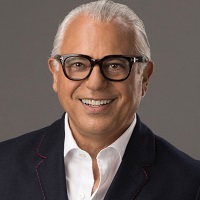
Host
Joseph Mimran
CEO of Joseph Mimran & Associates Inc., founder of Club Monaco & Joe Fresh, and former Dragon on CBC’s Dragons’ Den
Related resources

MyEDC gets you the answers you need
Join more than 30,000 Canadians who rely on MyEDC to grow their businesses with confidence.

Sectors in focus
From critical minerals, food and forestry, this report covers the opportunities and risks to Canadian companies.

EDC Investment Matching Program
Accelerate your company’s growth with quick access to reliable capital.