Be prepared - Plan for export risk
In this chapter
A current, detailed risk management plan is an invaluable tool for Canadian exporters. Creating a detailed plan will force your company to examine all areas of operation and uncover any current or potential issues that could jeopardize your success in international markets. Your plan will help you
- protect your assets and financial resources
- prevent or avoid unnecessary delays
- prepare for circumstances beyond your control
- prove to investors, lending agents and customers that your business is responsible and proactive
Every industry is different, as is every export experience. You are the expert on your business, and there is no single solution or approach to creating a risk management plan. The tools in this chapter will prompt you to consider a variety of factors for your business. They will also help get you started on creating a detailed, workable risk management plan that suits your business’ needs.
Ready to plan? Here are the steps you need to take:
- Step 1: Gather information
- Step 2: Draft your plan
- Step 3: Put your plan into action
- Step 4: Review your plan and monitor your risks
STEP 1:
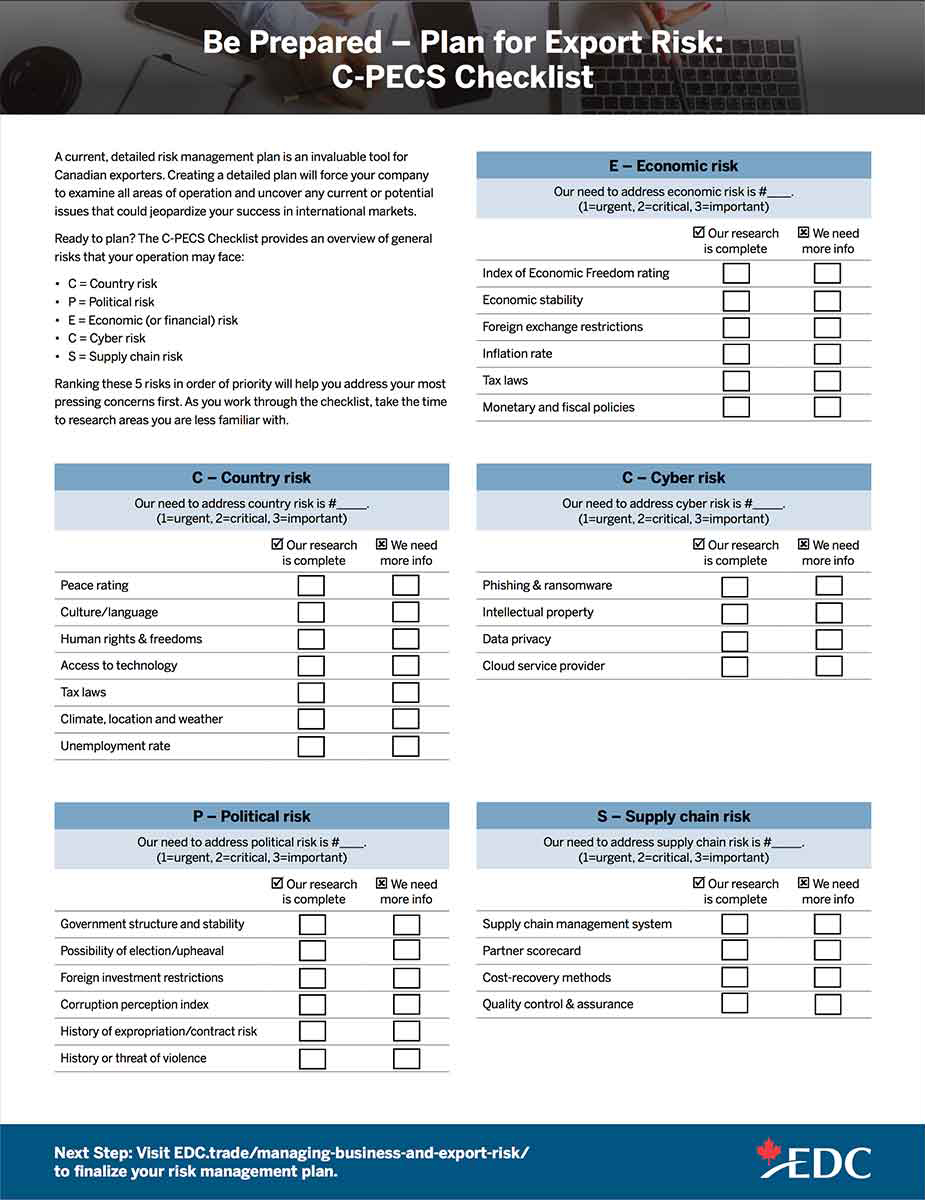
Gather information - Complete the C-PECS checklist
The C-PECS Checklist provides an overview of general risks that your operation may face:
- C = Country risk
- P = Political risk
- E = Economic (or financial) risk
- C = Cyber risk
- S = Supply chain risk
Ranking these 5 risks in order of priority will help you address your most pressing concerns first. As you work through the checklist, take the time to research areas you are less familiar with. Complete the C-PECS checklist
STEP 2:
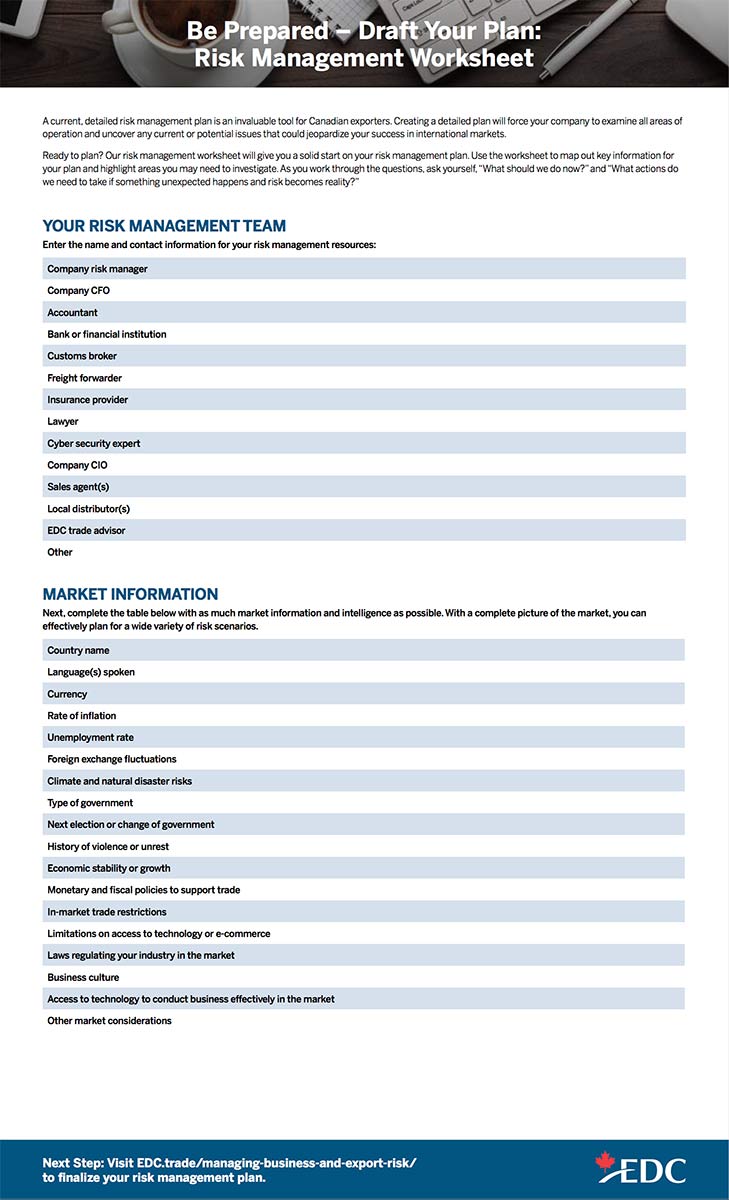
Draft your plan - fill out Risk Management Worksheet
Our risk management worksheet will give you a solid start on your risk management plan. Use the worksheet to map out key information for your plan and highlight areas you may need to investigate. As you work through the questions, ask yourself, “What should we do now?” and “What actions do we need to take if something unexpected happens and risk becomes reality?” Fill our the Risk Management Worksheet
STEP 3:
Put your plan into action
Once you have completed the worksheet, you will have a good idea of what areas need further research and what gaps need to be filled. To get the best value from your risk management plan, you should
- list and prioritize all actionable steps
- identify who is responsible for completing each task
- set realistic timelines for completion
STEP 4:
Review your plan and monitor your risks
Your risk management plan is a living document. As your business or your market changes, it is important to update your plan to ensure that you do not become complacent or lose sight of potential threats to your business. This will make your business more flexible and resilient, which are key ingredients to sustainable growth and success.
Incorporate a review of your risk management plan into your company’s regular planning activities to monitor its effectiveness, identify new concerns or flag areas for improvement.
If you would like to learn more about planning and monitoring for risk, the Forum for International Trade Training (FITT) offers an online risk management workshop. The program will help you assess your tolerance for risk, prepare for different risk scenarios, and keep your business on track toward long-term sustainability and growth. To register for the workshop, visit the FITT website.
EDC offers a wide range of solutions to help you manage your risk, access working capital or protect against loss. To help guide your search, review the risk factors you prioritized in your C-PECS analysis.
Need more information? Call EDC at 1-888-220-0047 or submit your questions online.