Manage your money matters – Financial risk

4.1 Why manage financial risk?

As a business owner, your bottom line is always top of mind. Even with stellar branding and innovative products and services, your company’s ongoing success will depend on its financial viability. Entering international markets exposes you to new financial risks in the form of currency fluctuations, longer payment terms and unfamiliar payment instruments. Mitigating your financial risk will protect your domestic operations and help you plan for the future.

Money drives success, both in terms of operations and profits. It often comes down to a simple equation:
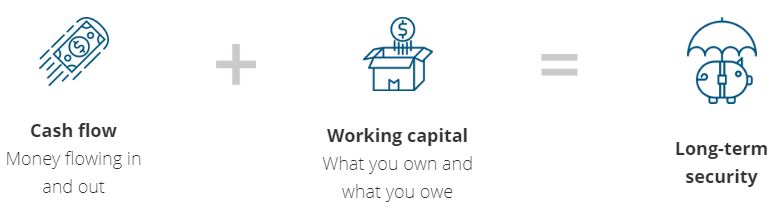
icons

4.2 Types of financial risk

Let’s explore 4 of the most common types of financial risk exporters face:

Risk 1: Contracts

A solid, well-written contract can be a lifesaver for exporters if something goes wrong with delivery, timing or payment. It offers protection against loopholes and measures for dispute resolution in the event of breach of contract.

Follow these steps for contracts that you can rely on:

1. Do your homework

In the pre-contract stage, pay close attention to your buyer’s reputation and capacity. Cultivate trustworthy partners.

2. Gather a team

You need a good team to support you, including an experienced lawyer who will scrutinize your contract before you sign it.

3. Consider purchasing peace of mind

EDC’s Portfolio Credit Insurance covers up to 90% of your losses if a customer cancels an order or can’t pay. EDC also has a range of other solutions to help you grow your business and manage your risks.

CHECKLIST:
Reduce your contractual risks

Review your contract with a lawyer before you sign. Look for the following types of clauses:

  • Late delivery penalties
    Will you agree to paying penalties on late delivery? Although you may wish to reassure the customer and demonstrate your reliability by agreeing to late delivery penalties, consider the impact of these penalties on your cash flow.
  • Indemnity clauses
    Are there circumstances that would cause you to consider absorbing losses caused by another party, rather than seeking compensation? What if the clause is standard in your customer’s part of the world?
  • Conditions related to intellectual property
    How can you ensure that the customer respects your patents, trademarks, copyrights, branding designs or proprietary technology? Is this something you need to push for in your line of business?
  • Insurance requirements
    What type of insurance does your customer require? If you don’t already have it, is it worth the additional cost?
  • Performance guarantees
    If you are unable to eliminate performance guarantees from a contract, set specific delivery and payment clauses that you are confident you can meet.
  • Warranties
    Do warranties make sense in your line of business? Consider the financial implications of not meeting warranty obligations. Are you willing to tie up funds for a long time to satisfy such a clause?
  • Delivery conditions
    Do you have concerns about circumstances (hurricane season in the Caribbean, for example) that could impact delivery dates or physical damage to goods? How can the contract satisfy the customer’s need for certainty while addressing your lack of control over some events?

Risk 2: getting paid

Payment risk in international markets often stems from lack of knowledge about an international buyer. Before you invest time and money into an international market, investigate business practices in the market so you understand how you will be paid—and the potential for any issues around payment.

To make sure that the company you’re doing business with can pay you, ask yourself these questions:

  • Is the customer financially healthy?
  • What will the payment terms be?
  • Will your payment terms allow you to meet your financial obligations?

Exploring payment methods: how risky can you afford to be? 

Payment methods Advantages Questions to consider
Cash in advance means that you get paid before shipping to your export customer. This adds to your working capital and allows you to sleep at night. Eliminates the risk of non-payment. Will your customers agree to this? (Few international customers do, which means you may need to seek other options.)
Letters of credit provide security to both you and your customer. This method relies on banks to receive and check shipping documents and to guarantee payment. Some letters of credit are confirmed and irrevocable (cannot be cancelled). Is checking documents enough? Or will your customer want stronger assurances based on actual delivery of physical goods?
Open account means the customer agrees to pay for goods within 30 to 90 days of either shipment or receipt. If you agree to ship the goods this way, the customer has them in hand before payment is made. An open account benefits your customer and can foster a trusting partnership. Do you have complete trust in your customer? Are you comfortable with the insecurity inherent in this method?
Documentary collections is also called documents against payment (D/P). It involves your
Canadian bank sending shipping documents to a bank in your customer’s market. 
When the goods arrive at customs, the in-market bank presents the documents to the customer, who then pays the bank before taking possession of the goods.
This offers you a secure method of payment. The buyer is only required to pay when the goods arrive at customs. What could be more secure for you and for the customer? This method gets the win-win stamp of approval.
Consignment is similar to an open account, but you retain ownership of the goods until the customer sells them. If the domestic market for your product is slow, this method allows you to have goods in the market for eventual sale.

Do you have strong trust in the customer?

Will the customer keep reliable sales records and remit those revenues to you in a reliable way?


Managing cash flow after you ship

Getting paid by an international customer can take time, but your cash flow is an ongoing priority. Here are some options to protect your cash flow while you’re waiting for payment:

  • Receivables discounting
    Your financial institution advances funds against export receivables. If the customer does not pay, you must repay your bank.
  • Factoring
    A factoring house purchases your export receivables and accepts the risks of non-payment.
  • Reverse factoring
    You can work with your financing partners to extend your payables up to 90 days to give you access to working capital in the interim.

FAQ: how to reduce the risk of non-payment

How can I confirm my customers are credit-worthy?
Conduct an online search or ask an EDC trade advisor to put you in touch with one of our risk specialists, who can help you assess the insurability of your customers.

Am I wrong to demand profitability from the start?
Not at all. Ensuring profitability is the only way to succeed in the long-term as an exporter. If you’re starting out, you may expect to make a $50,000 profit on annual export sales of $1 million in your first year. If one customer owing $60,000 does not pay, your profit is wiped out. With insurance premiums costing from .30% to 1% of your sales, you can protect your company from that $60,000 loss at minimal cost.

What are my best options for dealing with non-payment risk?
Credit insurance reduces the risk of non-payment (or a buyer’s bankruptcy) by providing exporters with coverage to mitigate risks such as

  • payment delays due to blocked funds
  • issues with currency conversion or transfer
  • contract cancellation
  • a customer’s refusal to accept goods
  • cancellation of export or import permits

Discover EDC’s credit insurance options in our list of EDC solutions below.

Risk 3: Foreign exchange

Foreign exchange (FX) risk refers to fluctuations in foreign currencies. Effective FX risk management can increase the predictability of your profits and cash flow, and allow you to be more competitive in international markets.

7 ways to manage FX risk

  1. Natural hedge
    This means you use the same currency to pay invoices and collect revenue. Another natural hedge involves borrowing money in the currency in which most of your export sales are paid and repaying the loan with foreign currency receipts. However, this means you will miss out on any benefit from favourable fluctuations in that currency.
  2. Forward contract
    With a forward contract, you make a commitment to buy or sell a currency at a set exchange rate in the future. This allows you to include all costs in the forward rate you negotiate, but often involves the need to post collateral, thus reducing your working capital.
  3. Options
    An option gives you the right, but not the obligation, to buy or sell a set amount of a certain currency at an agreed-upon exchange rate on or before an expiry date. This can help you manage risks in a volatile currency market, but it ties up cash to purchase the option.
  4. Futures
    This type of contract allows you to exchange a specific volume of a currency for another currency on a specific settlement date. Futures are tradable on exchanges, whereas other kinds of FX contracts are not.
  5. Transfer FX risk to your customer
    With this method, your customer agrees to assume the liability for trade fluctuations. Although uncommon, customers may agree to this if they have no other choice.
  6. Bill in Canadian funds
    This method benefits the exporter, but many customers are reluctant to assume risks that offer them no benefit. Customers who agree to pay in Canadian dollars will probably seek other suppliers in the future.
  7. Raise the export selling price
    This strategy involves raising your selling price in the foreign currency to offset a possible decrease in that currency’s value against the Canadian dollar. A word of caution: this strategy has proven ineffective when exchange rates are volatile.

4.3 Expert tip: use edc's global economic outlook

“We work in a globalized world and only looking at what’s happening in Canada isn’t going to help Canadian businesses succeed,” says Andrea Gardella, Senior Economist at EDC. “If companies want to grow their international sales, [they need to know] the driving forces in world economic prospects that are impacting businesses everywhere.”

For data on regional and global economic trends, EDC’s Global Economic Outlook is a great go-to resource for exporters. The Global Economic Outlook sheds light on currency and other economic indicators in your export market. EDC produces new outlooks twice annually.

Risk 4: Bonding/Guarantees

In many export markets, buyers will not even discuss a contract unless you are willing to provide a performance bond, which is a guarantee from a bank that you will fulfill your contract commitments. This is often the case with international companies and governments seeking to buy goods from Canadian exporters.

The bond usually takes the form of a standby letter of credit—a guarantee of payment issued by a bank on behalf of a seller. Should you fail to fulfill some or all aspects of a contract, the letter of credit will act as the payment of last resort to the customer.

Banks normally want 100% security for each dollar of bonding they issue. Companies provide this either as cash or from a line of credit. In either case, obtaining performance bonds can impact the capital you have to fund operations.

Bonding demands can make it financially impossible to take on certain projects without alternative sources of security. Export companies, large and small, seek out security guarantees from third parties like EDC to solve the problem of tying up corporate capital in performance bonds.

Learn more in our solutions section below.

4.4 Risk = reward case study

Arnon Melo, co-owner of Mellohawk Logistics in Toronto, has taken small steps and big leaps of faith in expanding his business into the U.S., Brazil and Pakistan.

Mellohawk Logistics

Arnon Melo, co-owner of Mellohawk Logistics in Toronto, has taken small steps and big leaps of faith in expanding his business into the U.S., Brazil and Pakistan. Building the company’s export profile and profits in the supply chain and logistics services sector has involved securing shipments with credit insurance from EDC.

“Recently we had a $50,000 shipment to Pakistan, and I told them without hesitation we could do it, no problem,” he says. “I simply insured the shipment through Select Credit Insurance on the EDC web site without the customer even knowing.”

Melo says that in the early days of his export business, the threat of non-payment made him tentative and almost lost him contracts. Now, he says, he can breathe “…because we had that guarantee we would be paid.”

4.5 Financial risk solutions

EDC offers Canadian exporters financial risk solutions in the form of financing and insurance products that can help you mitigate credit, contract and currency exchange risks.

For credit risk
EDC Credit Insurance covers 90% of your insured losses against a variety of risks when selling your products and services to the United States or internationally. Two kinds of credit insurance are available. The first is for coverage under $500,000. The second offers ongoing coverage if you have consistent export sales and you want to insure an unlimited number of customers.

For FX risk
Foreign Exchange Facility Guarantee allows you to secure your exchange rate without putting up capital. It also means you can increase your borrowing capacity by keeping more working capital in your business.

For performance risks
Performance Security Insurance provides a bank with a guarantee in lieu of collateral you may be required to post as part of your contract. This coverage will protect your cash flow if a letter of guarantee is wrongfully called.

4.6 Financial risk resources

Beyond the EDC financing and insurance solutions available to you, these excellent resources will help you plan for financial risk:

  • The Global Economic Outlook is a twice-yearly EDC publication that offers information on currency and other economic indicators in your export markets.
  • The EDC guide, Risk and Cash Flow Management, offers exporters tips and techniques to deal with the higher operating risks and cash flow requirements of international business.
Date modified: 2019-02-04