Safeguard your company - Supply chain risk

6.1 Protect your supply chain to protect your future

Given that many Canadian companies begin exporting through supply chain channels in Canada, supply chain management has a significant impact on your exporting success. In addition to helping you enter international markets, a strong supply chain can help you expand your client base and develop new products. Safeguarding your supply chain is therefore an excellent way to manage your costs, serve your customers and ensure the long-term viability of your business.

Supply Chain 101: Simply put, your supply chain is the series of steps involved in taking raw materials and turning them into finished products that then get delivered to your customers.
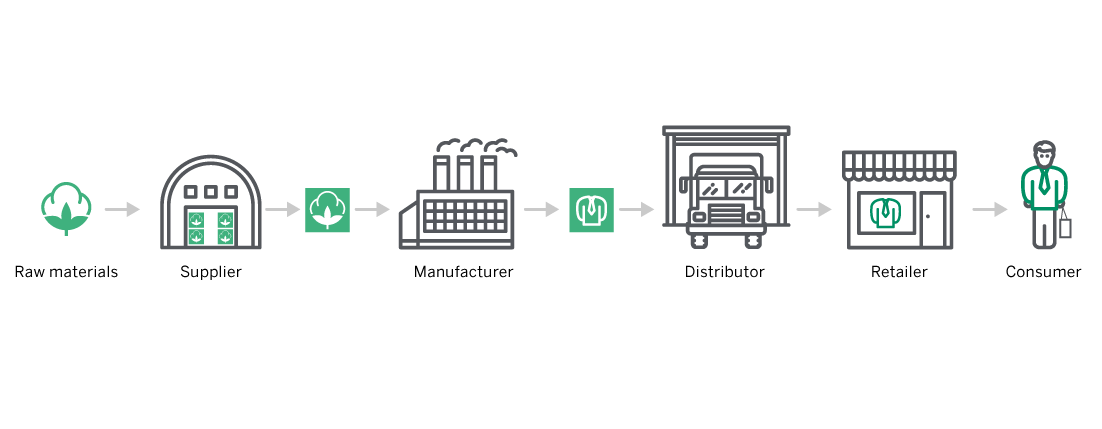

Supply Chain
KFC experienced a serious supply chain disruption and was forced to close stores when it ran out of chicken.

CASE STUDY:
Lessons from KFC

In February 2018, Kentucky Fried Chicken (KFC) in the United Kingdom faced a “chicken crisis” when the company ran out of chicken. KFC was forced to temporarily close hundreds of stores.

The delivery disruptions came after KFC switched to a new chicken supplier to reduce costs. While the previous supplier, Bidvest, specialized in food distribution, the new supplier, DHL, was better known for deliveries to offices and homes. Further, DHL’s single warehouse distribution centre replaced Bidvest’s network of 5 warehouses. Just days after the chicken shortage, KFC faced a gravy shortage. Ultimately, KFC’s cost-cutting resulted in a significant financial loss and a harsh lesson in risk management.

In the end, KFC returned to its previous supplier to sort out the chicken shortage and signed a new agreement to have Bidvest supply one-third of its U.K. stores.

Here are some lessons from KFC’s supply chain “fowl-up”:

  • Remember that cost is not the only factor. Consider ancillary charges—costs that are involved in a transaction, but are not related to it, such as the cost of transporting your goods to a dock for shipment. You also need to calculate costs associated with lead times between the time you place an order and when it is received.
  • Make sure your supplier truly understands your business. Does your supplier have related or transferrable experience? Do they have the right systems in place? Ideally, you want a supplier who can add value to your supply chain through efficiencies or innovation.
  • Determine whether your supplier can meet your specific needs. Does your supplier have the capacity and infrastructure to handle the volume you need? Are they flexible enough to accommodate increased demand or financial downturns in your industry? Can they ramp up quickly?
  • Take time to work the kinks out. Tap into your supplier’s experience and resources. Together, you should discuss every potential disruption that you can envision and put safeguards in place in case things go wrong.

6.2 Supply chain risks

Let’s explore some of the common risks affecting exporters’ supply chains.

Risk 1: supply chain partners

A supply chain is only as strong as its weakest link. Be selective when choosing supply chain partners.

Supplier checklist


  • Does your supplier have a solid track record?
  • Can your supplier provide the quality you want for the price you need?
  • Does your supplier have systems in place to ensure timely delivery?
  • Is your supplier’s business financially sound? Are they looking after their own cash flow?
  • Does your supplier comply with labour laws?
  • Is your supplier transparent about their wages?
  • Does your supplier use ethical business practices?
  • Is your supplier easy to do business with? Do they respond quickly?

Risk 2: shipping and delivery

If you are shipping goods from one country to another, there are other things to consider beyond customs regulations. Some of these factors are unforeseeable and out of your control: delays due to weather complications, accidents and equipment breakdowns. However, there are still steps you can take to safeguard against shipping risks:

  • Insure yourself against theft and loss. If the unthinkable should happen, you will be glad you protected yourself against financial loss. EDC offers a range of insurance solutions to protect you.
  • Work with reputable freight forwarders and transportation agents. Use an experienced partner to help ensure that your shipments transition smoothly from road to sea or air and back on the road seamlessly.
  • Factor in time for delivery delays. Leave a little wiggle room in your schedule that will let you deliver to your customer on time even if there are shipping delays.
  • Have a back-up plan. Could your shipment be transported by air if the sea shipment is delayed? Do you have a reliable alternative?
  • Be open and agile. Things happen in shipping. Be open to changing your processes or finding new suppliers.

Risk 3: trade compliance

To keep your global supply chain running smoothly, you need a sound understanding of your industry’s customs and regulatory requirements. As the Exporter on Record, you will be held accountable for the accuracy of your documentation and record-keeping. Mistakes and misinformation could result in fines, penalties, investigations, shipment seizures or quarantine, denied entry into the country and possibly even criminal charges.

Here are a few things you need to consider to be compliant:

  • Trade agreements and rules
  • Reporting requirements, import procedures and logistics
  • Canadian and foreign tax laws
  • Other special compliance issues

EXPERT TIP
Hire a good customs broker

Licensed customs brokers have the experience and connections to keep your supply chain running smoothly.

“It’s almost impossible for one person or even one company to have the expert knowledge required to maximize trade agreements and stay up-to-date with regulatory changes. An experienced, knowledgeable customs broker is an essential part of your supply chain,” says Audrey Ross, logistics and customs specialist at Mississauga, Ontario-based Orchard International Inc.

A licensed customs broker can offer information and advice about:

  • Tariff classification, which determines the amount you will pay in tariffs and duties
  • Rules of origin compliance, which differ depending on the product, service and trade agreement
  • Incoterms, which determine how the importing buyer and the exporting seller divide prices and risks with respect to shipping

When choosing a customs broker, look for someone who has a solid track record, a good understanding of your business and a flexible schedule that works when you do.

Risk 4: financial crime

Financial crime includes money laundering, terrorist financing, fraud, corruption and bribery.

How can you protect your business operations and reputation from financial crime?

Conduct due diligence
Get to know your market and your suppliers very well.

Be vigilant
Monitor at-risk transactions and keep an eye out for anything that seems unusual.

Know the red flags
Be ready to act if you have concerns about a supplier or buyer.

  • Is your supplier asking for payment or trying to pay you through a seemingly unrelated business in a third country?
  • Is a supplier, who otherwise seems financially stable, shipping inferior goods or refusing to pay for your goods?
  • Has an international buyer overpaid you and they are now asking for repayment through a seemingly unrelated business in a third country?
  • Is a foreign supplier demanding payment to a local official prior to shipping? Or using business practices that would not be acceptable in Canada?
  • Is your supplier offering deep discounts or a deal that otherwise seems too good to be true?

Create a plan 
Know what to do and where to turn to report financial crime. Consult EDC’s document, Financial Crime in International Trade, for more about mitigating this risk.

6.3 Best practices for managing your supply chain risk

Once you are familiar with your supply chain risks, put measures in place to manage them:

  • Maintain partner scorecards
    Prepare a list of the most important criteria for each of your suppliers (quality, timeliness, payment history, etc.) and evaluate them regularly.
  • Use a supply chain management system
    This will allow you to track your customers, logistics and billing.
  • Implement a vendor management process
    Qualify and manage your suppliers using clear processes and procedures.
  • Ensure clear lines of communication
    This is crucial to ensuring the smooth operation of your supply chain and all communication between you and your suppliers.
  • Use a quality management system
    This allows you to measure the cost of poor quality in your supply chain.
  • Develop cost-recovery practices
    To cover all the costs involved in your project, work with your Chief Financial Officer and Risk Manager to put practices in place that ensure cost-recovery.
  • Integrate your operations with those of your suppliers
    By doing so, you will do a much better job of sharing risk and data that supports your risk management strategy.

6.4 Supply chain management risk resources

Here are some resources that will help you dig deeper into supply chain risk:

Date modified: 2019-02-04