Since early 2025, the United States has introduced a wave of tariffs—sector-specific duties on goods like steel, aluminum, automotive, copper and forestry products, as well as country-specific tariffs with varying rates. With the U.S. accounting for more than 75% of Canadian merchandise exports, understanding these costs—and what they mean for Canadian businesses—is critical. See our latest Global Economic Outlook for insights on how tariffs are reshaping trade.
While sector-specific tariffs offer few exceptions, country-specific tariffs do. For Canadian exporters, compliance with the Canada-United States-Mexico Agreement (CUSMA) can mean duty-free treatment. Instead of paying a 35% tariff—or 10% on energy and potash exports—the rate drops to 0%.
But here’s the challenge: Tariff schedules are complex, and millions of traded products make it hard to determine what share of exports are truly “tariff-free.”
Determining the share of Canadian exports that avoid U.S. tariffs isn’t straightforward. Different methods produce different results, and the complexity of tariff schedules adds to the challenge.
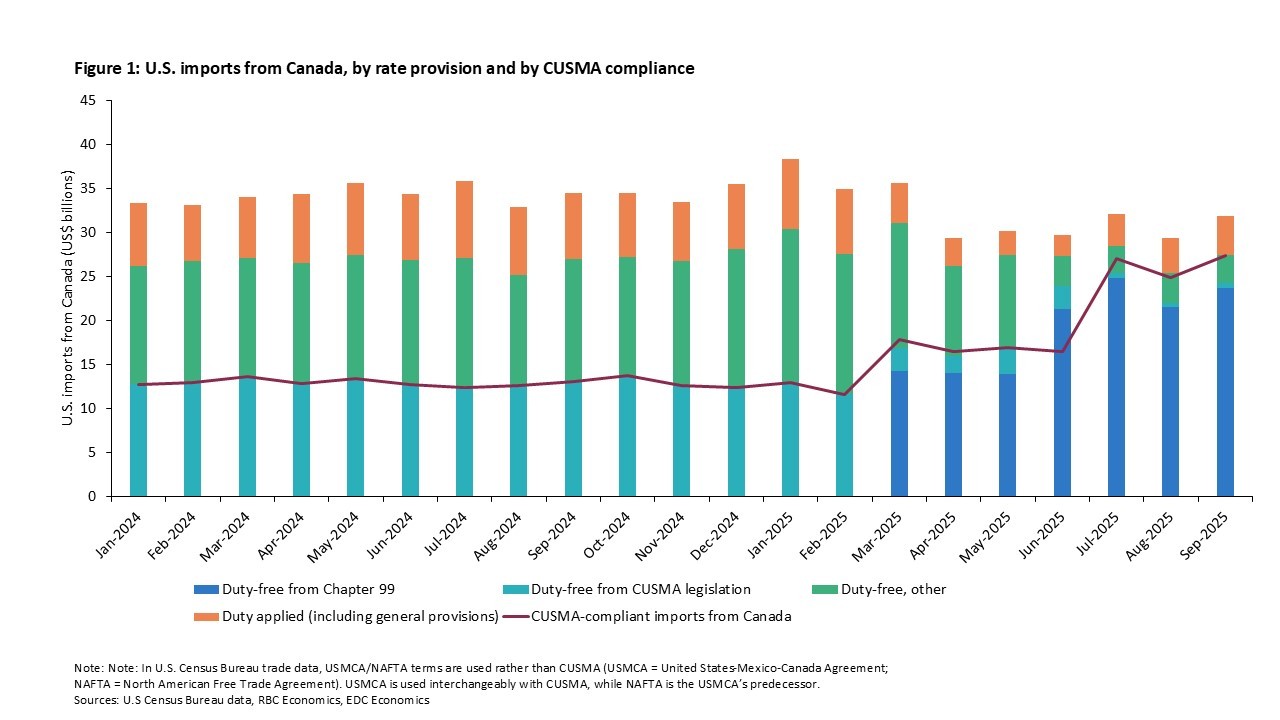
One approach is to analyze U.S. Census Bureau data to identify the tariff rate provisions applied to Canadian exports. These provisions translate into specific duty rates, including duty-free treatment. For example, an RBC Economics analysis, Canada’s trade balance swung back to a surplus in September, found that 86% of Canada’s exports to the U.S. in September 2025 were duty-free.
Another way to measure this is by looking at CUSMA compliance. As of September 2025, nearly 86% of Canada’s goods exports to the U.S. met CUSMA rules, according to U.S. Census Bureau data.
Both approaches suggest Canadian exports are largely tariff-free—but the underlying numbers don’t always match (Figure 1). In 2024, for instance, 38% of U.S. imports from Canada were CUSMA-compliant, while 78% were considered duty-free. Before 2025, many Canadian exporters benefited from exporters didn’t seek preferential treatment under CUSMAzero or low tariffs under Canada’s most-favoured nation (MFN) status. But after U.S. trade policy changes in 2025, those advantages disappeared, making CUSMA compliance essential to avoid steep tariffs.
While CUSMA compliance has been increasing, interpreting tariff data is far from simple. For example, the tariff rate provision labelled “duty-free from legislation (i.e., USMCA/NAFTA)” (equivalent to duty-free from CUSMA legislation) barely appears in trade data. As of September 2025, Canadian exports to the U.S. totalling above US$486 million were reported under this rate provision—compared to US$27.4 billion listed as CUSMA-compliant.
Trade and customs compliance experts point to a surge in U.S. imports from Canada under Chapter 99 duty-free provisions—the CUSMA exemption to country-specific tariffs. While this reflects higher compliance, it’s not always captured accurately in official data. Further, a high share of “tariff-free” exports can mask the real costs Canadian businesses face.
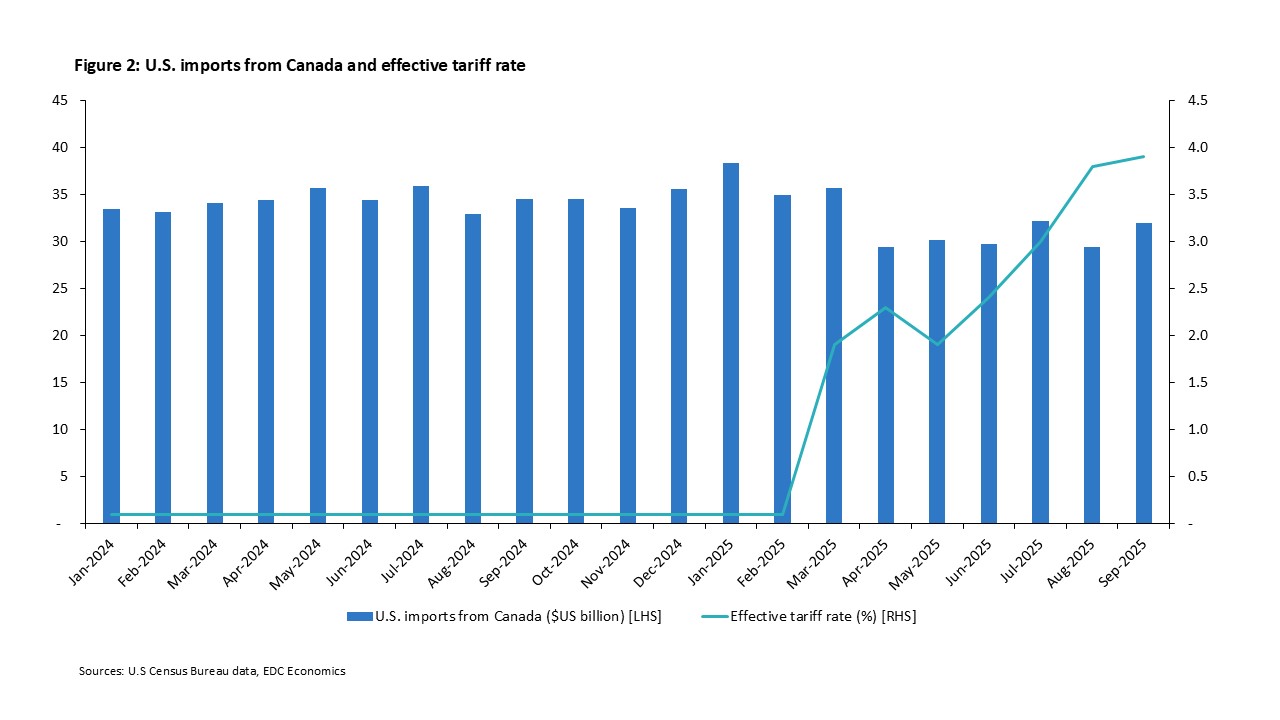
A clearer way to gauge the cost of U.S. trade policy changes is by calculating the effective tariff rate—estimated duties paid as a share of total U.S. goods imports from Canada. This measure reveals the potential economic impact of tariffs (Figure 2).
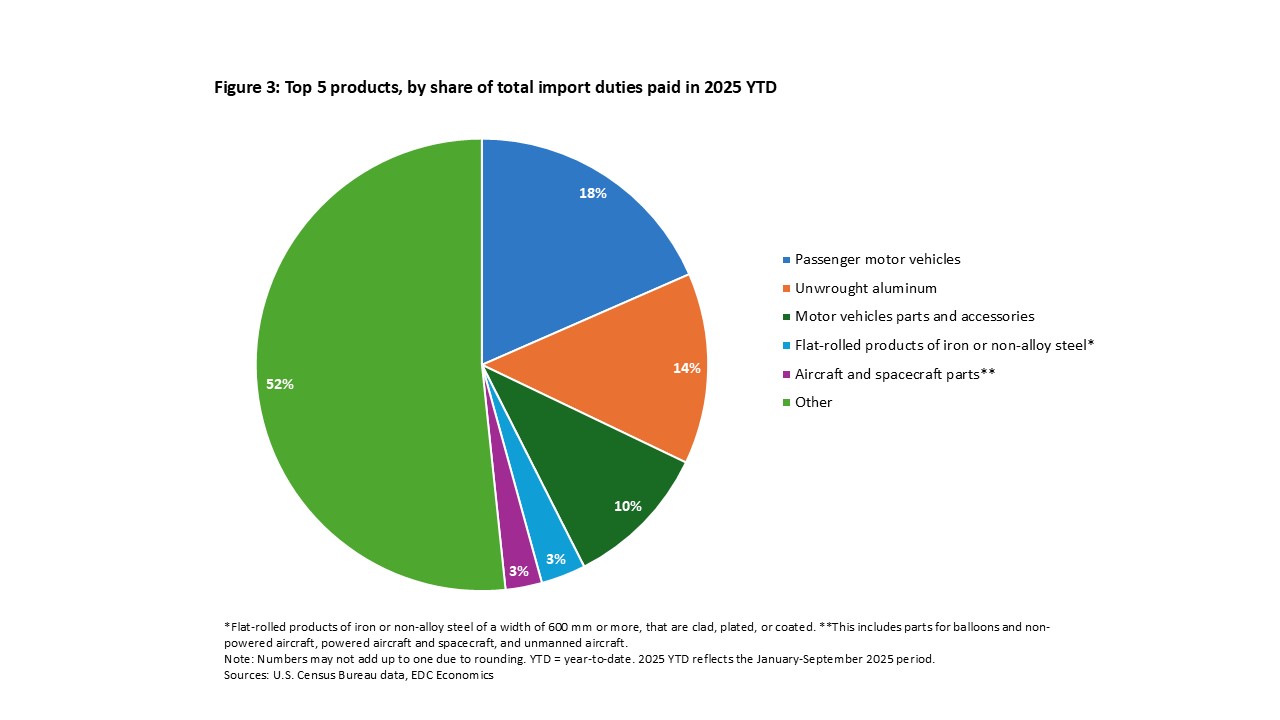
Before the 2025 tariff hikes, the effective rate was close to 0%. By September 2025, it had climbed to 3.9%. At the same time, overall U.S. imports from Canada fell—September imports dropped 7.7% (US$31.9 billion) year-over-year, and January to September exports were down by 5.4% compared to the same period in 2024. While 3.9% may sound modest, the sector-level pain is significant: An estimated US$6 billion in duties were paid year-to-date (YTD), with only five products accounting for 48% of the total (Figure 3).
Focusing only on the share of “tariff-free” exports can obscure the bigger picture. CUSMA exceptions help many companies navigate a challenging environment, but the growing effective tariff rate shows that costs are mounting—especially in sectors like metals and automotive. Understanding these dynamics is critical for Canadian companies to adapt and for EDC to provide targeted support.
Additional resources
Ready to navigate tariffs and strengthen your export strategy? Explore these EDC resources for expert guidance and practical tools.
- CUSMA compliance checklist: Step-by-step guidance to qualify for duty-free treatment under CUSMA.
- U.S. market intelligence: Expert analysis to help you navigate the U.S. trade and economic business environment.
- Export Help Hub: Connect with EDC trade advisors for market strategies, regulations and customs support.
- Business Connections Program: Showcase your capabilities and connect with international buyers.
- Risk management solutions: Protect your cash flow with credit insurance, performance security and other tools.
- Navigating tariffs and customs regulations: Watch our EDC webinar for practical compliance strategies.