Doing business in China in 2026: Opportunities for Canadian exporters
Author Details
Danny Xu
Marketing business partner, Indo-Pacific strategy
- Why China remains a strong market for Canadian exporters in 2026
- Top growth sectors in China for Canadian companies (agri-food, cleantech, advanced manufacturing)
- Regional markets in China: Where Canadian businesses should start
- Key challenges of doing business in China in 2026—and how to prepare
- Where China stands on environmental, social and governance (ESG) issues
- How Canadian companies can succeed in China: Practical strategies
- Your next step: Connect with EDC
- FAQ: Doing business in China in 2026
After more than 50 years of steady trade, investments and cultural exchange, Canada stands on the threshold of greater opportunities for doing business in China.
This massive market is being redefined by rapid sector expansions, increased focus on domestic consumption as a growth driver and reaffirmed commitment by both China and Canada to strengthen economic co-operation. New developments in the trade relationship promise to give Canadian exporters better access to our second-largest export market.
Prime Minister Mark Carney made an official visit to China Jan. 14-16, 2026–the first by a Canadian prime minister since 2017. At the conclusion of his visit, Carney and the President of China, Xi Jinping, announced a new strategic partnership between Canada and the People’s Republic of China focused on energy, agri-food and trade.
This visit marked a turning point in the Canada-China relationship and builds on productive engagements undertaken this past year to advance co-operation and revitalize the trade partnership. The two countries reached agreements to deepen collaboration in climate-related technologies, ease tariffs on key Canadian agricultural exports and encourage two-way investment in sectors such as electric vehicle (EV) manufacturing, wood products and agri-food.
“As the world’s second-largest economy, China presents tremendous opportunities in 2026 for Canadian companies,” says Peter Xu, Export Development Canada’s (EDC) senior regional manager for Greater China.
“This can be attributed to a combination of factors, including the continued rise of China’s middle class and growth in key sectors, like agri-food, consumer goods, cleantech and advanced manufacturing, where Canadian companies have demonstrated great competitive advantages and established strong Canadian branding,” Xu says.
With new agreements in place to address economic and trade concerns, Canada has set an ambitious goal to increase exports to China by 50% by 2030. But China also presents certain challenges that Canadian exporters need to be aware of and plan for in their export strategy, he adds. Comprehensive due diligence, strategic planning and regular market visits are critical in this market.
The Chinese export market is vast, with a consumer base of more than 1.4 billion people and gross domestic product (GDP) of US$18.7 trillion in 2024, making it the world’s second-largest economy after the United States.
Susanna Campagna of EDC’s Economics and Political Intelligence Centre (EPIC) says she expects China is likely to maintain a GDP growth target of about 5% in 2026, as it did last year, despite declining exports to the U.S.
“If we look at 2025 and some of the factors that might flow into 2026, my expectation is that China will continue to benefit from strong export resilience by focusing on higher value-added exports, particularly in high-tech manufacturing, as well as ongoing export market diversification, for example, to Southeast Asia, the European Union, Africa and Latin America,” Campagna says. “Despite all the tariff uncertainty, China closed 2025 with a record-setting US$1.2 trillion goods trade surplus.”
The country’s middle class—broadly estimated at around 700 million people, or double the population of the U.S.—is among the fastest growing in the world. According to a 2024 S&P Dow Jones Indices report, China’s middle class is set to expand by another 80 million by 2030.
For Canadian exporters, China’s vast consumer market, sustained economic growth and burgeoning middle class translate into opportunities to expand their global reach and tap into high-demand sectors.
“These trends indicate that Chinese consumers are in the market for Canadian goods, which are known for higher quality and safety,” says Xu. “More and more people in this country are willing to pay more for premium products, which Canada can deliver.”
For decades, Canadian companies have demonstrated this ability, delivering products Chinese consumers and companies want—from wheat that accounted for about 60% of Canadian goods sold to China in the 1990s, to agri-foods, metal ores, energy and forestry products, and consumer goods, which were Canada’s top exports to China in 2024. According to Global Affairs Canada, Canadian merchandise exports to China totalled $30.4 billion in 2024, while bilateral trade hit $118.7 billion.
What does Canada export to China?
In 2024, Canada exported $30.4 billion of merchandise goods to China, representing 4% of Canada’s total goods exports. Canada also traded $7.7 billion in services with China, with travel spending by Chinese tourists and students in Canada accounting for more than 75%.
| Top products exported to China in 2024 | Total value | |
| Farm, fishing and intermediate food products | $8.8 billion | |
| Metal ores and non-metallic minerals | $5.5 billion | |
| Energy products | $5.3 billion | |
| Forestry products and building and packaging materials | $3.7 billion | |
| Consumer goods | $1.8 billion |
| Top services exported to China in 2024 | Total value | |
| Travel spending | $5.8 billion | |
| Commercial services | $1.08 billion | |
| Transportation and government services | $819 million |
Source: Statistics Canada, Canada’s international trade and investment country fact sheet (updated on Dec. 11, 2025)
Campagna says that in 2026, Canadian exporters are likely to find significant opportunities in agri-food, clean technology and China’s advanced manufacturing ecosystem—sectors targeted for growth in China’s upcoming Five-Year Plan.
“The Chinese government continues to double down on its efforts to pivot into the advanced manufacturing and high-tech industries,” says Campagna. “At the same time, it’s also looking to boost domestic consumption, aiming to make household spending a stronger driver of economic growth.
“To achieve this, Beijing is rolling out targeted measures to put money in consumers’ pockets, including nationwide childcare subsidies. The government is also renewing and expanding its consumer goods trade-in program for 2026 to stimulate consumer spending on everything from home appliances and cars to digital devices,” she says.
Chinese market consumer trends create opportunities for Canada’s agri-food sector
China’s booming food and beverage market is one of the largest and fastest growing in the world, driven by middle-class expansion, strong consumer spending and increasing urbanization. These trends create even greater opportunities for Canadian agri-food companies, with seafood, meat, dairy, canola and processed foods making up roughly one-third of Canadian exports to China.
Canada’s recent agreement with China includes measures to remove trade barriers and reduce tariffs on key agricultural products:
- By March 1, 2026, Canada expects that China will lower tariffs on Canadian canola seed to a combined rate of about 15%. China is a $4-billion canola seed market for Canadian producers, and this change represents a significant drop from current combined tariff levels of approximately 85%.
- Canada expects that Canadian canola meal, lobsters, crabs and peas won’t be subject to relevant anti-discrimination tariffs from March 1, 2026, until at least the end of the year.
Together, these measures will help to further unlock the massive Chinese market for Canada’s innovative agri-food sector.
Xu says the core drivers of demand for Canadian agri-foods are China’s growing middle class and health-conscious consumers who prioritize quality and safety and are willing to pay more for premium products, including organic, low-sugar and functional foods that provide benefits beyond basic nutrition. A 2025 survey by Euromonitor International found that 40% of Chinese consumers look for all-natural ingredients on food and drinks labels while close to 50% said they want to reduce their sugar intake.
You should also check out

Arlene Dickinson shares insights on agri-food exports, risks and growth opportunities in Indo-Pacific markets.
E-commerce platforms offer new sales channels for Canadian agri-food exporters
China’s e-commerce sector is growing rapidly, bolstered by an internet penetration of almost 80% as of December 2024. Widespread adoption of online shopping gives Canadian agri-food producers an additional channel to reach Chinese consumers.
Top e-commerce platforms for agri-food products include Tmall Global (owned by Alibaba Group Holding Ltd.) and JD.com’s JD Worldwide. Both focus on cross-border e-commerce, enabling international producers and merchants to sell to Chinese consumers without establishing physical entities in China.
Can Canada satisfy China’s evolving appetite?
Yes. Canada is the world’s fifth-largest food exporter. In 2024, Canadian agri-food producers exported approximately $100 billion in goods, underscoring Canada’s capacity to meet China’s evolving food demands.
Why Canadian firms have a clear role in China’s advanced manufacturing sector
As China accelerates its push into advanced manufacturing—particularly in automotive and next-generation mobility—Xu sees a clear role for Canadian firms in the automotive supply chain. In particular, he sees opportunities for Canadian businesses that compete on quality, technology and R&D—not price.
“China is the world’s largest automotive market, in terms of manufacturing, sales and exports,” says Xu. “Canada doesn’t have its own automotive brands, but we have strong capacity in our automotive supply chains. For example, Magna International Inc. operates 67 plants in 25 cities in China and their strategy is to compete on quality and innovation,” he says.
His advice to Canadian companies looking to enter China’s automotive or advanced manufacturing sector: Focus on high-quality manufacturing supported by innovation, advanced materials and specialized know-how.
This advice aligns with China’s new “anti-involution” economic policy, aimed at ending what the Chinese refer to as nei juan, where businesses continually undercut each other, leading to falling prices and quality. As China works to stabilize the industries affected by nei juan—including its automotive and heavy truck sectors, which suffer from excess capacity and shrinking profit margins—Canadian companies with innovative and scalable solutions in vehicle technology, clean transportation and supply chain efficiency are well-positioned to drive sector improvements.
China needs Canadian cleantech that’s commercialized, scalable and proven
In September 2025, President Xi announced his country’s commitment to cut greenhouse gas emissions across the economy by 7% to 10% by 2035. He also pledged to boost the share of non-fossil fuels in China’s total energy consumption to more than 30%, expand wind and solar capacity to more than six times over 2020 levels and put electric vehicles at the forefront of new automobile sales.
These commitments represent a big milestone for China and the global climate community. For Canadian companies with cleantech expertise, including specializations in water remediation, air quality improvement and renewable technologies, there are many opportunities.

In addition, “the increased energy demand linked to China’s AI (artificial intelligence) industry creates potential opportunities for Canadian companies in grid technologies, novel long-duration energy storage solutions, power electronics, grid digitalization and cybersecurity,” says Shariq Akhlaq, EDC’s national lead for the energy and energy transition ecosystem.
Under the terms of the new strategic partnership, Canada and China agreed to collaborate in energy, clean technology and climate competitiveness. As “energy superpowers,” Canada and China will focus on expanding two-way energy co-operation—reducing emissions and scaling up investments in batteries, solar, wind and energy storage.
“China has made huge investment commitments in cleantech and is open to working with multinational companies, including Canadian companies,” says Xu. “Canadian companies with commercialized solutions with large processing capacities to match the scale of China’s projects are in great positions to grow in the market.”
The ability to scale is a critical deciding factor for most Chinese buyers of cleantech and a barrier to entry for many Canadian companies. As an example, Xu cites a Chinese manufacturer that was considering a Canadian company’s emissions-reduction technology.
“The technology was great, but the bottleneck was that the Chinese customer was asking for 2,000 tonnes of emissions to be captured per day and the Canadian company could only do up to 200 tonnes per day,” he recounts.
In addition to having a commercialized and scalable product, it’s also essential for Canadian cleantech companies to demonstrate their solutions in projects in China, says Xu. Having a pilot project that’s proven in China will make it easier to secure contracts.
You should also check out
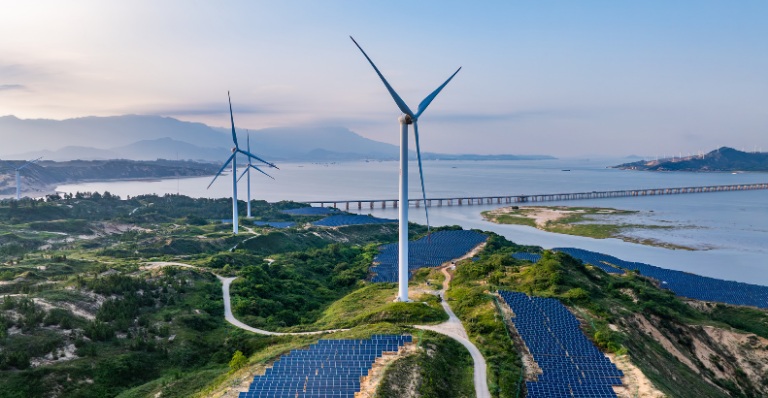
Explore Canada’s cleantech export edge in EDC’s 2025 report on scalable clean technologies.
China isn’t one market. It’s a collection of major regional economies with different industry clusters, costs and customer ecosystems. Xu suggests Canadian companies consider China’s industrial priorities illustrated in China’s 15th five-year plan, well as the sectoral distributions in different regions.
The best region to establish a foothold depends on the exporter’s sector and distribution channel. A consumer brand scaling through cross-border e-commerce will typically need a different starting point than a Tier 2 automotive supplier or a water-treatment technology firm.
| Region / hub | Characteristics | Common industry strengths | |
| Northern China (including Beijing region) | More traditional industrial manufacturing with labor-intensive areas | Industrial manufacturing, heavy industry, policy and regulatory hubs | |
| Eastern China (e.g., Shanghai region) | Strong technology ecosystem | Advanced manufacturing, tech, finance, services | |
| Southern China (e.g., Guangzhou/Shenzhen corridor) | Mix of manufacturing and technology | Electronics, consumer goods supply chains, tech and export-oriented clusters | |
| Western China (e.g., Chongqing region) | Services and emerging industrial growth nodes | Services, logistics corridors, customer call centres, regional manufacturing bases |
China is a highly complex export market. Despite its record-breaking trade surplus in 2025, falling real estate prices, subdued domestic consumption and government debt remain key challenges to stronger growth.
“Domestic consumption is where China hopes to pivot the economy in terms of it becoming a key growth engine,” says Campagna. “We’re seeing some success in the government’s efforts to boost domestic consumer spending, but I think it will be slow. For many Chinese consumers, a big portion of their wealth was tied to the value of their property and because the property sector remains in crisis, the Chinese consumer remains a very high saver,” she says.
Geopolitical tensions, which included tariff disputes between Canada and China, have highlighted the complexity of the relationship between the countries. Nonetheless, Canada-China trade remains strong, and recent meetings between the two governments signalled renewed engagement.
Campagna also points out that ongoing geopolitical trade and tariff uncertainty, particularly for China, means it’s important to have flexible, agile supply chains that enable you to react quickly if something changes that impacts your business.
“Having a strategy that diversifies your supply chains to include other Indo-Pacific markets helps to build supply chain resilience. This way you’re not concentrating all your efforts—and risks—in one market,” she says.
China’s ESG landscape is evolving, and due diligence remains essential, particularly where there’s state involvement, public procurement and cross-border compliance risks. Highlights of China’s progress in ESG and areas where Canadian exporters need to be alert to risks include:
- Environmental and climate exposure: China is implementing measures to reduce carbon emissions and advance green technologies. In 2025, China committed to emissions targets for the first time with the United Nations.
- Financial crime: China has strengthened financial crime frameworks and continues updating its anti-money laundering regime, including expanding oversight into non-financial sectors.
- Governance and corruption risk: Transparency International’s 2024 Corruption Perceptions Index places China slightly below the regional average, underscoring the importance of risk-based due diligence, especially in sectors with significant state involvement.
- Geopolitical and sanctions exposure: China’s global role can introduce international regulatory restrictions that affect cross-border transactions in certain sectors.
- Social: Canada continues to engage with China on key issues, including supporting workers, women and children, peaceful pluralism, respect for diversity and global health.
China rewards preparation and persistence. The companies that succeed usually invest early in local capability, build trusted networks and keep adapting as policy and competitive conditions shift.
Xu and Campagna offer additional tips to help Canadian exporters succeed in China:
- Treat regulatory change as part of daily operations. China is a highly regulated market, notes Xu.
- Build your network. To stay abreast of and understand frequent updates, Canadian exporters should build a reliable in-market network that includes legal, advisory, industry and Team Canada trade resources.
- Do due diligence with feet on the ground. Canadian companies that want to do business in China need to visit their target market, meet partners face to face and validate assumptions against in-market reality.
- Protect your IP proactively. Intellectual property (IP) risk remains one of the top concerns for foreign companies operating in China. Xu urges Canadian companies to register their patents in China and be prepared to take actions in cases of infringement. China has made progress on this front, including national specialized IP court capacity, though gaps remain, he says.
- Build the right distribution strategy and be patient. Selecting distributors and partners can take time and timelines vary by sector and objective. Canadian exporters must be patient and expect to invest real effort into identifying the right fit.
- Win on quality, not price. Competition in China can be intense, especially in sectors affected by overcapacity and pricing pressure. Canadian companies should be ready for margin pressure and protect long-term viability by focusing on quality and innovation.
- Use the appropriate communication tools. WeChat is the most popular communication platform in Chinese business, says Xu. An invitation to communicate via WeChat is, in most cases, an indication that a business relationship will go to the next level after the initial meeting.
- Understand Chinese business etiquette. Strong cultural awareness is essential to business success in China. Respecting hierarchy, being on time, not being pushy or too direct, avoiding talk of politics—these are just some of the cultural and Chinese business etiquette rules that Canadian exporters need to follow.
You should also check out

Read this Export Development Canada overview on etiquette style in this key market.
EDC helps Canadian companies navigate complex markets, including China. EDC has been supporting Canadian exporters and investors in Greater China since 1979, helping Canadian companies enter China, expand their footprint and grow their business.
With representations in Shanghai and Beijing, our in-market teams can provide you with on-the-ground insights, sector knowledge, market intelligence and connections to help you navigate China’s evolving business landscape with greater confidence.
If you're looking to explore opportunities in China or need support with your export strategy, connect with EDC to get started.
1. Is China a good market for Canadian exporters in 2026?
Yes. China’s large consumer base, strong export resilience and rising demand for premium, high-quality Canadian products continue to make it attractive. New Canada-China agreements promise to improve access for some industries.
2. What are the top opportunities for Canadian companies in China?
Key growth sectors include agrifood exports, cleantech solutions and advanced manufacturing partnerships, all aligned with China’s policy priorities.
3. What risks do Canadian exporters face when doing business in China in 2026?
Companies should be prepared for regulatory changes, geopolitical tensions, tariff uncertainty and intellectual property protection challenges.
4. What’s the best market entry strategy for Canadian businesses entering China?
Popular routes include using local partners or distributors, establishing joint ventures, or selling through China cross-border ecommerce platforms.
5. How can Canadian exporters protect their IP rights in China?
Register trademarks and patents directly in China, monitor for infringement and work with local legal advisors to enforce IP rights.
6. Which regions in China offer the best opportunities for Canadian exporters?
- Beijing/North: Industrial manufacturing, policy, heavy industry
- Shanghai/East: Tech, finance, advanced manufacturing
- Shenzhen/Guangzhou/South: Electronics, consumer goods supply chains
- Chongqing/West: Logistics and emerging industrial bases
7. How can EDC help Canadian companies expand into China in 2026?
EDC has representations in Shanghai and Beijing that provide market intelligence, sector knowledge and trusted in-market connections to support entry and growth in China.