Doing business in Poland: Opportunities for Canadian exporters
Author details
Susan Redding
Senior international trade writer
In this article:
- Poland: A growing EU market seeking reliable partners
- Why Poland is a strategic gateway to the EU for Canadian businesses
- How CETA benefits Canadian exporters in Poland
- What does Canada export to Poland?
- Why Poland’s economic growth makes it a strong market for exporters and investors
- What sectors in Poland offer the most opportunity for Canadian companies?
- How to navigate Poland’s business environment and regulations
- What are the challenges of exporting to Poland?
- EDC support for exporters in Poland
For Canadian exporters and investors seeking to diversify beyond traditional markets, Poland is an attractive option.
“Over the past few years, Poland has emerged as a powerhouse within Central and Eastern Europe. This region offers less saturated markets than Western Europe, with growing demand,” says Klaus Houben, Export Development Canada’s (EDC) business development director for Europe.
EDC will open a new representation in Warsaw, Poland’s capital city, in 2026. Our in-market team will create new pathways for Canadian companies to do business in Poland and take full advantage of Canada-Poland trade opportunities.
A member of the European Union (EU) since 2004, Poland’s diverse economy features strong manufacturing, energy, agriculture, mining and service sectors. It’s also the regional banking centre for Eastern Europe, with a well-developed financial sector, and an emerging tech hub.
Poland reached a significant milestone in 2025, when its economy hit US$1 trillion, following two decades of steady growth. It’s now the sixth-largest market in the EU by nominal gross domestic product (GDP). According to the International Monetary Fund (IMF), Poland surpassed Switzerland to become the world’s 20th-largest economy in 2025. The IMF predicts that Poland’ will surpass New Zealand and Spain for per capita income in 2026.
Today, Poland confronts pressing security challenges and seeks reliable, like-minded partners to support its continued growth and stability. Houben says that Canadian capabilities align with several of Poland’s current priorities, which include:
- making generational investments in defence and security;
- adding capacity and renewable energy sources to its power grid; and
- accelerating digital transformation.
With market access provided through the Canada-European Union Comprehensive Economic and Trade Agreement (CETA) and the recent signing of the new EU-Canada Strategic Partnership of the Future and EU-Canada Security and Defence Partnership, Canada is well-positioned to increase its footprint in Poland.
The Canada-Poland relationship is strong. Approximately one million Canadians trace their ancestry to Poland. We established formal diplomatic ties in 1942, and we’ve collaborated on the world stage since 1989.
With rising incomes driving demand from its middle-class consumer base and economic growth that’s outpacing both its regional peers and the EU average, Poland is an appealing market on its own. But it’s also an ideal launchpad for Canadian companies seeking to serve multiple European markets from a single location due to its:
- Central location
- Large manufacturing base
- Deep integration with EU supply chains
- Wage-competitive, well-educated workforce
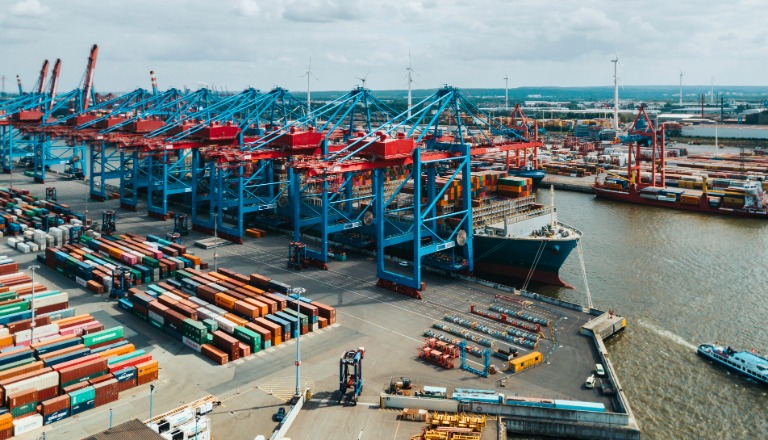
Poland borders Germany, Czech Republic, Slovakia, Ukraine and Lithuania (along with Russia and Belarus). It’s a transportation and logistics hub for Central and Eastern Europe, with a well-developed road and rail network, several seaports and airports and access to the Baltic Sea.
You should also check out
How Canadian exporters can reduce trade risks and successfully enter high-growth European markets.
Canadian companies enjoy preferential access to the Polish market through CETA, the wide-ranging trade agreement between Canada and the 27 member states of the EU. Its benefits for Canadian exporters include:
- eliminating duties on 99% of all tariff lines;
- increasing market transparency and stability;
- opening new opportunities to participate in EU procurement markets;
- simplifying temporary entry for business professionals, making it easier to establish local presence, conduct negotiations and provide after-sales support;
- enhancing investment protection and dispute mechanisms, proving certainty for investors; and
- facilitating mutual recognition of professional certifications to enhance labour mobility.
Under CETA, Canadian companies can compete for Polish government contracts on equal footing as other EU suppliers, opening substantial opportunities in infrastructure, technology and professional services.
Canada-Poland bilateral merchandise trade has grown from $2.6 billion in 2017—when CETA came into force—to $4.6 billion in 2024. Canadian service exports to Poland increased from $156 million to $274 million during the same period.
(Source: Statistics Canada)
What does Canada export to Poland?
Canada’s top exports to Poland include:
- Industrial machinery, equipment and parts
- Energy products
- Consumer goods
- Electronic and electrical equipment and parts
- Aircraft and other transportation equipment and parts
EDC’s Economic and Political Intelligence Centre (EPIC) forecasts that Poland’s economy will grow by more than 3% in 2026, outpacing regional peers and the EU average. This growth will be driven by:
- defence and infrastructure investment;
- a strong labour market;
- lower inflation;
- supportive monetary policy;
- deep integration into regional value chains; and
- progress on energy transition.
Steady growth is a defining feature of the Polish economy. From 2014-2024, Poland’s economy grew by 3.7% on average. But this period includes two exceptional events that impacted Poland’s growth rate: The COVID-19 pandemic and Russia’s full-scale invasion of Ukraine. From 2014-2019, Poland’s average growth rate was a brisk 4.7%.
Poland’s rise to the top of the global economic table makes it one of the great success stories of the post-Communist era. When 44 years of communist rule ended—dubbed the fall of the Iron Curtain—in 1989, Poland’s GDP per capita was only 41% of the EU average, basic goods were rationed and annual inflation soared above 600%. Structural reforms adopted in the early 1990s liberalized Poland’s crashing economy, and the inflow of funding and foreign direct investment (FDI) it received after joining the EU accelerated growth.
Between 1990 and 2023, Poland’s GDP per capita (adjusted for purchasing power parity) doubled, and its income level reached 80% of the EU average. Poland’s 38.5 million citizens now have an average income around US$38,100. Their buying power makes Poland a strong market for a wide range of products and services.
Along with EU funding and FDI, “Poland’s growth has been driven by its well-educated workforce, lower labour costs compared to the matured EU economies, and its deep integration with the EU auto and manufacturing supply chain, particularly that of German and Italian enterprises,” says Lili Mei, a senior economist with EPIC. “It’s also the top recipient of the EU funding for infrastructure upgrades. But keeping that momentum going might face some headwinds in the years ahead, as Poland’s economy is slow to absorb the EU grants, and momentum for reform has slowed due to political gridlock.”
EDC sees opportunities in a broad range of sectors in Poland, including:
- Agri-food
- Energy and energy transition
- Aerospace, defence and security
- Digital technology
In 2025, our governments agreed to strengthen the Canada-Poland strategic partnership in trade, defence and energy, creating new openings for investment in clean energy (including nuclear), critical minerals, defence, aviation, cybersecurity and advanced technologies.
How Canadian companies can enter Poland’s defence supply chain
Poland defines itself as a “frontline state” in Russia’s efforts to destabilize its western neighbours through cyber and conventional warfare, hybrid tactics (i.e. propaganda and disinformation) and sabotage. Since Russia’s full-scale invasion of Ukraine in 2022, Warsaw has increased defence spending dramatically, committing 4.7% of its GDP—187 billion złoty (C$70 billion)—in 2025. Poles understand the threats they face, so defence spending enjoys stronger public support compared to some of its European peers.
The Polish government has directed substantial resources to defence and security procurement, including new financial mechanisms to facilitate funding and tapping the EU’s EUR150 billion Security Action for Europe (SAFE) fund.
As a fellow member of the North Atlantic Treaty Organization (NATO) and trusted ally, Canada can participate in Poland’s efforts to boost its defence and security sector. Canada joined SAFE in December 2025, which presents an additional opportunity for companies selling into Europe.
“The Canadian Armed Forces have been working in Poland through Operation UNIFIER, helping train Ukraine’s military to strengthen their capabilities,” says Gordon Scharf, EDC’s ecosystem lead for the defence sector. “Canada also leads the Multinational Brigade in Latvia, as part of Operation REASSURANCE, where Poland contributes troops. This close collaboration between our countries creates strong opportunities to work together in the defence and security sector.”
Canadian defence exports to Poland totalled $52 million in 2024, making it our eighth-largest export market globally and second largest in the EU. Opportunities will continue to grow for Canadian companies offering defence and dual-use technologies for:
- Aerospace, including components, materials and specialized services
- Drone components
- Integrated ship systems and design capabilities
- Surveillance systems
- Cybersecurity
- Training and education
While Poland’s defence and security needs are great, succeeding in the market is challenging.
“Poland approaches defence and security procurement with a sense of urgency because of the existential threat posed by Russia. They place a lot of importance on fast delivery and getting new systems up and running quickly. They also prefer long-term commitment, which is why Canada’s involvement in Operation UNIFIER, Operation REASSURANCE and the SAFE initiative could give an edge to Canadian suppliers,” Scharf says.
Poland is also committed to building its domestic defence capabilities to ensure its survival. To succeed in the market, Canada’s TCS recommends that defence sector exporters find ways to make their solutions “more Polish” through technology transfer, local production and partnerships.
Houben agrees, saying that joint venture partnerships, “where you have a Polish name on the end product, with technology and IP (intellectual property) coming from Canada, may be the way to go.”
Canadian cleantech opportunities in Poland’s energy and energy transition goals
Poland is heavily dependent on fossil fuels, particularly due to its natural abundance of coal, making its economy one of the most carbon-intensive in Europe. Decarbonization is a controversial topic in Polish politics, but the country is making efforts to reduce its reliance on fossil fuels and upgrade its energy grid.
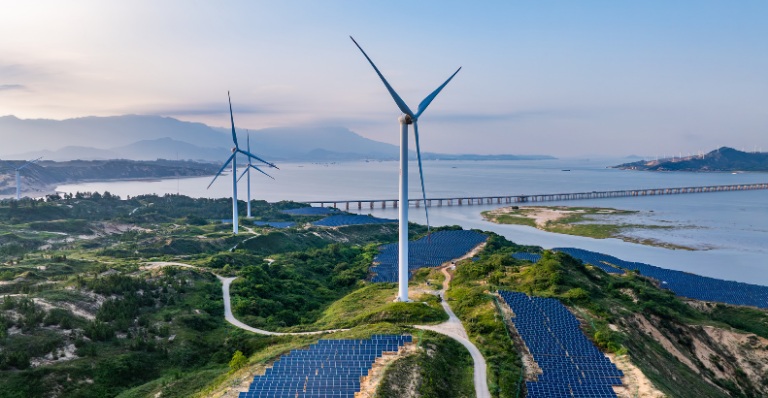
Russia’s full-scale invasion of Ukraine in 2022 led to gas shortages and high fuel costs, adding urgency to Poland’s energy transition plans. With support from the REPowerEU Plan, devised by the European Commission to reduce Russian fossil fuel imports, Poland is investing in wind, solar and energy efficiency.
Canadian companies with expertise in renewable power, energy storage solutions and last-mile connectivity are well-positioned to participate in this transformation.
Poland has committed to building its first nuclear power plants by 2033, representing a multi-billion-dollar market opportunity for Canada’s nuclear supply chain. Canadian companies are keen to get involved in this sector and EDC believes there’s room for investment and engagement.
You should also check out
Explore Canada’s cleantech export edge in EDC’s 2025 report on scalable clean technologies.
Poland’s role in EU critical minerals and Canadian export potential
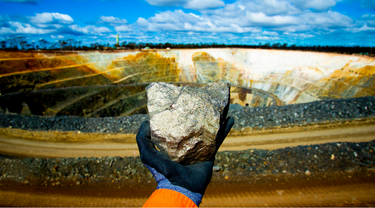
Creating a diversified and resilient supply chain for critical minerals is a strategic priority for Poland and the EU. As a leading producer of aluminum, nickel, platinum and copper, Canada is in a prime position to support Poland’s defence, decarbonization and national security needs by increasing production and export of these minerals.
Canadian mining technology and service providers can find opportunities in Poland’s sizable mining sector, which increasingly requires advanced extraction technologies, environmental solutions and safety systems. Canadian companies with expertise in sustainable mining and remediation can help meet these demands.
Advanced manufacturing
Poland is a top manufacturing centre within the EU, particularly for European auto makers. Canadian companies with solutions for automation, precision tools and green manufacturing can find opportunities in the sector.
Digital technology
Poland is an emerging digital powerhouse. It leads the EU in mobile banking adoption, and its tech sector is closely intertwined with Estonia and other Baltic nations that are driving innovation in digital payments and services. There’s high demand for cloud computing, Internet of Things (IoT), smart cities and cybersecurity solutions. Warsaw is a rising tech hub with a sizable pool of IT (information technology) professionals, making it a great entry point to the entire European network for Canadian digital service exporters.

Poland has a stable, business-friendly environment that offers advantages for Canadian companies looking for a foothold in Europe, including:
- Competitive operational and labour costs
- Low corporate tax rates, especially for small- and medium-size enterprises (SMEs)
- Low minimum capital requirements and fast processing for setting up a business
Poland is also an attractive destination for foreign investment.
Tips for building business relationships in Poland
Be formal: Houben describes Polish business culture as “conservative—a bit more than even Germany. Just to give an example, you must wear business attire, including a tie, for meetings.” Punctuality, professionalism and respect are valued.
Build connections: Business is also built on relationships, Houben continues. “It’s not a transaction-oriented market. You must build relationships, which takes time. You’ll have to get through some initial discussions to get closer to your counterparts before making progress on a deal,” he says.
Bring a translator: While English is increasingly used for business in Poland, language barriers can still arise. Houben notes that you may need to hire a translator for meetings and recommends having key business documents translated into Polish.
- Political polarization: Poland offers a business-friendly environment, but its polarized political climate can introduce uncertainty and policy shifts that affect investor confidence. EU funding was temporarily frozen in 2022 over concerns that legal reforms enacted by Poland’s former government undermined judicial independence. The funding was unblocked in 2024 when Donald Tusk’s centrist coalition took power and promised to address rule-of-law issues. Sustained commitment to judicial reform and rule of law remains crucial for investors, as institutional quality directly affects market stability. The progress made on this front is also a key anchor to secure access to EU funding for infrastructure upgrades and green transformation.
- Complex regulations: The EU has strict and varied regulations across sectors and countries. Ensuring that your offerings comply with the General Data Protection Regulation (GDPR), product standards, value-added tax (VAT) systems and environmental laws can be a barrier.
- Currency: Poland uses the złoty (PLN), not the euro. Canadian exporters hedging against the złoty face the risk of currency volatility eroding profit margins, especially during periods of political uncertainty, or diverging interest rate policies between Poland and Canada. EDC has solutions to mitigate the risks associated with foreign exchange fluctuations.
- Language: Your products, services and branding must be localized for the Polish market.
- Understanding the market: Getting accurate information about Polish consumer preferences, regulations and economic conditions can be challenging for Canadian companies. Engaging a local partner, or working with EDC and the TCS, can provide the market intelligence you need to succeed.
- Competition from established players: Poland has strong local incumbents and global competitors. Canadian firms must differentiate clearly, offer unique value propositions and innovate to edge out the competition and succeed in the market.
Wondering how to start exporting to Poland from Canada? EDC is part of the Government of Canada’s trade ecosystem of experts available to help you save time, learn more about your target markets and identify the capital you need to grow.
We're committed to helping Canadian companies diversify into new markets. Our experienced team is available to offer the industry insights, knowledge and tools you need to succeed in Poland.
EDC also offers:
- A full suite of trade credit insurance products to lower your risk for doing business abroad
- Support with getting access to working capital
- Expertise to enable you to learn more about international markets
- Connections to international companies in need of your products and services
Learn more about how EDC’s financial and knowledge solutions can help you understand the opportunities in your target market and make exporting less risky. To contact an EDC export advisor, visit our Export Help Hub.
Interested in growing your business in Poland?
Connect with EDC and watch your business flourish on the international stage.
Answer a few questions about your company to learn more about how EDC can help you plan, connect and fuel your expansion in Europe.
Frequently asked questions about how to export to Poland
What are the top export sectors in Poland for Canadian businesses?
Technology, agri-food, energy and energy transition, and defence are key growth areas.
How does CETA help Canadian companies export to Poland?
CETA reduces tariffs, improves market access, and simplifies trade regulations between Canada and Poland.
Is Poland a good market for Canadian cleantech companies?
Yes. Poland is investing heavily in wind, solar, and nuclear energy, creating strong demand for Canadian innovation.
What are the challenges of doing business in Poland?
Exporters may face regulatory complexity, competition from EU suppliers, and cultural differences in business practices.
How can EDC help me enter the Polish market?
EDC offers financial solutions, risk management tools, and access to global networks to support your expansion.